Get Full Government Meeting Transcripts, Videos, & Alerts Forever!
Get email alerts on the Parental Drug Testing Child Welfare topic
No spam. Unsubscribe anytime.
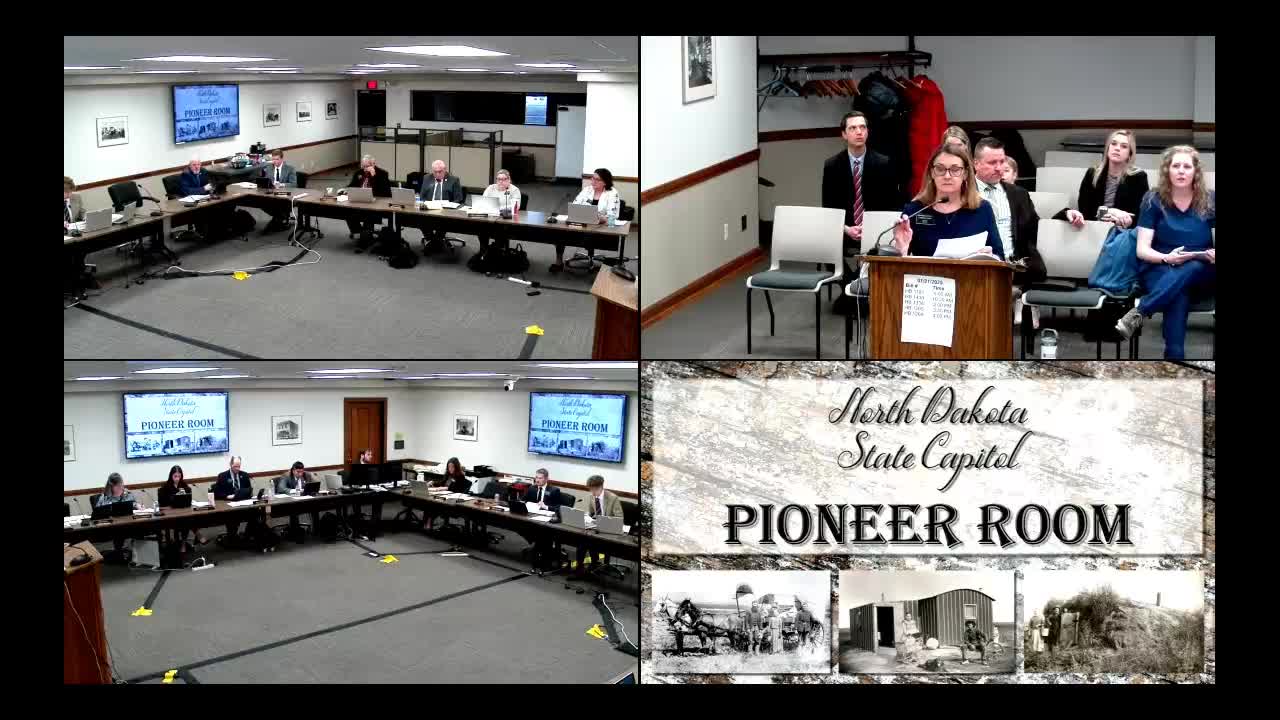
Heated committee hearing on mandatory drug testing for parents in child-welfare cases exposes operational concerns
Summary
House Bill 1268 would require mandatory drug testing by human service zones prior to unsupervised visits when illegal substances contributed to a child's removal; proponents said testing protects children and reduces reentry, while human service directors warned of implementation, access and privacy problems
Representative Karen Rohr introduced House Bill 1268, which would require human service zones to require a clean drug test before a parent who used illegal substances could begin unsupervised visitation when those substances contributed to the child’s removal. The sponsor presented an amendment that changed the appropriation to $95,000 and explained the proposal arose from foster-parent concerns and meetings with zone directors.
Bailey Greiner, a foster parent and co-author of the bill, told the committee the intent is to reduce reentry of children into foster care following reunification when parental substance use has not been resolved: “If an illegal substance is a contributing factor to the abuse and neglect of a child, then the parent should have a clean drug test from that substance prior to an unsupervised visit,” Greiner said. She and other supporters described variable testing practice across zones and requested statutory consistency and funding to cover tests where zones lack resources.
Tabitha Darriss, a pediatric and neonatal nurse who is a co-author and foster parent, described clinical experience with infants exposed to drugs and recounted cases where children reentered care after reunification despite known parental substance use. Darriss cited national research linking parental substance use to higher risks of maltreatment and poorer outcomes for children, and argued mandatory testing would provide a nonpunitive tool to assess readiness for unsupervised visits and to support treatment planning.
Supporters proposed excluding marijuana (because it can remain detectable long after impairment) and alcohol (because alcohol is a legal substance) from the bill’s mandatory testing requirement; the committee heard that testing technology and detection windows differ by specimen type (urine, hair, saliva) and that costs vary (witnesses gave ballpark figures including an $85 local test cost and lower-cost options).
Kim Jacobson, president of the North Dakota Human Service Zone Directors Association, testified in opposition, urging caution. Jacobson said human service zones already use drug testing as one tool and that the state’s safety-framework practice model requires individualized assessments. She and other agency witnesses raised concerns about: rural access to timely testing; variable drug half-lives and test windows; confidentiality and federal limits on sharing test results; risk of overreliance on a single test result; administrative burdens; and potential unintended consequences that could limit engagement with parents and hamper services.
A Department of Human Services staff member (data) told the committee statewide recidivism within 12 months is under 10% and that about 55% of children in care have reunification as a case goal; the agency representative said zones already use testing in many cases and that results are reported to federal partners when releases allow.
Ending: The committee closed the hearing after lengthy testimony from foster parents, nursing staff and human service leaders. Supporters asked for a do-pass recommendation; human service directors asked the committee to table or reject the bill until implementation details (testing logistics, confidentiality, rural access, coordination with probation/treatment providers) are resolved.