Get Full Government Meeting Transcripts, Videos, & Alerts Forever!
Get email alerts on the Safe Haven Baby Boxes topic
No spam. Unsubscribe anytime.
Lawmakers hear testimony for newborn safe-haven box bill, supporters cite anonymity and lifesaving potential
Summary
House Bill 1205 would authorize installation of newborn safety (safe-haven) boxes and provide a state appropriation; testimony highlighted anonymity for surrendering parents, adoption outcomes, cost of boxes, and questions about injury/death and tribal-placement rules under ICWA
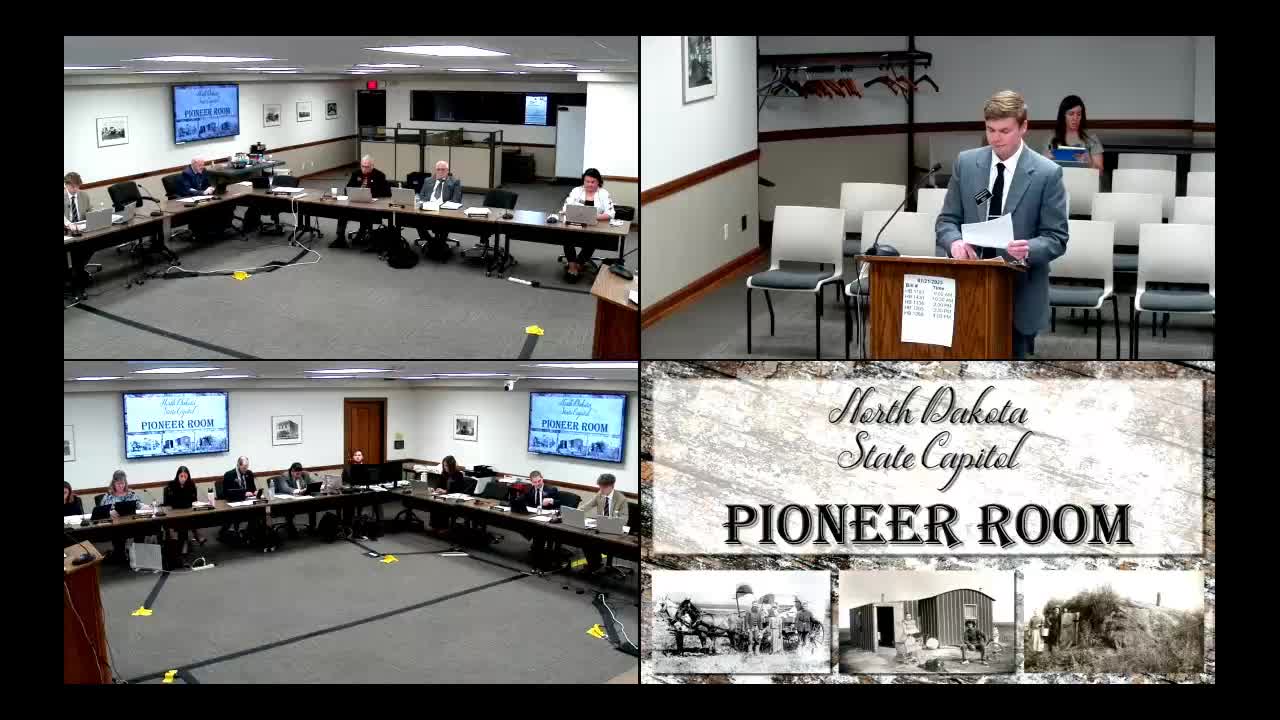
Representative Dawson Holly introduced House Bill 1205, proposing authorization and an appropriation for newborn safety devices—commonly called safe-haven or baby boxes—under North Dakota’s safe-haven law. The bill’s concept allows a person to surrender an infant under 60 days old anonymously by placing the child inside a temperature-controlled, monitored compartment in an authorized location, which then alerts first responders.
Representative Dawson Holly said the boxes are already operating in other states and framed the bill as a life-saving, anonymous option: “These are real children who now grow up with loving families and are given a second chance of life because their parents had access to safe compassionate options during the moment of crisis,” Holly said.
Testimony in support included foster and adoptive parents, faith-based groups and pro-life organizations. Savannah Schmidt, a foster parent who adopted a safe-haven baby, described barriers she has seen in the current process and urged the committee to pair boxes with training and awareness efforts. “The safe haven baby box ensures a safe place for the baby and a contact free surrender for the mother,” Schmidt said, and added that lack of awareness of procedures had prolonged court cases in at least one instance she recounted.
Representative Holly and witnesses described costs and program design: a single box costs roughly $15,000 with recurring monitoring/program fees (witnesses referenced an annual IT/monitoring fee near $500), and the sponsor proposed an appropriation amendment reducing an initial request to $100,000 to pilot boxes in several population centers. Holly said the bill does not require any facility to install a box and suggested initial locations such as Fargo, Bismarck, Minot and Grand Forks.
Committee members and witnesses addressed several implementation questions raised in testimony: what happens if a surrendered infant is injured or deceased (witnesses said law enforcement and CPS would investigate and the child would not be eligible for immediate adoption); how long parental rights remain or are terminated (witnesses described a notification/termination process that includes public notice and a later hearing); whether the Indian Child Welfare Act (ICWA) applies (Kim Jacobson and other human services witnesses told the committee that ICWA would apply if a surrendered child is identified as Native American and that identifying the child’s status could affect placement timelines); and the rationale for a 60-day age limit (vendor guidance cited safety, size and mobility concerns).
Supporters from the North Dakota Family Alliance Legislative Action, the North Dakota Catholic Conference and North Dakota Right to Life stressed anonymity, safety and alignment with the state’s pro-life stance. Jacob Thompson of the North Dakota Family Alliance described the boxes as “a safe way to surrender a baby without face to face interaction,” and David Tamese of the North Dakota Catholic Conference framed the bill as protecting infant life while continuing efforts to support mothers in crisis.
Several witnesses urged clear statutory language on exceptions and investigative processes, especially if a child is injured, and requested that the bill clarify how ICWA procedures would be carried out when a surrendered child’s tribal status is later identified. Kim Jacobson recommended clarifying that law enforcement and CPS be notified in cases of obvious injury and suggested adding language directing the Department of Health and Human Services to set implementation procedures and training.
Ending: The hearing closed after several hours of testimony in favor; no opposition witnesses appeared and the committee did not vote on the bill at this session. Lawmakers were left with implementation questions about notification, ICWA implications, and pilot site selection.