Get Full Government Meeting Transcripts, Videos, & Alerts Forever!
Get email alerts on the Ccbhc Readiness topic
No spam. Unsubscribe anytime.
Human service centers report progress toward CCBHC certification but name two main gaps
Summary
Regional directors told the Appropriations Committee they are positioned to provide most services required for Certified Community Behavioral Health Clinic (CCBHC) certification but cited two areas—primary care screening/monitoring and veteran-specific services—as the likeliest shortfalls if certification were required immediately.
John Buttcrite, regional director at North Central Human Service Center in Minot, told the Appropriations Committee that his center “feel[s] like we're in very good position to offer seven of these nine services already,” referring to the nine services required of CCBHCs. He said work remains on primary-care screening and veteran-focused services.
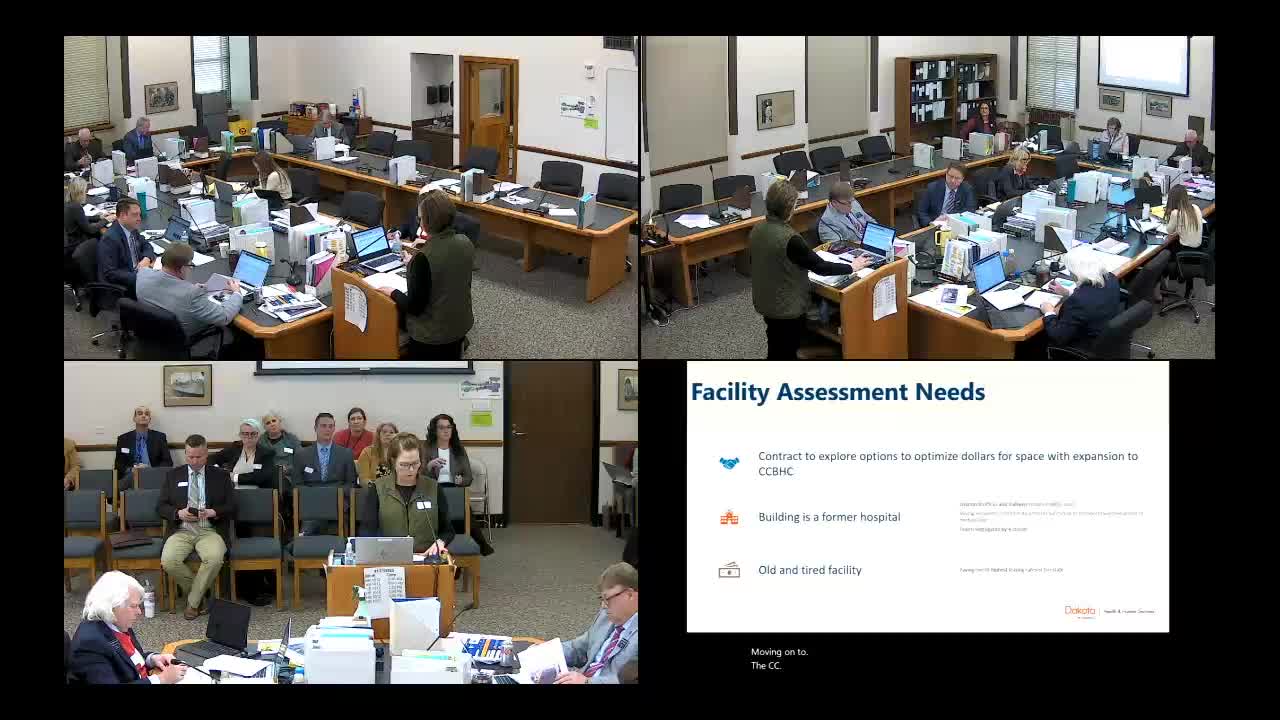
Shar Farrell of Northwest Human Service Center described structural challenges that affect scale-up for CCBHC: her center is housed in a large, older building spread across four floors that increases leased square footage costs and complicates co-location of new services. Farrell also told lawmakers that Northwest has submitted a letter of intent for CCBHC certification and has hired staff roles tied to certification, including a community care coordinator, peer support specialists and a continuous quality improvement manager.
Julie Baumgard, regional director at Lake Region Human Service Center, said Lake Region has hired a community behavioral health liaison and a clinical care coordinator and has restructured the “front door” — the access and intake process — to improve initial screening and linkage to services.
All three directors described peer-support staffing increases. Buttcrite said North Central has “4.5 FTE of our peer support” including an on-site supervisor with lived experience; he and others said peer supports have improved engagement and helped clinicians interpret signs missed by clinical staff.
Panelists said additional psychiatric providers, weekday and evening outpatient capacity and physical upgrades to pharmacy and clinical space will be necessary to meet full CCBHC standards. None of the presenters said certification was complete; several said certification workgroups and policy teams are still defining details.
Ending — Directors asked continued legislative support for staffing and modest capital or leasing flexibility while the centers finish certification steps. Lawmakers signaled interest in tracking readiness and asked for follow-up on remaining gaps.