Get Full Government Meeting Transcripts, Videos, & Alerts Forever!
Get email alerts on the Inhalants Difluoroethane topic
No spam. Unsubscribe anytime.
Committee amends, passes bill to restrict retail sale of difluoroethane; raises age and pack limits
Summary
The Senate Human Services Committee on an amended, unanimous vote moved to restrict retail access to difluoroethane propellants used in aerosol "air duster" products, citing concerns about inhalant abuse.
The Senate Human Services Committee on an amended, unanimous vote moved to restrict retail access to difluoroethane propellants used in aerosol "air duster" products, citing concerns about inhalant abuse.
Senator Judy Lee, District 13, introduced Senate Bill 2195 and said she was prompted by a constituent whose son had become addicted to aerosol dusters. "I was contacted by an individual whose son has had all kinds of struggles with having been, addicted to what they call air dusters," Lee said at the hearing.
The bill, as introduced, would add difluoroethane to the state's list of volatile chemicals and require retailers to keep products containing it behind the counter or in locked cabinets, verify that buyers are of a specified minimum age, and limit how many cans a customer can purchase at one time. Victoria Christian of Legislative Council testified neutrally and summarized the product's harms and the bill's intent: "The product is an inhalant. The difluoroethane is the aerosol component...it has a depressant effect on the central nervous system and causes that brief high experience." Christian told the committee she had reviewed laws in other states and that Minnesota served as a model for parts of the draft language.
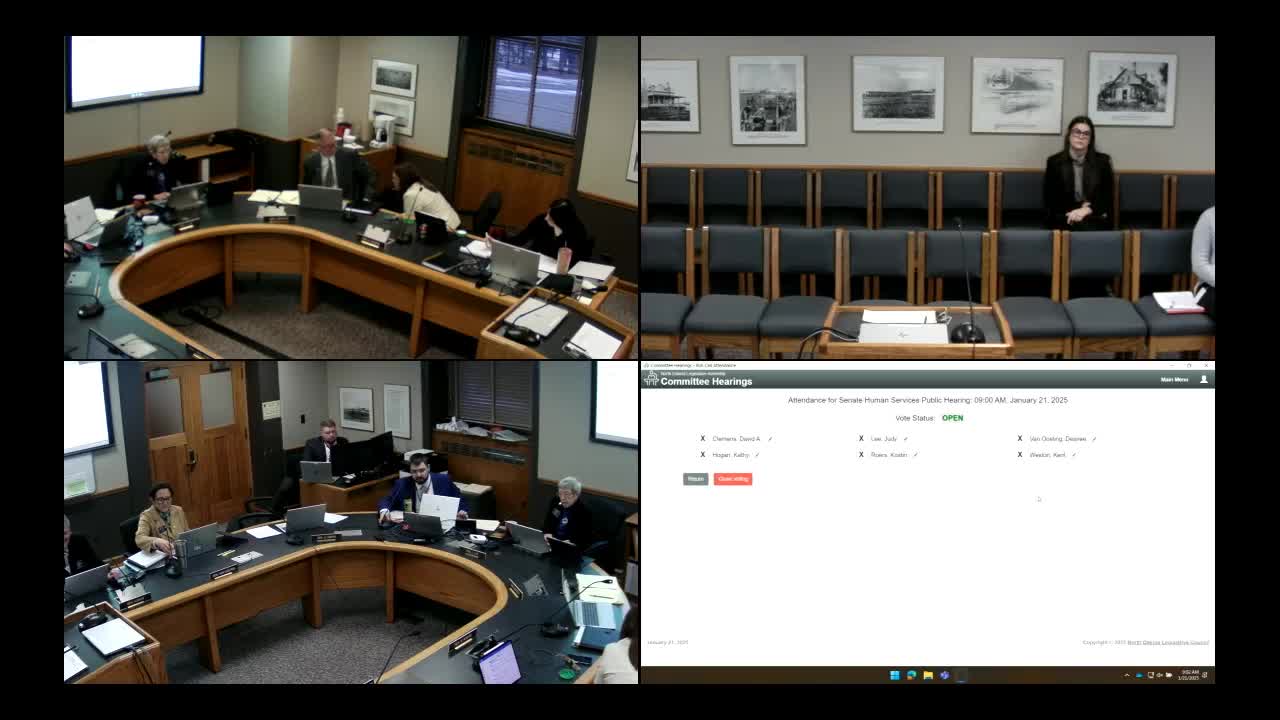
Committee members debated the appropriate purchase limit and age restriction. Senators Kristin Rohrs and Michael Hogan (seconding the motion) initially moved to change the bill's single-purchase limit from three cans to four, reflecting common retail packaging. Committee discussion then led members to raise the buyer age from 18 to 21; the amendment that combined both changes — increasing the pack limit to four and raising the minimum purchase age to 21 — passed on a roll call vote of 6-0.
After adopting the amendment, the committee voted 6-0 to pass SB 2195 as amended. Senator Lee said she expected to carry the bill further in the Senate.
What the bill does and what remains to be decided
The committee's action places limits intended to reduce youth access to difluoroethane-containing propellants and establishes retail safeguards (behind the counter/locked storage and age verification). The bill text also references criminal penalties tied to inhalant use and the statute(s) that govern volatile chemicals, as drafted in the bill language presented to the committee. Committee members noted implementation details retail staff would face, such as identifying products that contain difluoroethane and how stores would verify age at point of sale.
The committee debated, but did not mandate, additional retail compliance details (for example, how retailers should identify which products contain difluoroethane beyond label review). Senator Rohrs said the committee could consider a future amendment if the packaging situation warranted further change.
Votes at a glance
- Amendment (change maximum purchase from 3 to 4; raise buyer minimum age from 18 to 21): moved by Senator Kristin Rohrs, seconded by Senator Michael Hogan. Roll call: Judy Lee — Aye; Weston — Aye; Rohrs — Aye; Hogan — Aye; Van Oosten — Aye; Clemens — Aye. Outcome: passed 6-0.
- Passage of SB 2195 as amended: motion to pass by Senator Michael Hogan, seconded by Senator Clemens. Roll call: Judy Lee — Aye; Weston — Aye; Rohrs — Aye; Hogan — Aye; Van Oosten — Aye; Clemens — Aye. Outcome: passed 6-0.
Next steps
Senator Lee said she expects to carry the bill forward. Committee members asked staff to clarify retail compliance details before later chamber action so that enforcement and retailer burden can be better understood.