Get Full Government Meeting Transcripts, Videos, & Alerts Forever!
Get email alerts on the Charter Reauthorization topic
No spam. Unsubscribe anytime.
Emmett leaders, charter school debate student funding, propose online expansion and non‑compete terms
Summary
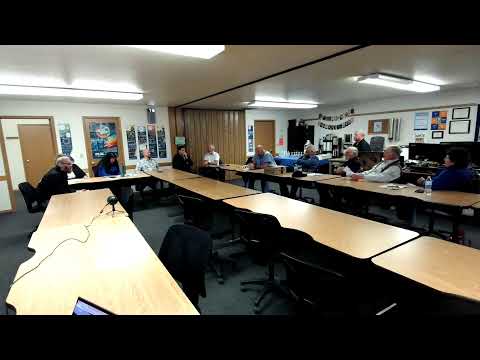
Emmett School District and representatives of a locally authorized charter school met in a reauthorization work session to discuss enrollment declines, the effect of recent state funding changes on discretionary revenue, and a charter proposal to add an online high‑school program aimed largely at homeschool and out‑of‑district students.
Emmett School District and representatives of a locally authorized charter school met in a reauthorization work session to discuss enrollment declines, the effect of recent state funding changes on discretionary revenue, and a charter proposal to add an online high‑school program aimed largely at homeschool and out‑of‑district students.
The discussion mattered because the two organizations share students and state funding is allocated by students in attendance: the parties described a funding gap that, when enrollment drops, can shrink discretionary funds available for local programming and building maintenance. The charter told the district it wants to move cautiously so its academic expansion does not harm students enrolled in Emmett schools and offered to negotiate geographic limits on recruitment.
Board chair and staff opened the session by framing it as a reauthorization work session; a representative for the charter outlined three main concerns: perceived tension between the two institutions over a finite student pool, overlapping course offerings (especially where academic classes overlap with career and technical education), and a funding shortfall after lower student attendance pushed the charter’s budget close to or into deficit. The charter representative said the organization does not want to “compete” for students in ways that harm either institution and proposed keeping vocational/CTE programming distinct while offering more general academic classes through a planned online option.
Officials described the funding math in concrete terms. The attendees said the district’s state funding per pupil is about $8,300 while the charter’s funding was characterized as nearly $14,000 per pupil; the charter walked through examples showing that at about 178 full‑time equivalent students the district of receipts would be roughly $2.4 million and that at 195 students the figure would be roughly $2.7 million — a difference the participants characterized as roughly $250,000–$300,000 depending on rounding and which year is used as the baseline. The groups discussed how a loss of roughly 20 students can quickly reduce discretionary dollars that cover repairs, non‑personnel building expenses and sometimes teacher positions.
The charter described a mitigation plan: create a “full‑service” online freshman program (with a plan to grow to additional grades) that would recruit largely outside Gem County, target homeschoolers and students statewide who want CTE pathways, and deliver much of the courseware through an independent contractor experienced with online programs. The charter estimated a net of roughly $2,000 per remote student after typical costs, and suggested attracting 100 such students could add about $1 million in revenue with relatively low brick‑and‑mortar costs. Emmett trustees expressed interest in the plan but repeatedly raised a protection: they asked for language that would prevent the charter’s academic online program from actively recruiting students who live in Gem County and would otherwise attend Emmett schools, unless Emmett explicitly agreed.
Both sides discussed narrower options (for example limited percentages of in‑county students being allowed to enroll) and several technical points: how fractional attendance (ADA) is calculated, how career and technical education (CTE) funding flows, and how shared staffing or service agreements have been handled historically. A charter representative acknowledged earlier informal practices — including years when the charter returned discretionary funds to the district — and said the partners must improve transparency and financial reporting going forward.
District board members said the district has already made budget adjustments in response to projected revenue losses and indicated they are prepared to discuss modest one‑time assistance but cannot absorb the full shortfall without cutting programs or staff. The board asked the charter to present a written, concrete proposal at or before the district’s June/July budget cycle that would include student projections, the proposed geographic recruitment limits, curriculum/provider details, and a clear accounting of expected net revenue after contracted provider costs.
Next steps: the charter agreed to return with a formal proposal and the parties said they will negotiate specific non‑compete language that would generally restrict recruitment of Gem County students for the charter’s academic online program. Both sides also committed to improved financial reporting and to revisit service agreements, discretionary kickbacks and shared staffing to reduce future surprises. No formal votes or binding commitments were taken during the work session; the items discussed were planning and negotiation points to be formalized later.
For context, participants referenced state authorization materials used for charter oversight and an itemized breakdown (the charter referred to an authorizer number the state assigned and to a state authorizer template). Several speakers said recent state tax relief and funding changes (referred to in the meeting as “292” and by others as related bond/levy mechanics) have shifted budget dynamics for both districts and charters.
The session combined a lengthy factual review of finances with exploratory policy discussion about how to avoid direct competition for in‑county students while enabling the charter to pursue online growth that could increase the total number of students served in the region.