Get Full Government Meeting Transcripts, Videos, & Alerts Forever!
Get email alerts on the Land Use topic
No spam. Unsubscribe anytime.
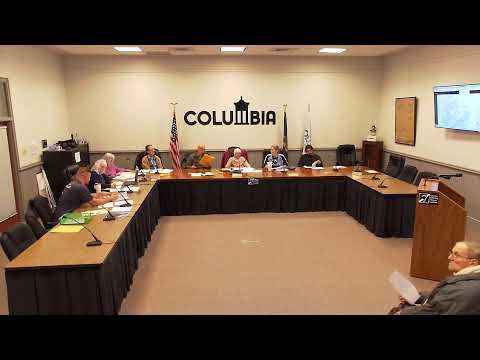
Columbia planning commission weighs zoning changes for McGinnis airfield site; council opposed residential use
Summary
The Columbia Borough Planning Commission on Jan. 21 discussed proposed land‑use ordinance amendments for the McGinnis airfield property, focusing on whether to create a separate special business district, prohibit residential development, allow parking as a principal use, and change lot‑size and building‑coverage rules to make the site more marketable.
The Columbia Borough Planning Commission on Jan. 21 discussed proposed land‑use ordinance amendments for the McGinnis airfield property, focusing on whether to create a separate special business district, prohibit residential development, allow parking as a principal use, and change lot‑size and building‑coverage rules to make the site more marketable.
Chairperson Mary Wickenheiser said the commission had sent a letter to borough council and described council members’ reaction at a Jan. 7 council workshop. “They were questioning why we sent a letter,” Wickenheiser said, and she added council “felt they did not want any kind of residential use with that property.” The commission’s review drew repeatedly on the McGinnis airfield site inventory and analysis report by ELA (July 2021), which Wickenheiser cited as the working guideline.
Why it matters: The borough is preparing the former airfield for redevelopment as a business/industrial park. Zoning text and table changes will shape what kinds of businesses can occupy the property, what infrastructure the borough must provide, and how nearby residential areas will be buffered.
Discussion highlights
- Districting and residential prohibition: Commissioners discussed treating the airfield area as a special district separate from existing light‑industrial or general‑industrial zones. Wickenheiser said council opposed permitting residential uses on the site; she conveyed that councils’ sentiment was “no” to residential, citing potential conflicts with proposed play areas and walking trails.
- Staff support and recordkeeping: Wickenheiser emphasized the commission’s need for borough staff to prepare agendas and minutes and to serve as the point of contact for developers. “We need staff,” she said; commissioners agreed minutes historically have been prepared by staff.
- Tables vs. text: Much of the conversation centered on the ordinance tables (permitted uses, dimensional standards) rather than only text amendments. Commissioners noted the ELA report recommends narrower build‑to lines except where adjacent to residences and suggested increasing allowable building coverage so modern, technology‑driven companies that need more building and less parking are accommodated.
- Parking as a principal use: The commission discussed allowing parking lots as a principal use in the business park, instead of forcing property owners to seek variances. Borough liaison Eric (title: borough staff liaison) commented, “Parking. Yes. I think that’s fine.” Commissioners noted that making parking a permitted principal use might reduce the need for repeated zoning‑hearing requests.
- Lot sizes and subdivision: The current light‑business district includes a 5‑acre minimum tract size in the ordinance. Several commissioners said a 5‑acre minimum could deter buyers and recommended removing or lowering the minimum lot size to increase flexibility.
- Warehousing and accessory uses: Commissioners flagged that “warehouse” does not appear as a permitted standalone use in the light‑business table; manufacturing operations could include accessory warehouse space, but standalone distribution warehouses would be excluded under current wording. The group discussed clarifying primary versus accessory uses so manufacturing and associated storage can occur without multiple special exceptions.
- Buffers and screening: Multiple participants urged buffers and lighting/screening requirements where the business park abuts residential areas. Commissioners agreed the ordinance should protect nearby residents with setbacks, landscaping or screen requirements and controlled lighting.
- Airport overlay, drones and FAA limits: The commission noted the borough no longer has an active airport overlay, so accommodating a company that would use an airstrip or operate larger drones would require reestablishing an airport overlay or other regulatory steps. Commissioners raised the Federal Aviation Administration’s 400‑foot ceiling for small unmanned aircraft as a planning consideration when evaluating whether the airstrip and drone operations would need separate regulation.
- Infrastructure and official map: Commissioners discussed whether the borough or a future developer will install streets and utilities. Wickenheiser said the borough has financing and noted the official map does not yet show streets; several members advised placing key streets on the official map before selling parcels so future layouts are respected.
Next steps and staff direction
Commissioners agreed to review the ordinance tables in more detail ahead of the February meeting. Specific follow‑up items included: producing a marked‑up permitted‑uses table that separates primary and accessory uses; researching comparable industrial parks for setbacks, building‑coverage and lot‑size norms; drafting buffer and lighting standards adjacent to residences; and asking borough counsel to review the table line‑by‑line to identify items council wants explicitly prohibited.
Formal actions taken
The commission approved minutes from the Nov. 19 meeting (motion by Vice Chairperson Tiffany Lin; second by Member Justin Evans) and approved minutes from the Dec. meeting (motion by Secretary Brad Lynn; second by Justin Evans). Both motions passed by voice vote of members present. The commission adjourned at 7:00 p.m. on a motion by Tiffany Lin, seconded by Justin Evans.
Ending note
Members said many issues are straightforward (for example, adding buffering requirements) but that other items — especially lot sizes, warehousing definitions and whether to allow parking as a principal use — require detailed review and counsel input before formal ordinance language is recommended to council.