
Charter schools for students with autism highlight low‑ratio classrooms, job training and calls for replication funding
Get AI-powered insights, summaries, and transcripts
Subscribe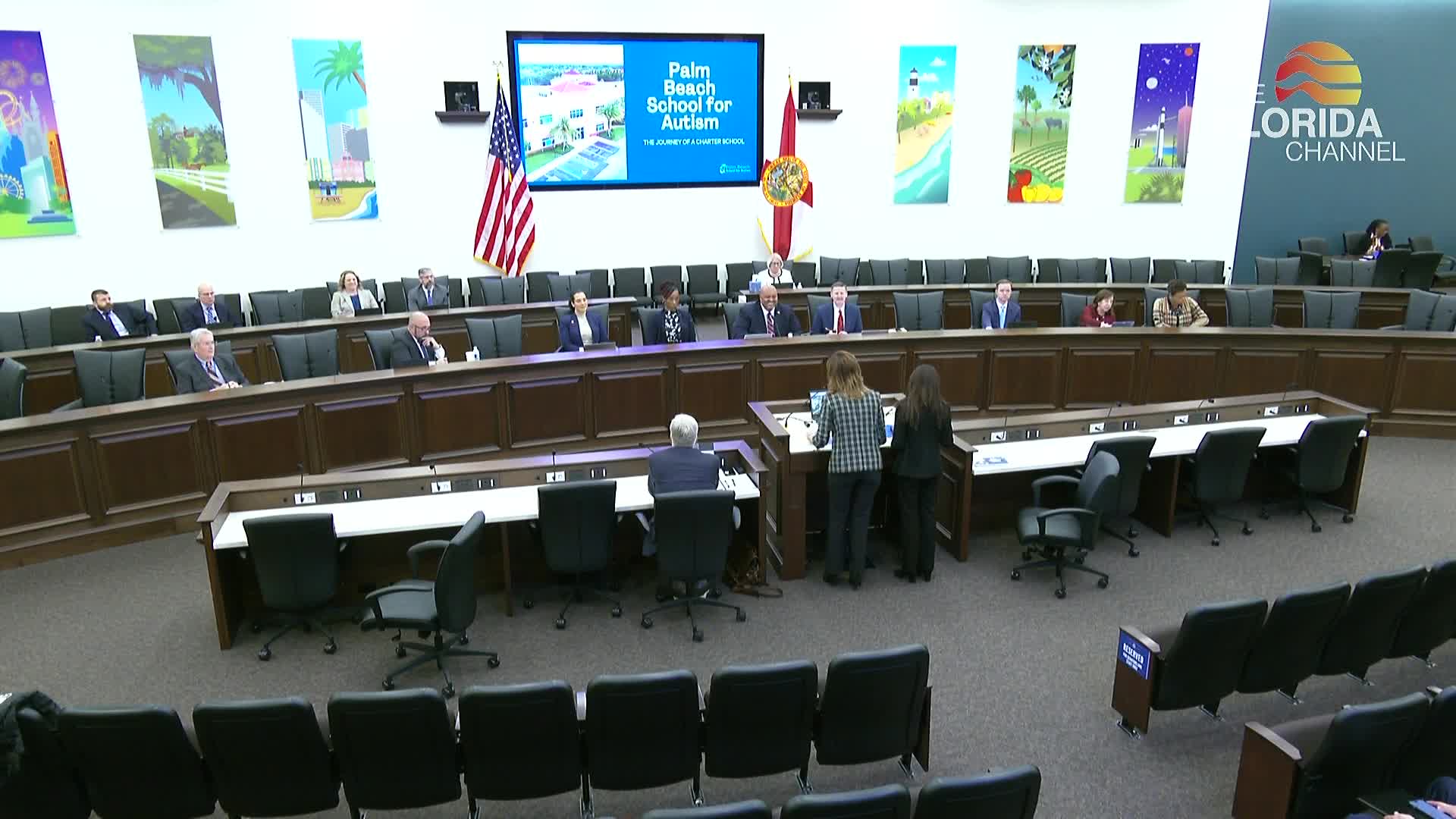
Summary
Two charter operators — Palm Beach School for Autism and South Florida Autism Charter School — told the committee about specialized classroom models, transition programs that place students in community jobs, and barriers to scaling, including uncertain start‑up grants and limits in Medicaid waiver supports for adults.
Charter operators and parents described specialized schools and transition programs for students with autism and asked lawmakers to consider targeted start‑up funding, streamlined replication criteria and policies to support vocational and residential outcomes for adults.
Ann Eisenberg, executive director of the Palm Beach School for Autism, told the Committee on Education Pre K–12 her school serves students from preschool through a transition program for young adults and uses low student‑to‑staff ratios and applied behavior analysis to teach academics, social skills and job readiness. Eisenberg said the school operates classes with 10 students, one teacher and two teacher assistants; speech and occupational therapists also push into classrooms or provide pull‑out services. She said the school’s building footprint is about 22,500 square feet with a later 10,000‑square‑foot addition for the high‑school program.
Eisenberg described student outcomes and operational measures: she said about 56% of students made learning gains in reading (placing the school fifth in its county), more than 94% made gains in math (placing first in the county and second statewide on the metrics she cited), the school reported a 98% teacher retention rate and a 97% student retention rate, and roughly 95% of operational funding comes from FEFP. She outlined vocational and transition initiatives including Project NEXT (an 18–22 transition program) and Exit8480, an on‑campus e‑commerce gifting business that provides supervised job training for students who cannot yet work safely in community employment. Eisenberg said a replication campus in Port St. Lucie is planned for August 2026 if startup funding can be secured.
Glenn Pierce, chair of the board of South Florida Autism Charter School, described an even more intensive model the school operates in Hialeah: classes of nine students with three adults (a 3:1 adult:student staffing model) and a system of wraparound supports. Pierce described the broader need for more of these specialized charter schools across Florida, argued that districts benefit financially from authorizing high‑severity autism charter schools, and urged one‑time accelerator funding to help start new campuses. Pierce estimated a conversion/startup cost in the neighborhood of $800,000 per campus to make facilities safe and operational and urged the legislature to prioritize proven replicating programs when awarding startup grants.
Both operators described strong community partnerships that support job placements in hospitality and other industries. Eisenberg said many graduates are placed competitively in hotels and restaurants after internships with job coaches; the school uses community partnerships to create direct-hire pathways. Pierce and Eisenberg both said Medicaid waiver changes have created barriers for adults leaving school: they reported that some adults who previously qualified for waiver supports now face stricter criteria, which complicates post‑22 transition services and day‑program or job‑coaching funding.
Presenters also discussed housing and employment for adults with high support needs. Pierce urged creative use of surplus district property and partnerships with housing authorities to create residential and day‑program capacity embedded in communities, and he noted federal changes to work‑support rules (including changes affecting subminimum‑wage employment programs) could affect the viability of some employment pathways for adults with high support needs.
A private‑sector guest, Jonathan Lamon, briefly described a commercial early‑screening technology his company offers and asked to provide more information to the committee in a future briefing. Committee members thanked presenters, asked about specific funding sources (including FEFP and CSP grants), and heard requests for the legislature to consider targeted start‑up capital and clearer replication pathways for proven autism charter models.
No motions or votes were taken at the meeting; presenters asked the committee to consider policy changes and startup support to expand specialized school capacity, strengthen transition pathways and support adult housing and employment models.