Get Full Government Meeting Transcripts, Videos, & Alerts Forever!
Get email alerts on the Opioid Response Access topic
No spam. Unsubscribe anytime.
Committee approves technical change to allow opioid antagonists beyond naloxone
Summary
A technical amendment to expand statutory language beyond naloxone to include other opioid antagonists was reported to the full House on a 7-1 vote; supporters said it removes an unintended restriction that could block access to newer prescription antagonists.
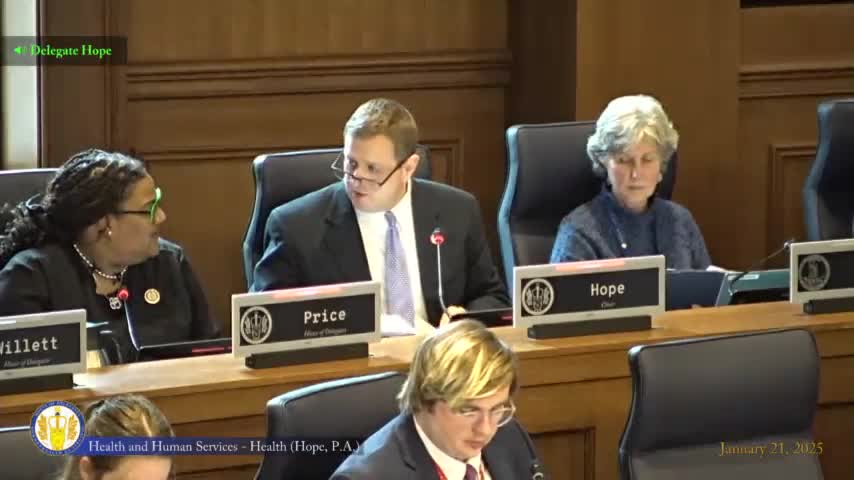
A subcommittee voted to report House Bill 1637 to the full House on a 7-1 vote after adopting a technical change to expand statutory language that now permits organizations and authorized individuals to dispense naloxone “or other opioid antagonists.”
Chair Price, who described the bill as a technical update, said the original language named naloxone specifically when the statute was written; newer opioid antagonists are now on the market and the change would ensure authorized organizations can use those alternatives. “When we wrote this statute originally, naloxone was the only drug out there, but there are others that have come online. We just wanted to allow those other uses for the individuals that are already permitted to do the prescribing to allow them to use other opioid antagonists as well,” Price said.
Nicole Lauder, representing a manufacturer of alternative opioid antagonist products, described instances in which community service boards and other organizations hesitated because the code referenced naloxone specifically and therefore interpreted the law narrowly. Committee members asked whether the change would conflict with the over‑the‑counter status of naloxone; Lauder and the sponsor said naloxone can be obtained without a prescription, while other products may require prescription access and the change merely allows organizations already authorized to prescribe or distribute to use alternative antagonists where clinically appropriate.
The subcommittee reported the bill to the full House on a 7-1 vote.
Ending: The bill advances as a technical statutory update; supporters said it avoids inadvertent limits on access to clinically appropriate opioid antagonists without changing which organizations are authorized to provide them.