Get Full Government Meeting Transcripts, Videos, & Alerts Forever!
Get email alerts on the Hospital Pharmacy Compounding topic
No spam. Unsubscribe anytime.
Panel clears bill letting hospitals compound and share medications within same health system
Summary
A subcommittee voted 8-0 to report a substitute of House Bill 1905, which removes a Virginia prohibition and allows hospitals within the same health system to compound needed medications and distribute them to affiliated hospitals to maintain continuity of care during shortages or facility disruptions.
The House subcommittee unanimously reported a substitute for House Bill 1905 that removes a Commonwealth prohibition preventing hospitals from compounding needed medications and distributing them to other hospitals within the same health system.
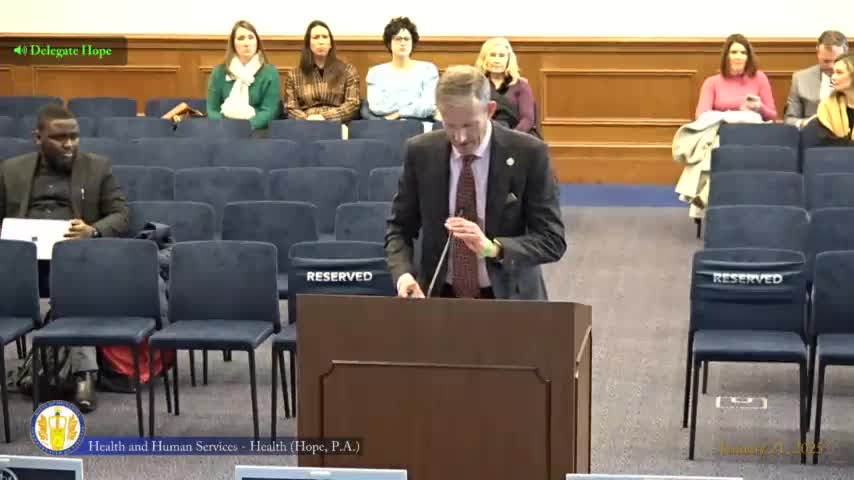
Delegate Willett, the bill’s sponsor, said the change would help hospitals respond more quickly during drug shortages, natural disasters or infrastructure failures. Supporters described several recent examples: shortages of IV fluids and oxytocin during emergency conditions, a Richmond water outage that disrupted pharmacy operations, and cleanroom HVAC failures that can render a hospital unable to compound sterile products. Natalie Nguyen of the Virginia Society of Health System Pharmacists told the committee that Virginia’s prohibition is unique among states and that allowing intra‑system distribution would “help us sustain critical care and the role of preventing maternal deaths.”
VCU Health described benefits from prior emergency waivers that allowed it to centralize compounding during crises. Dr. Joshua Crawford, a hospital pharmacist, gave multiple operational examples in which neighboring hospitals within a system could have helped by compounding sterile products while an affected facility repaired infrastructure or recovered from an outbreak.
Brent Rawlings of the Virginia Hospital and Healthcare Association urged the committee to codify lessons learned from recent emergencies so hospitals can respond without delay. No witnesses offered opposing testimony. The substitute, which specifies distribution within health systems under common ownership, passed on an 8-0 vote.
Ending: The bill advances to the next step with unanimous committee support; backers said it would build resiliency into hospital supply and compounding systems without changing safety standards, because hospitals would remain subject to the same sterile compounding regulations.