
Subcommittee advances bill to require equal insurance reimbursement for licensed midwives
Get AI-powered insights, summaries, and transcripts
Sign Up Free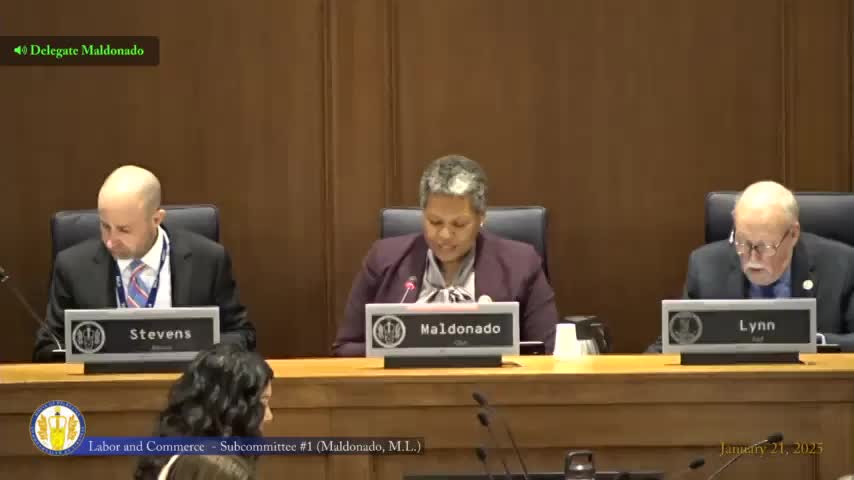
Summary
Delegate Ward presented House Bill 19‑23 to the House subcommittee and successfully moved the substitute; the measure was reported and referred to Appropriations by a vote of 5‑2.
Delegate Ward presented House Bill 19‑23 to the House Subcommittee on Labor and Commerce, Insurance and Financial Institutions and asked the committee to move her substitute. "House Bill 19‑23 is a critical legislation. It ensures all licensed midwives ... receive 100% insurance reimbursement for covered health services," Ward said, arguing the change would expand access to maternity care and address rural and racial disparities.
The nut graf: supporters said equal reimbursement would make midwifery practice financially viable in underserved communities, reduce interventions such as cesarean sections, and improve outcomes while saving Medicaid money over time. Jessica Jordan, a retired certified nurse midwife, told the panel that certified nurse‑midwives already receive 100% of the physician fee schedule in Medicaid, and parity would extend similar treatment to other licensed midwives.
During testimony, licensed midwives and policy advocates told the committee that current partial or absent reimbursement discourages midwives from practicing in areas with physician shortages. Miranda Schindler, a licensed midwife, and Catherine Haines, testifying for the Virginia Interface Center for Public Policy, described examples of reimbursement gaps and urged passage.
Opponents and commenters representing insurers and physician organizations said the bill raises operational and market questions. Doug Gray of the Virginia Association of Health Plans noted the proposal would add two mandated provider types to insurer requirements and said credentialing and rate‑setting for commercial plans would be complex. Clark Baranow of the Medical Society of Virginia said ‘‘paid the same as a physician’’ is hard to define because physician payments vary by contract, setting and specialty.
The committee voted to report and refer HB 19‑23 to the Appropriations Committee by a vote of 5 to 2. The referral means appropriations will consider the bill’s fiscal impacts and funding language next.
Ending: The bill now moves to the House Appropriations Committee for further review; supporters urged continued consideration of parity as a step to improve access for families in rural and low‑income communities.