Get Full Government Meeting Transcripts, Videos, & Alerts Forever!
Get email alerts on the Property Insurance Market topic
No spam. Unsubscribe anytime.
Florida property-insurance market showing signs of stabilization, regulator says
Summary
The Office of Insurance Regulation told the Senate Banking and Insurance Committee that rate requests and litigation have declined since reforms, but regulators flagged continued risks from inflation, reinsurance costs and condo (HO-6) coverage gaps.
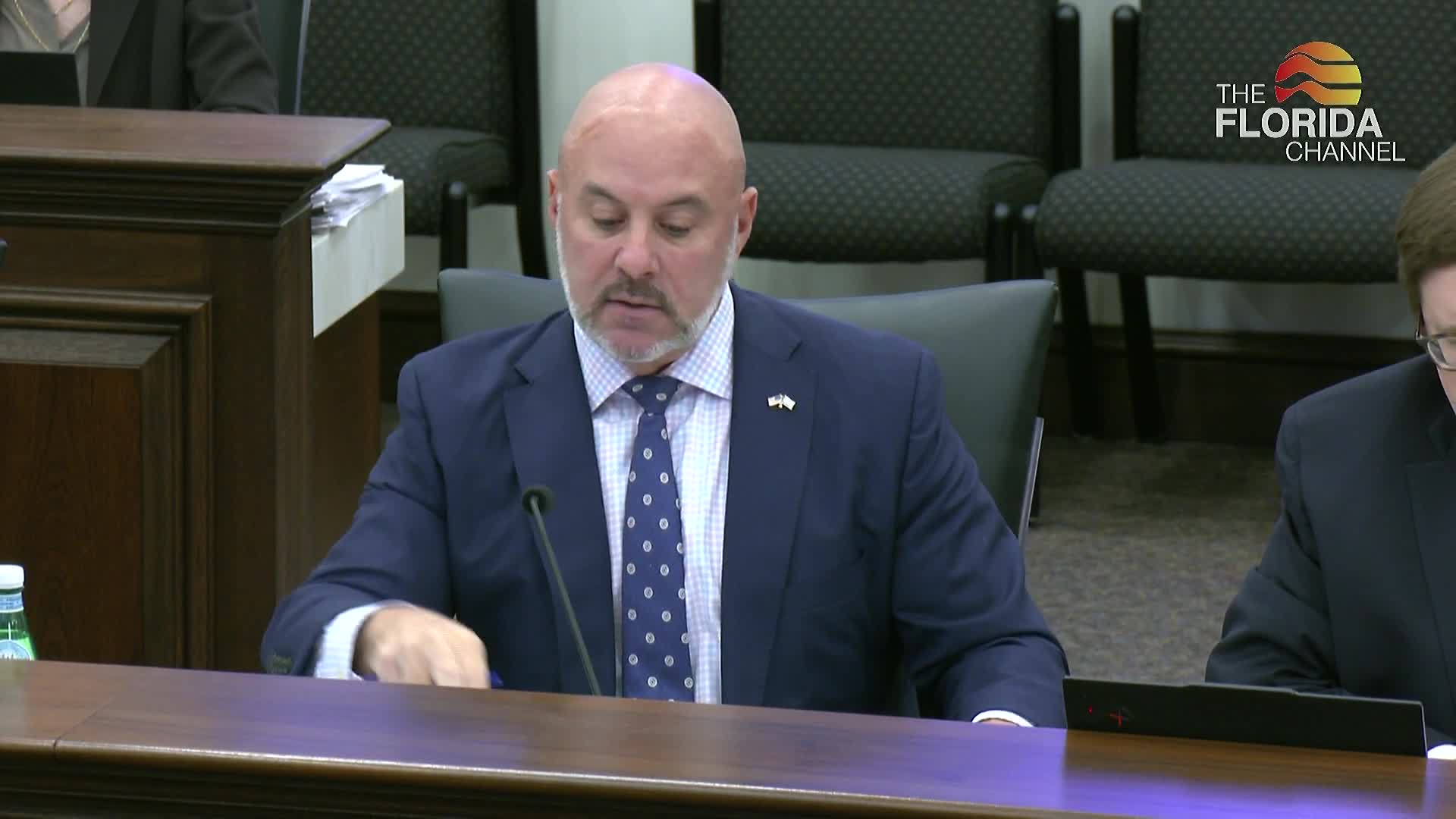
Commissioner Michael Jaworski, head of the Office of Insurance Regulation, told the Senate Committee on Banking and Insurance on the state of Florida’s property-insurance market, saying the market is improving but still faces persistent challenges.
Jaworski said Florida currently has about 7,500,000 insurance policies in force and that the admitted market has begun to show growth following reforms enacted in 2022–23. “While we do have indicators and stories that people are foregoing insurance from the admitted marketplace, what we continue to see is growth within that market,” Jaworski said.
Why it matters: the admitted market’s recovery signals fewer Floridians relying on Citizens Property Insurance as insurer of last resort and reduces the state’s exposure to emergency assessments. Jaworski and committee members discussed reforms enacted in special sessions in 2022 and the 2023 regular session, including insurer-accountability measures and reporting requirements tied to SB 76 (2021) and later tort-reform bills.
Key facts and trends
- Rate requests have fallen sharply since the crisis peak. Jaworski said 30‑day average rate requests were about +21.8% two years ago, 1.82% a year ago, and roughly +0.8% in the most recent period. - Takeout approvals: the Office has approved roughly 1,200,000 policies for takeout; historically only about 28% of approved takeout offers lead to policies leaving Citizens during each block-readjustment process, Jaworski said. - New entrants and capital: Jaworski said nine new companies entered Florida since the legislation passed, and at least one company received an infusion of capital in the hundreds of millions of dollars to support market participation. - Litigation: statewide litigation filings have declined. Jaworski reported an approximate 30% drop in new lawsuits after the tort reforms and said litigation—one of the primary drivers of prior instability—has become less acute. - Reinsurance: Jaworski and committee members discussed that reinsurance can account for roughly 30% (or in some cases 45–50%) of a homeowner’s dollar of premium in the market example shown; the commissioner stressed figures in the presentation were illustrative for a typical HO‑3 (single‑family) product and do not represent condo HO‑6 products. - Inflation and total insured value: the Office highlighted that replacement-cost inflation pushed Florida’s combined total insured value up by roughly 40% since about 2020, increasing pressure on premiums even where loss frequency has stabilized.
Regulatory actions and data tools
Jaworski described upgrades to market-conduct enforcement, including a new deputy‑commissioner for market conduct and an expansion of that unit by about 29 positions. He said fines and enforcement actions have increased (citing about $2.8 million in fines in the most recent year versus about $233,000 earlier) and emphasized the agency’s increased scrutiny of takeout transactions to ensure companies taking policies out of Citizens have the financial capacity to carry the risk.
The Office has deployed a claims- and litigation-monitoring tool called PCLR that aggregates closed-claim lifecycle data for analysis; Jaworski said PCLR and other datasets (MCAS and an in‑house litigation tracker) will improve regulators’ ability to spot outlier behavior by company or geography. Jaworski noted some PCLR outputs are protected as trade secret by insurers and said the Office can brief legislators under statutory confidentiality obligations.
Condos and HO‑6: data limits
Committee members pressed Jaworski on condo (HO‑6) coverage and whether the presentation’s reinsurance and premium examples included condo policies. He said the slides and pie charts were focused primarily on HO‑3 (single‑family) policies and that condo markets have a greater surplus‑lines/surplus‑market presence, which complicates statewide comparisons. Jaworski said he could produce additional HO‑6-specific data on request.
Quotes from the hearing
- “It’s not really enough to make the goal depopulating Citizens,” Jaworski said, arguing regulators must ensure companies taking policies out have the “financial wherewithal” to pay claims when a major storm hits. - On enforcement: “We are not messing around with insurer accountability,” Jaworski said, summarizing increased fines and a stronger market‑conduct unit.
Takeaways and unresolved issues
The regulator characterized the current market as stabilized relative to the crisis years, with fewer rate spikes and reduced new-litigation filings. However, committee members repeatedly sought more granular, company‑level litigation and claim‑closure data. Jaworski said some data are trade secret and cannot be released publicly but offered to provide confidential briefings to legislators who accept statutory confidentiality restrictions.
The committee asked for more HO‑6/condominium-block data, more detail on how rate requests affect consumers who move from Citizens into the private market, and additional clarity on reinsurance pass‑through to premiums. Jaworski said the Office would work to provide more granular analyses for the committee.
Ending
Committee members followed the presentation with detailed questions about PCLR data, trade‑secret protections, and how to identify outlier companies or geographic clusters of litigation. The hearing then continued to a presentation from Citizens Property Insurance.