Get Full Government Meeting Transcripts, Videos, & Alerts Forever!
Get email alerts on the State Budget Hhs Base topic
No spam. Unsubscribe anytime.
Senate Appropriations panel reviews $46.8 billion HHS base budget, emphasizes data and outcome measurement
Summary
Committee staff presented a $46.8 billion base budget for the Health & Human Services silo and outlined a two‑meeting review plan focused on performance measures, funding history and transparency as the starting point for 2025–26 budget decisions.
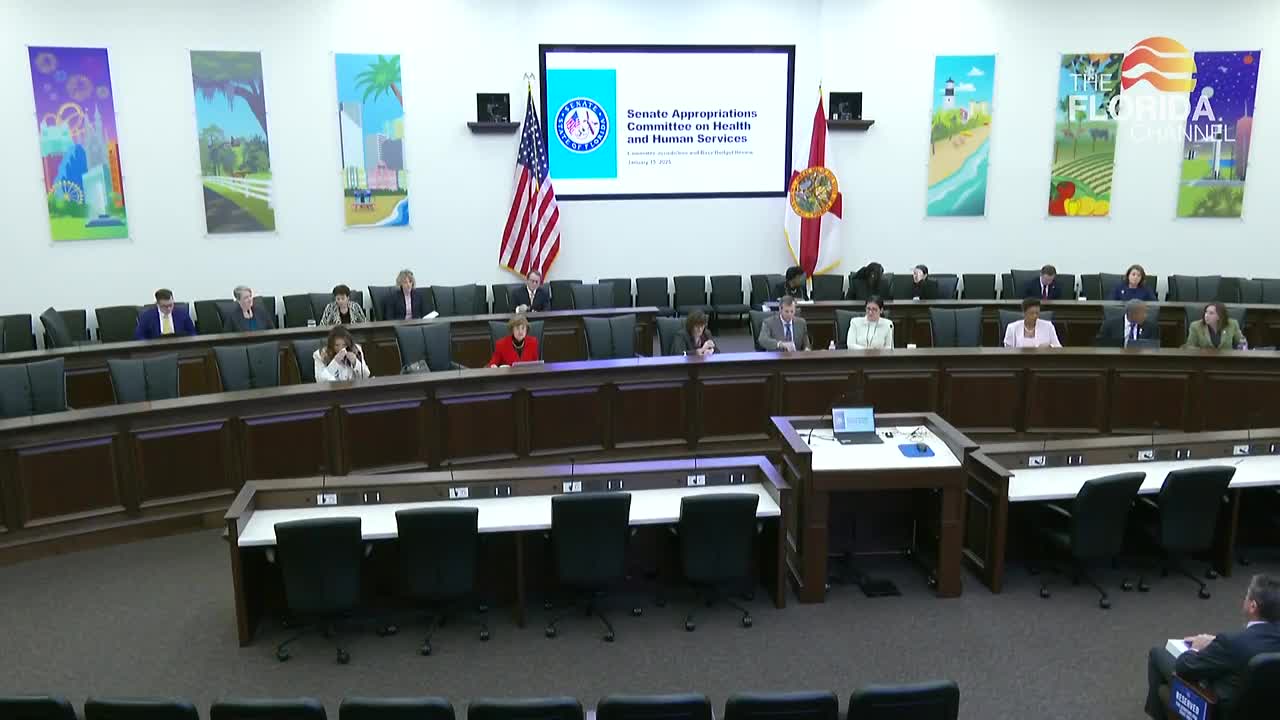
The Appropriations Committee on Health and Human Services opened its session with a staff overview of the committee’s base budget for the 2025–26 fiscal year, which staff presented as $46,800,000,000 and described as roughly half of the state’s total base budget.
Brooke McKnight, the committee staff director, told senators the HHS base budget will serve as the starting point for development of the 2025–26 budget and stressed that the committee will use its first two meetings to “evaluate existing programs in our budget” and ensure agencies provide performance measures, data collection, and funding histories. “If you do not measure it, you cannot manage it,” Chair Trumbull said during opening remarks, summarizing the oversight principle the committee intends to apply.
The presentation said the HHS silo covers the Agency for Health Care Administration, Agency for Persons with Disabilities, Department of Children and Families, Department of Elder Affairs, Department of Health, and Department of Veterans’ Affairs. McKnight said those agencies together provide medical services to “approximately 4,300,000 Medicaid and 217,000 KidCare enrollees,” pay for almost half of births in the state, and provide long‑term care and home‑and‑community services to thousands of Floridians. She noted the largest share of HHS funding comes from federal sources, followed by general revenue and state trust funds.
McKnight outlined Florida’s incremental budgeting approach: agencies begin with the prior year’s recurring appropriations as the base, and the committee will propose increases or decreases from that starting point. The packet distributed to members includes a 10‑year funding history, an agency summary with FTE counts and base appropriations by program and fund source, line‑item descriptions and a trust fund summary with statutory authority and purpose for each trust fund.
Committee members did not pose questions after the overview but were told agency budget teams were available for follow‑up. The chair directed senators to use the next two hearings to examine performance measures, data collection, accountability, transparency and efficient resource management as the committee considers changes to the base budget.
The committee will receive agency program presentations and has asked presenters to include funding histories and any reversions so members can assess whether appropriated money is being used as intended.
Members in later program reviews returned to the themes McKnight raised — measurement, transparency, and aligning appropriations to demonstrable program performance — when questioning agency presenters about reversions, slots and program administration.