Get Full Government Meeting Transcripts, Videos, & Alerts Forever!
Get email alerts on the Childcare Regulation topic
No spam. Unsubscribe anytime.
Subcommittee splits on child‑daycare exemptions for church programs and outdoor camps
Summary
Lawmakers approved a narrow exemption for agricultural and horse‑riding summer programs but tabled a companion measure extending broader licensure exemptions for church‑operated child day care; the bills drew testimony both for regulatory relief and against reduced oversight.
Delegate Weber introduced a bill to add certain outdoor instruction — specifically agriculture, animal care and horse‑riding programs — to the list of activities exempt from child‑daycare licensing requirements. He said the measure was prompted by a constituent who operates a summertime horse‑riding camp that the Department of Education had unexpectedly determined must comply with day‑care regulations.
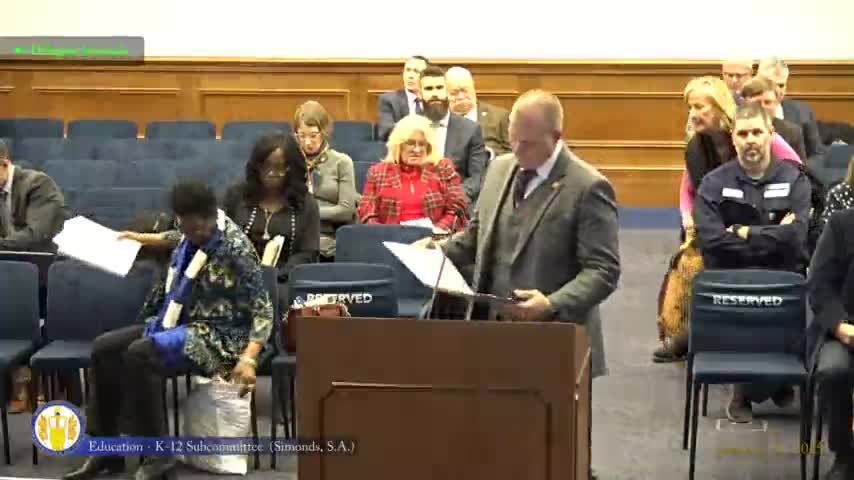
Dan Zacharias, director of the Old Dominion Association of Church Schools, and Reverend Doug Wright, who runs a church‑based school and daycare, testified in favor, providing statistics they said showed fewer founded abuse cases in religiously exempt centers than licensed centers. They asked the committee to relieve programs that are educational and seasonal from licensing designed for continuous child care.
Shane Riddle and other representatives of the Virginia Education Association opposed broad exemptions, arguing daycare licensure protects children and that regulatory oversight should not be removed. The subcommittee voted to report the agriculture/horse‑riding exemption bill; the clerk announced the vote as 7 to 1.
A related measure that would have created a broader exemption for church‑operated child‑daycare facilities drew similar testimony but produced more opposition and was tabled on a 6‑2 vote after substitute motions.
Committee members debated inspection resources and complaint‑driven enforcement; one amendment adopted during discussion changed inspection language to make superintendent responses mandatory after a complaint. Supporters said the changes reduce “red tape” for faith‑based programs that operate educationally, while opponents warned against removing routine oversight.
Outcomes: one narrow exemption advanced (reported 7‑1) and a broader exemption was tabled (6‑2).