Get Full Government Meeting Transcripts, Videos, & Alerts Forever!
Get email alerts on the Land Use Agriculture topic
No spam. Unsubscribe anytime.
City attorney says ag-zone dwellings require principal farm, recreation or resource use under current ordinance
Summary
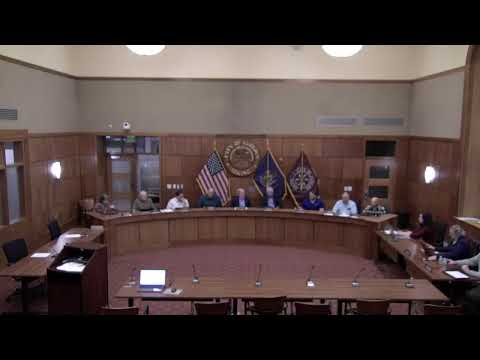
City Attorney Mr. Stockford told a Jan. 21 joint workshop that Auburn’s zoning ordinance requires a parcel’s principal use be agricultural, recreational or natural resources-focused before a new single-family dwelling is allowed in the Agriculture and Resource Protection (AGRP) district.
City Attorney Mr. Stockford told a joint Auburn City Council and Planning Board workshop on Jan. 21 that the plain language of the Agriculture and Resource Protection District chapter and the ordinance definitions indicate the parcel’s principal use must be agricultural, recreational or natural resource-focused before a new dwelling may be approved.
“Based on the language of the Agriculture and Resource Protection District chapter of the ordinance and interpreting that in light of the definition of what an accessory use is, it's our opinion that the principal use of a property needs to be for 1 of those specified purposes,” Stockford said. He noted the definition of accessory use in the ordinance — a “subordinate use of land or building… customarily incidental and subordinate to the principal use” — supports that reading.
The opinion responds to a minority report from the ad hoc agricultural committee, which argued the committee’s report misrepresents section 6145A1 and that a bona fide determination should begin with designating a parcel’s principal use. Stockford said legal review was requested by the city manager to clarify the current ordinance language; any future proposal to add criteria for determining bona fide activities would be a separate ordinance change and referred to the Planning Board.
Council and Planning Board members questioned how staff will apply a “principal use” standard in practice. Mr. Trier, who identified himself as the author of the dissenting opinion on the committee report, said workshop participants “struggled with… how to get to an understanding of whether or not something is principal use or not,” noting large parcels where only a portion would be farmed could complicate determinations. He asked whether the city can define principal use or provide a measurable threshold.
Stockford said not every factual scenario can be exhaustively prescribed in ordinance text and that determinations will likely be developed case by case. “Ultimately… the application and interpretation of principal use will really have to be developed based on the specific factual scenarios that are found,” he said, adding that it is important that the Planning Director or Planning Board make specific findings to support any determination.
Councilors raised concerns about the ordinance’s effect over time. Several members asked whether a dwelling built under the current standard could lose the right to be occupied if the parcel later ceased the qualifying principal use. Stockford and city staff said the ordinance, as written, ties the right to occupy some new dwellings to continued compliance with the principal-use requirement; they also said that existing dwellings built before the ordinance change would be grandfathered.
The workshop also discussed the ad hoc committee’s checklist-style recommendations for criteria and whether financial or proprietary documents requested from applicants could raise legal issues. Stockford said the city attorney had not been asked to review the ad hoc committee’s report itself; legal review would occur if and when the council refers specific proposed ordinance language to the attorney’s office.
On state tax standards, a councilor asked whether meeting the state’s farm and open-space tax test — $2,000 in agricultural gross income (measured under the statute over two of the preceding five years) — would automatically qualify a parcel under the city ordinance. Stockford said that state standard is not incorporated into the city ordinance and would not be determinative; it could be one factor staff or the director might consider.
Next steps: staff will continue to process any applications under the existing ordinance and review the ad hoc committee’s report. The mayor said proposed ordinance language incorporating criteria could come to the council later in late winter or early spring and, if advanced, would be referred to the Planning Board for recommendation.