Get Full Government Meeting Transcripts, Videos, & Alerts Forever!
Get email alerts on the Law Enforcement Training And Benefits topic
No spam. Unsubscribe anytime.
Senate subcommittee advances package of bills on training, Line-of-Duty coverage, retirement and leave
Summary
The Senate Human Resources Subcommittee agreed to a substitute allowing regional criminal justice academies broader hiring flexibility, moved action on a bill to extend Line-of-Duty Act coverage to auxiliary deputies, and reported a slate of retirement, insurance and labor measures to the full Senate.
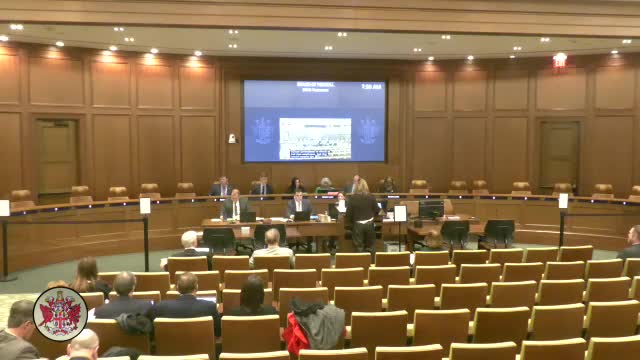
Senate Human Resources Subcommittee members advanced a series of public-safety, retirement and labor bills during a meeting in Richmond, agreeing to a substitute to support Virginia’s 11 regional criminal justice academies and moving several measures — including a bill to expand Line of Duty Act coverage for auxiliary deputies — for further consideration.
The measures covered law-enforcement training, definitions in the Virginia Line of Duty Act, retirement enhancements for select law enforcement categories, the Commonwealth Savers (Virginia529) access fund, and labor proposals including paid family medical leave and overtime protections for domestic workers.
Supporters of the regional-academy change said the substitute would let regional training academies hire recently retired, highly qualified instructors more flexibly, helping smaller agencies that cannot staff and pay their own academies. "We were legislated by this body in 1966 to provide consistent training across the state to ensure we have the highest caliber officers that our Commonwealth deserves," said Michael Harvey, executive director of the Rappahannock Regional Criminal Justice Academy in Fredericksburg. Harvey said the regional system consists of 11 academies and that hiring retired officers as instructors is a recurring operational need.
On Senate Bill 1286, which would alter definitions in the Virginia Line of Duty Act to include auxiliary sheriff deputies and auxiliary police officers, Senator Durand (bill sponsor) told the panel that an Attorney General opinion and a VRS response showed those volunteers are not currently covered. A sheriff from Fredericksburg raised the issue with the senator, and witnesses urged the subcommittee to recognize volunteer law-enforcement personnel who serve without pay and face similar risks as full-time officers. After discussion and questions about past local incidents, the committee moved to "pass by for the day" on SB 1286 and requested a JLARC review before further action.
Other notable measures advanced or reported out of the subcommittee:
- SB 1065 (Commonwealth Savers Plan/Virginia529): Sponsors proposed creating an access fund and an advisory committee to direct surplus trust funds toward education access initiatives. The subcommittee moved to pass the bill by for the day while members continue to work on budget language and related proposals.
- SB 1142 (college and campus police Line of Duty coverage): The committee approved two line amendments clarifying that an MOU must exist between the department entering the benefit and the police entity; the bill was recorded as amended.
- SB 1396 (animal-control officers/VRS hazardous-duty eligibility): The sponsor said localities would bear any ongoing costs and moved the bill by for the day because of questions about long-term implications.
- SB 780 (health-insurance coverage for FDA-defined contraceptives): The panel heard testimony for and against the measure (including faith-based objections). Senator Deese moved the bill be reported and the committee voted in favor.
- SB 1122 (paid family medical leave insurance): The committee agreed to a substitute that removed an income-tax subtraction provision and then advanced the substitute; senators and witnesses debated contribution levels, exemption procedures for private plans and whether state employees would participate.
- Domestic-workers overtime bill (bill number discussed in committee): The subcommittee approved a committee amendment delaying the effective date to July 1, 2026 and reported the bill as amended.
- Retirement and hazardous-duty bills (conservation police, park rangers, campus police, firefighters cancer presumptions and judicial retirement): Multiple bills that would change retirement multipliers, hazardous-duty eligibility, or effective dates were discussed and in most cases either reported to the Senate or passed by for later consideration. Sponsors and public witnesses repeatedly cited recruitment and retention concerns for specialized law-enforcement roles.
Votes at a glance (committee-level outcomes reported in the transcript): - Substitute to allow regional academies greater hiring flexibility: substitute agreed to (voice vote). - SB 1286 (extend Line of Duty Act to auxiliary deputies/auxiliary police): passed by for the day; JLARC requested. - SB 1065 (Commonwealth Savers Plan — access fund): passed by for the day. - SB 1142 (college campus police Line of Duty amendments): amendments agreed; bill recorded as amended. - SB 1396 (animal-control officers hazardous-duty eligibility): passed by for the day. - SB 780 (contraceptive coverage): reported to the Senate (aye vote). - SB 1122 (paid family medical leave): committee substitute agreed and bill reported as amended. - Domestic-workers overtime bill: committee amendment (delay effective date to July 1, 2026) agreed; reported as amended. - SB 1195 (Line of Duty Act cancer presumptions): reported to the Senate. - SB 1201 (park rangers retirement enhancement): reported to the Senate. - SB 950 (judicial retirement): motion to delay effective date to July 1, 2026 agreed; bill reported as amended. - Conservation police bills (identified by sponsors as similar measures): passed by for the day; JLARC letter requested.
Committee discussion emphasized two recurring themes: operational impacts on small and midsize public-safety agencies (including the ability to recruit trainers and officers) and fiscal or drafting questions that committee members asked staff or JLARC to review before final votes. For example, senators pressed staff about whether private employers could satisfy state contributions to the paid-family-leave program via preapproved private plans and whether state employees were included in some proposals.
The subcommittee heard testimony from agency and stakeholder representatives, including Mary Morris of Commonwealth Savers Plan (Virginia529), who described SB 1065 as using "existing statutory authority and infrastructure to maximize educational access for students of all ages across Virginia," and Elyssa Patton of the Office of the Executive Secretary, who urged lawmakers to consider retirement adjustments for current judges if a judicial-retirement change moves forward.
Where the committee moved bills "by for the day," senators said they expected further review or coordination with the budget process before advancing final language. Several measures with fiscal or structural implications were sent forward with requests for JLARC review or additional drafting adjustments.
The subcommittee completed its docket and adjourned with several bills reported to the full Senate and others postponed for later consideration or further staff review.