Get Full Government Meeting Transcripts, Videos, & Alerts Forever!
Get email alerts on the Workers Comp Repetitive Motion topic
No spam. Unsubscribe anytime.
Committee advances competing bills on repetitive-motion workers’ compensation standard; debate focuses on 50% threshold
Summary
Senators debated three competing approaches to repetitive-motion injuries in workers’ compensation — a 50% causation standard, a more permissive standard modeled on existing Virginia law, and an alternative compromise billed as a pilot; the committee moved to report Senator Williams Graves’ approach to finance after intense testimony.
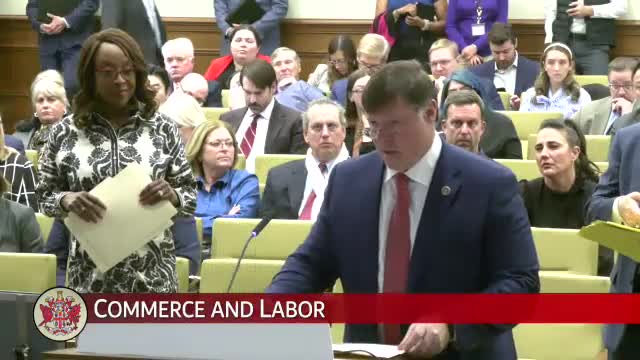
The committee held an extended debate on a set of bills that would change how repetitive-use and repetitive-motion injuries are handled under Virginia’s workers’ compensation system. Three concepts were before the panel: a Williams-Graves bill to expand coverage without a 50% primary-cause requirement; a McDougall/Head compromise that would include a delayed enactment and other guardrails; and an approach incorporating a 50% causation standard used in Tennessee.
Senator Williams Graves described her bill as a way to extend workers’ compensation coverage for repetitive-motion injuries without requiring claimants to prove that 50% of the injury was caused by work. Senator McDougall and others urged a middle ground; McDougall’s version carried a delayed enactment and aimed to balance worker protections with predictability for employers and insurers.
Witnesses were sharply divided. Unions, workers’ advocates and the AFL-CIO argued the 50% rule would be a bar to care and that many repetitive injuries are cumulative and would go uncompensated under a high threshold. Brodie Reid (AFL-CIO) and Brad Goodwin (Virginia Trial Lawyers Association) spoke for the labor side, citing JLARC work and legislative studies recommending coverage for repetitive trauma.
Insurers and employer groups — including the Virginia Self-Insurers Association, the Virginia Chamber of Commerce, the Virginia Manufacturers Association and trade groups representing employers — warned that the 50% causation test serves to limit speculative claims and that adopting a broad standard would increase litigation and costs. Industry witnesses pointed to Tennessee as a model but said the fiscal and legal consequences needed careful assessment.
After the evidence and public testimony, the committee approved a motion to report the Williams-Graves bill (Senate Bill 112 / 112-series consolidation) to Senate Finance. The motion to report was seconded and recorded; the roll was taken and recorded on the committee machine. The committee chair noted the issue was complex and that the bills had been the subject of summer workgroups involving labor and insurers.