Get Full Government Meeting Transcripts, Videos, & Alerts Forever!
Get email alerts on the Education Complaint Process topic
No spam. Unsubscribe anytime.
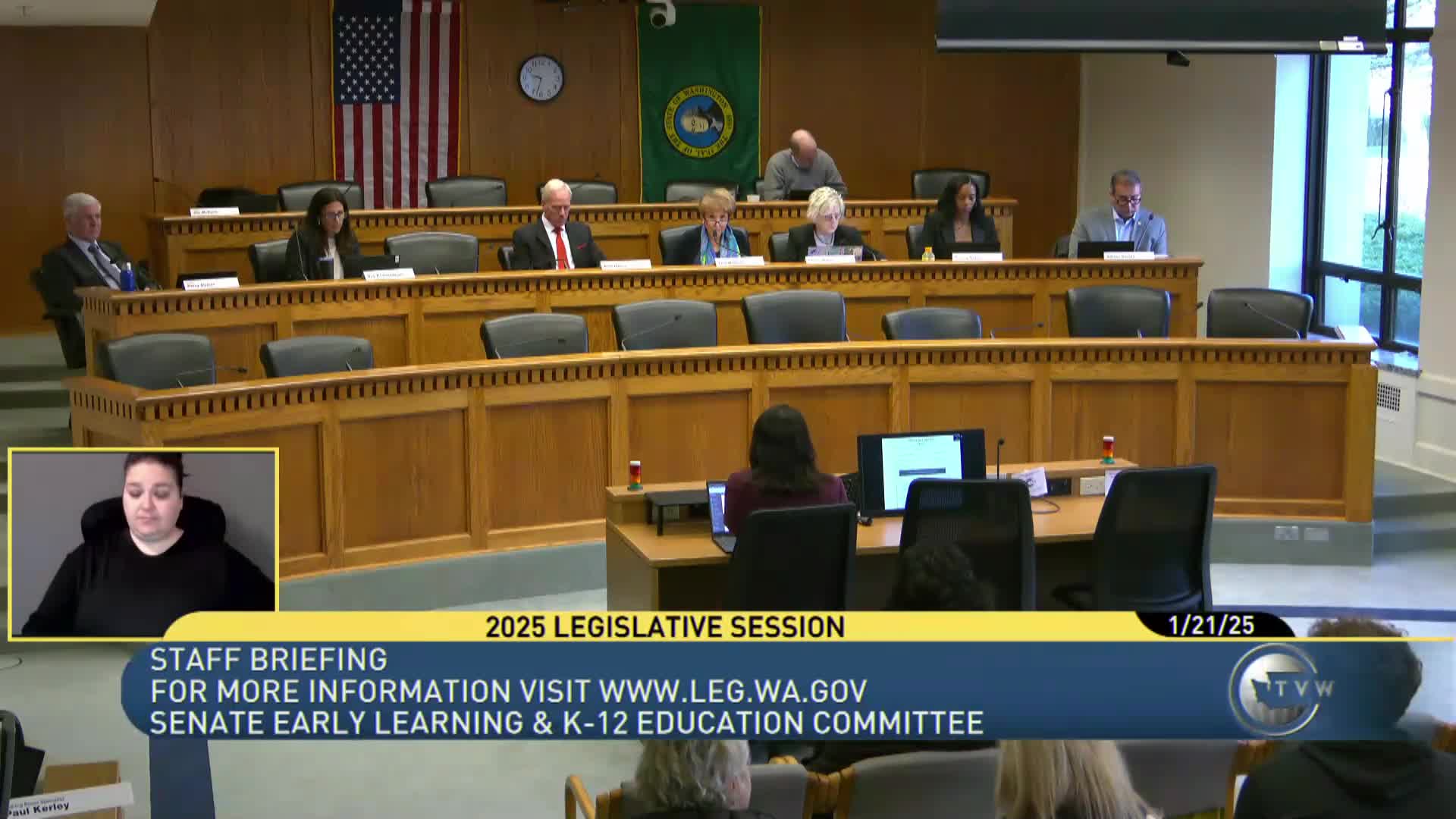
Panel hears bill to create OSPI complaint process and penalties for willful noncompliance by districts
Summary
Senate Bill 5179 would create a two‑tier complaint process at OSPI to investigate alleged noncompliance with state education laws and authorize public hearings, compliance plans and, for willful noncompliance, potential actions up to redirecting 20% of basic education funds.
Senate Bill 5179 would establish a formal complaint and enforcement process at the Office of Superintendent of Public Instruction (OSPI) for alleged noncompliance with specified state education laws. Committee staff described two complaint types: limited complaints affecting one or more individual students and broad complaints affecting an entire student body, subgroup, school or district. The complaint subjects listed in the bill include civil‑rights laws, harassment/intimidation/bullying statutes, curriculum requirements such as comprehensive sexual‑health education and tribal history, instructional materials selection and review, restraint/isolation use, and student discipline.
If OSPI finds noncompliance, the district must adopt and submit a compliance action plan developed after a public hearing and by consulting specified stakeholder groups. For willful noncompliance, the process requires at least two additional public hearings and gives OSPI authority to take actions including ordering policy changes, finding that a superintendent committed unprofessional conduct (referral to the Professional Educator Standards Board), and—only as a last resort—redirecting up to 20% of state basic education funding to support the compliance plan. The bill also would add to a school board member’s oath language that they will support the laws of Washington state.
Supporters: District parents, disability advocates and school counselors said current complaint and mediation options are insufficient for patterns of willful noncompliance. OSPI’s Jenny Plaja testified the agency supports a transparent process focused on remedy and hopes the process will not be necessary in routine cases. Students and advocates described historic harms and urged a mechanism to enforce rights.
Opponents: School directors, some parents, and a number of commenters warned the bill creates a “snitch line,” could produce costly litigation and would give OSPI broad investigatory powers and financial leverage that might harm students if funds are redirected. Jill Olson of the Washington State School Directors Association said the bill’s penalties risk harming students and placing OSPI in adversarial roles with local boards. High‑school student Hayden Steele opposed redirecting funds, saying the measure “claims to support local control but falls short in practice.”
Process notes: The committee heard many pro and con testimonies and several organizations offered to work on implementation details. No committee vote was recorded in the transcript; supporters and opponents asked for amendments to clarify process, safeguards and remedies.