Get Full Government Meeting Transcripts, Videos, & Alerts Forever!
Get email alerts on the Gender Inclusive Schools topic
No spam. Unsubscribe anytime.
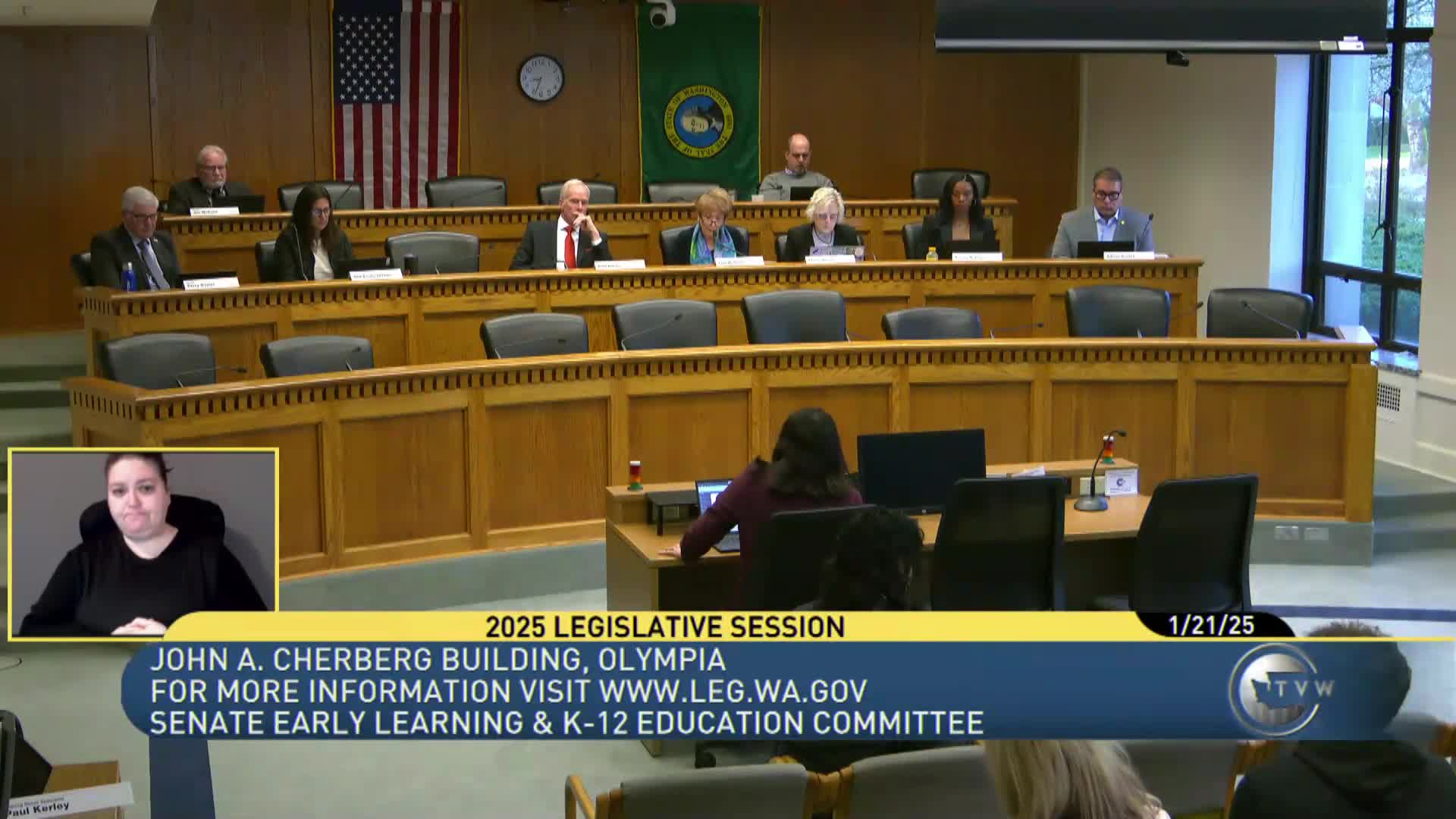
Committee considers bill to require gender‑inclusive school policies statewide
Summary
Senate Bill 5180 would codify gender‑inclusive school policies: use of preferred names/pronouns, restroom and athletics access consistent with gender identity or expression, non‑disclosure protections and prohibitions on retaliation against staff who support students.
The Early Learning & K‑12 Education Committee took testimony on Senate Bill 5180, a proposal to require Washington school districts to adopt gender‑inclusive policies and procedures that include specific protections for gender‑expansive students and for staff who implement those policies.
Committee staff described the bill as replacing references to a “Transgender Student Policy” with a broader “policy and procedure relating to gender inclusive schools.” The presentation listed required components: students’ rights to be referred to by preferred names and pronouns; the right to use restrooms and dress consistent with gender expression or identity; the right to participate in school athletics and activities consistent with gender identity; protections preventing disclosure of a student’s sexual orientation, gender expression or identity without the student’s consent; and procedures to avoid inadvertent disclosures. The bill also prohibits districts, educational service districts, charter schools and tribal compact schools from retaliating against employees who support students exercising covered rights or who teach material consistent with state law. A fiscal note was requested and not yet available.
Supporters: Students, parents, district leaders and LGBTQ advocates spoke repeatedly about the evidence that inclusive school policies improve student safety and mental‑health outcomes. Claire Wilson, bill sponsor, said gender‑affirming school policies are a way “to support vulnerable students” and cited surveys showing gender‑expansive youth face elevated mental‑health risks. Local school board leaders, student speakers and groups including the Lavender Rights Project, Lavender Rights Project and the Washington State LGBTQ Commission urged passage and offered amendment help.
Opponents: Several students and parents testified the bill would harm girls’ privacy and competitive fairness in sports; two teenage athletes said they feared competing against biological males. Some witnesses framed the policy as compelled speech for school staff and raised legal concerns about federal guidance; others cited specific incident narratives to argue against the changes.
Process notes: Testimony included both district leaders who reported positive experiences implementing model policies and community members who said the measure would force schools to take actions they oppose. The committee recorded extensive oral testimony with no vote taken in the transcript and no fiscal note available at the hearing.