Get Full Government Meeting Transcripts, Videos, & Alerts Forever!
Get email alerts on the Parental Rights topic
No spam. Unsubscribe anytime.
Committee hears bill to align 2024 parental‑rights initiative with state and federal law
Summary
Senate Bill 5181 would amend Initiative 2081 to rework record definitions, adjust notification timelines, remove some medical‑notification provisions and clarify that the initiative does not create a private right of action; proponents call it a cleanup, opponents say it weakens parental oversight.
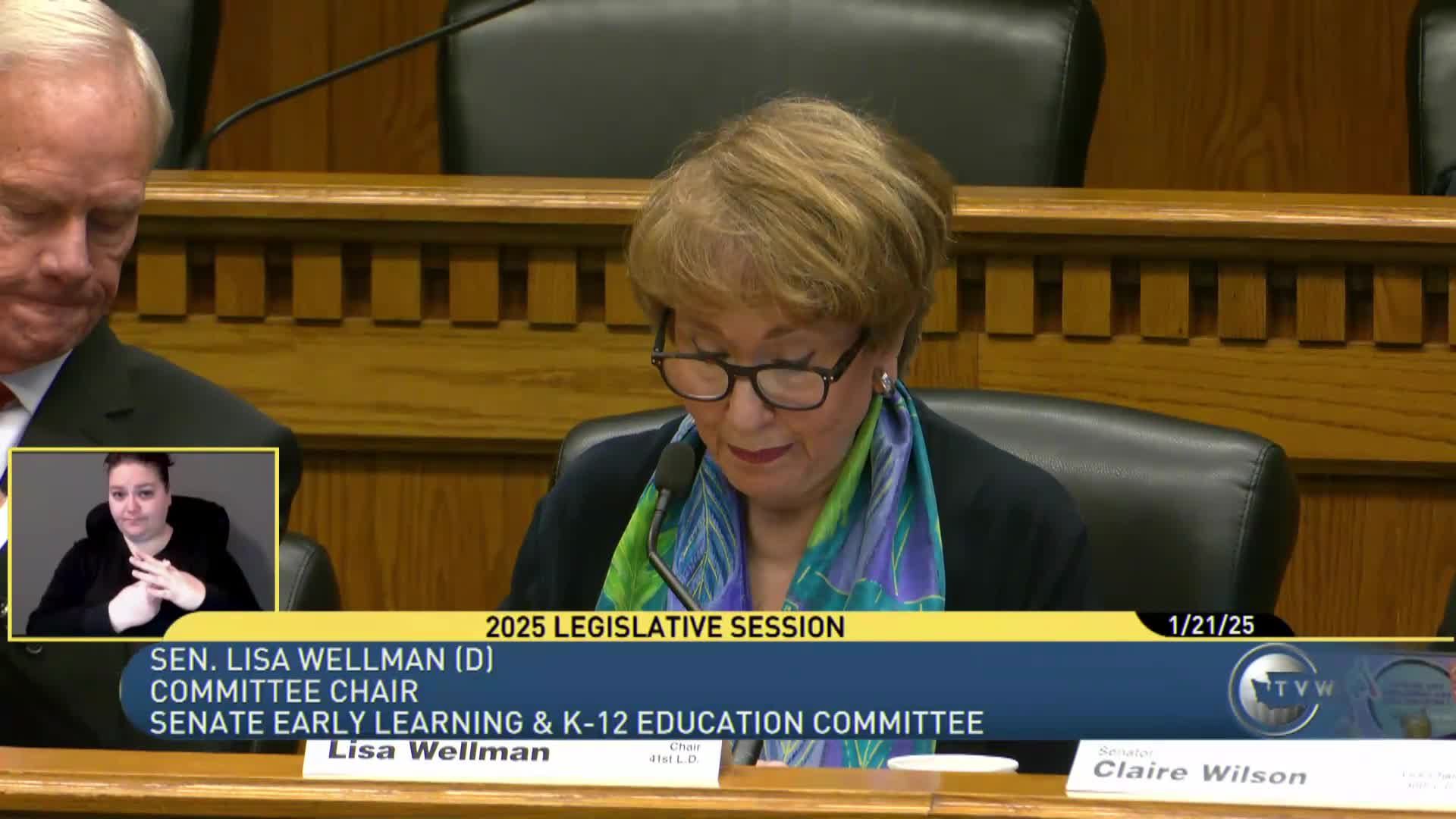
The Early Learning & K‑12 Education Committee heard testimony on Senate Bill 5181, a proposal from Sen. Claire Wilson to amend the 2024 Parental Rights Initiative (Initiative 2081) to align it with existing state law and federal rules such as the Family Educational Rights and Privacy Act (FERPA).
The bill’s sponsor, Senator Claire Wilson, told the panel SB 5181 is “a cleanup bill, this is not an overhaul,” and said the measure aims to reduce confusion districts encountered implementing the initiative. Committee staff summarized changes that include renaming “public school record” to “education record” with a definition that mirrors FERPA, changing strict 10‑day timelines for records access to a “reasonable period,” and revising notification requirements so that some notices that previously required immediate parent notification would now be provided “within a reasonable amount of time, but not more than 72 hours.” The bill removes three initiative provisions that required notification when medical services are offered or provided and adds cross‑references to existing state law. It also states the initiative’s rights do not create a private right of action. A fiscal note was requested and not yet available.
Why it matters: The proposals affect who may see student records, how quickly parents must be notified about law‑enforcement contact or removals, and the handling of sensitive health information in schools. Backers say the changes prevent conflicting requirements between the initiative and federal/state law and will help districts implement consistent policies; critics say removing or delaying notifications undermines parental authority and risks student safety.
What committee staff presented: Eileen Caddo, committee staff, summarized the bill and the specific edits to Initiative 2081’s text, including the education‑record definition aligned to FERPA and removal of the three medical‑notification provisions. Caddo said the bill “provides that these rights do not create a private right of action.”
Supporters: Jenny Plaja, chief policy and legislative affairs officer for the Office of Superintendent of Public Instruction (OSPI), testified in support, saying Initiative 2081 caused “confusion and inconsistent implementation across the state” and that SB 5181 addresses those issues. Planned Parenthood Alliance Advocates and the Washington Education Association spoke in favor, citing student privacy and the need for clarity. Several advocacy organizations and legal services groups, including the Gender Justice League and a statewide violence‑survivors legal clinic, urged passage to protect students who could be placed at risk by forced disclosures; Elizabeth Hendren, an attorney for a violence law center, said the bill “protects the sensitive records of students who are victims of a crime in which their parent is the defendant.”
Opposition and concerns: The Washington State Catholic Conference supported aligning the initiative with law but opposed removal of medical‑notification provisions, saying parents should make non‑emergency medical decisions for their children. School board members and some parents testified against the bill, arguing the changes could delay time‑sensitive notifications and erode trust; Tanya Hickman, speaking on behalf of the Linden School Board, urged the committee to reject SB 5181, calling the proposed 72‑hour window for some notifications “too long.” The Washington State PTA asked for a shorter maximum notification period for law‑enforcement questioning or involvement; Natalia Yudkalski requested amendments proposing 24–48 hour maximums in certain circumstances.
Process notes and next steps: Committee testimony concluded with sponsors and stakeholders noting opportunity for further amendments. No committee vote or formal action on SB 5181 was recorded in the transcript; the bill’s fiscal note remained pending at the time of the hearing.