Senate Veterans Affairs Committee presses nominee Doug Collins on EHR rollout, Mission Act implementation, staffing and reproductive-care rule
Get AI-powered insights, summaries, and transcripts
SubscribeSummary
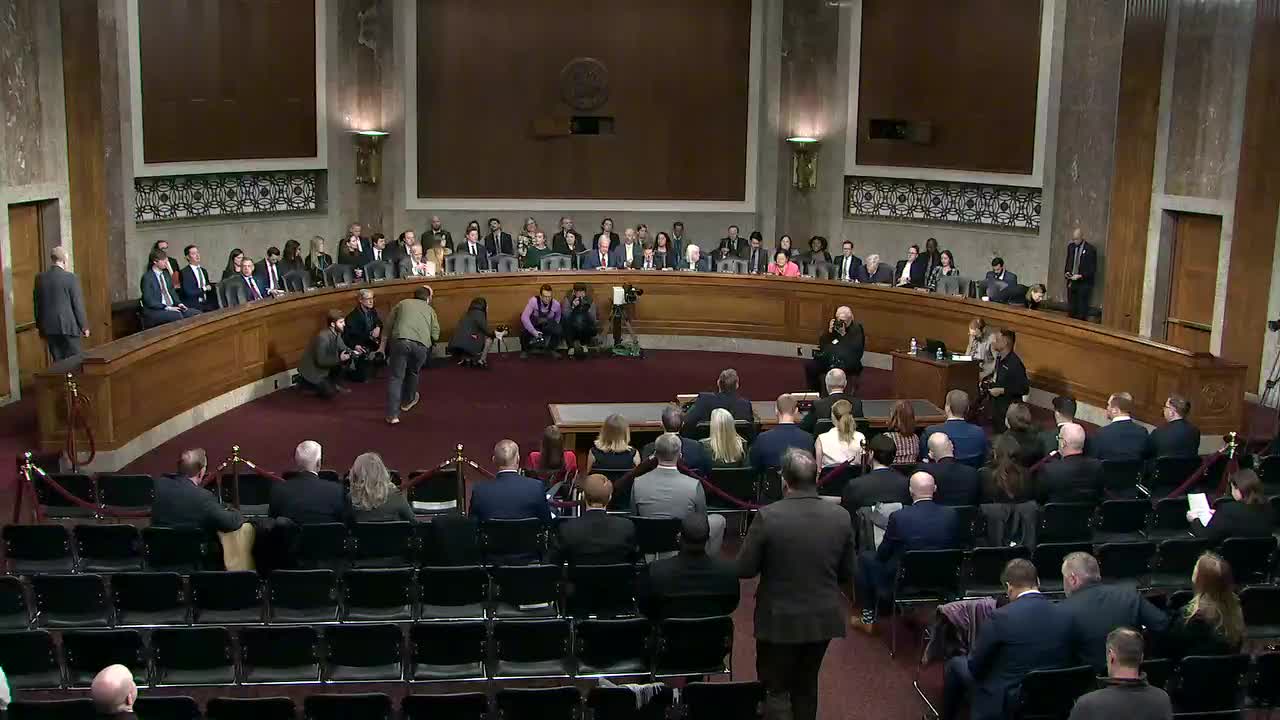
At the Senate Committee on Veterans Affairs' first hearing for the 119th Congress, Rep. Doug Collins, nominated to be Secretary of Veterans Affairs, answered extended questioning from senators about the VA's electronic health record rollout, implementation of the VA MISSION Act, staffing and a new hiring‑freeze memorandum, the department's construction backlog, suicide prevention and whether VA reproductive‑care guidance complies with current law.
At the Senate Committee on Veterans Affairs' first hearing for the 119th Congress, Rep. Doug Collins, nominated to be Secretary of Veterans Affairs, answered extended questioning from senators about the VA's electronic health record rollout, implementation of the VA MISSION Act, staffing and a new hiring-freeze memorandum, the department's construction backlog, suicide prevention and whether VA reproductive-care guidance complies with current law.
The hearing matters because the Department of Veterans Affairs is one of the federal government's largest agencies and oversees health care and benefits for millions of veterans. Committee members repeatedly framed the nominee's responses around two priorities: ensuring timely access to care for eligible veterans and making the VA a reliable partner for congressional oversight and veterans service organizations.
Collins said he would treat the VA as his primary mission if confirmed. "If I'm confirmed by this body, the VA will be my mission," Rep. Doug Collins said in his opening testimony. He told senators he would accept the intent of the MISSION Act and "follow the Mission Act," promising to enforce both the letter and spirit of the law and to push VA employees to help veterans access care where the veterans want it or need it. "We're gonna be following the Mission Act. We're gonna have the intent. We're gonna follow that up," he told Chairman Jerry Moran during questioning.
Electronic health records surfaced repeatedly. Senators from both parties described the VA's multi‑year, multi‑billion-dollar effort to replace its medical records system as costly, slow and at times unsafe for patients. Collins said fixing the electronic health record (EHR) will be an early priority if confirmed: he pledged to convene VA staff, the record vendor (Oracle Cerner), and frontline clinicians to diagnose problems and to adopt a measured, clinically driven approach rather than a rushed deployment. "We have to get our health records straight so that we can have an easy handoff," Collins said, adding that he would seek a rapid project review and bring members of his staff to work immediately on the issue.
Senators pressed Collins on workforce and a White House hiring‑freeze memorandum issued during transition. Ranking Member Senator Richard Blumenthal raised concern that the freeze could worsen shortages in hospitals, clinics and veteran cemeteries and asked whether Collins would seek exemptions for positions that deliver direct care. Collins declined to promise a blanket exemption but said he would review the memorandum and work with the committee to ensure veterans' needs are met. He also repeated his pledge to hold employees accountable under existing law, citing the VA Accountability and Whistleblower Protection Act as a tool the committee had previously supported.
Other topics covered: - Suicide prevention and transition care: Collins called the transition from active duty to veteran status a high‑risk time and said coordinated effort between DOD, VA and state veterans' offices is a priority. "That transition time... is a time of heightened risk of suicide," Collins said, and he pledged extra focus on connecting veterans to care. - Community care vs. VA direct care: Collins said community care has an important role under the MISSION Act but added that he intends to preserve a "strong VA health care system" while ensuring eligible veterans can access community providers when appropriate. Senators from large, rural states (including Alaska and Montana) described cases where call centers or eligibility procedures created access barriers and asked Collins to fix them. - Facilities and construction: Multiple senators pressed Collins to prioritize aging facilities and construction backlogs, including examples cited from Indiana, Connecticut and New Hampshire. Collins said he would prioritize funding requests and seek better stewardship of construction projects. - PACT Act and toxic exposure fund: Senators asked how Collins would manage the PACT Act's workload and the toxic exposure fund. He said he would provide the committee with accurate, actuarial information and work to ensure sustainability while implementing congressional intent. - Reproductive‑care rule: Senators asked whether Collins would rescind or revise the interim rule that implemented reproductive‑health guidance for VA care. Collins said he would "look at this rule and see if it complies with the law," referencing a 1992 provision that restricts VA abortion services and saying he would ensure VA follows applicable law. He also committed to keep the committee informed if his review begins.
Throughout the hearing Collins repeatedly pledged to improve responsiveness to Congress, saying he would make legislative affairs "proactive, not reactive" with staff on the Hill and pledged to respond to members' requests for information more quickly than some senators said they had recently experienced.
No formal committee votes occurred during the hearing; senators concluded with a fixed period for questions and invited Collins to submit additional answers for the record.
Senators thanked Collins for his willingness to appear and told him they expect prompt responses to committee information requests and close oversight if he is confirmed. The hearing closed after senators agreed to additional written questions and a scheduled executive session to consider the nomination.
Ending: The hearing gave senators detailed opportunities to test Collins on VA priorities they called urgent: completing the EHR transition, enforcing the MISSION Act for rural and vulnerable veterans, improving suicide‑prevention outreach, addressing construction and facility needs, and protecting VA benefits and services regardless of future budget pressures. Collins pledged to make the agency a priority and to work with the committee on implementation details if confirmed.