Get Full Government Meeting Transcripts, Videos, & Alerts Forever!
Get email alerts on the Public Meetings topic
No spam. Unsubscribe anytime.
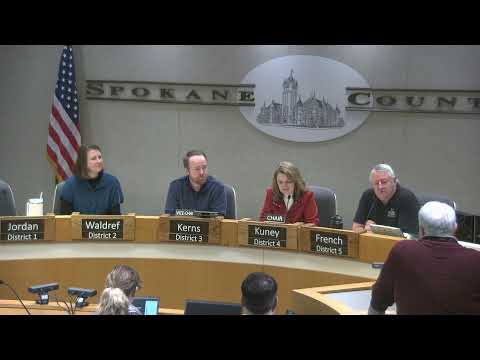
Spokane County commissioners adopt clearer rules for public testimony, keep chair discretion on time limits
Summary
The Spokane County Board of County Commissioners voted unanimously to amend the county’s open public forum policy and rules of conduct, making address disclosure voluntary, standardizing a three‑minute speaking limit with chair discretion to extend time, and prohibiting speaker time transfers.
The Spokane County Board of County Commissioners on a unanimous vote adopted amendments to the county’s open public forum policy and accompanying rules of conduct that make a testifier’s street address voluntary, standardize a default three‑minute speaking limit and give the chair authority to extend time, and bar a speaker from allocating their time to another person.
County legal counsel presented the proposed changes as the product of three workshops and a review of other jurisdictions’ forum rules. The counsel said state case law supports not requiring speakers to give their address and that the proposed changes align the county’s practices with other local governments. "Counties in the state of Washington are not required to hold open public forums," county counsel said, and the county has chosen to continue doing so while updating the rules.
The revisions aim to resolve inconsistencies between two county documents — the open public forum policy and the rules of conduct — and to clarify time limits and decorum. A line in both documents now specifies that "each person addressing the board shall be limited to a maximum of three minutes or less, unless the chair determines additional time is appropriate," language added as an amendment during the meeting to make the two documents consistent.
Commissioners debated whether the change to the section about complaints and charges could be read to bar criticism of elected officials. Several commissioners said their understanding from prior workshops was that the county should prevent targeted complaints against individual county employees but allow members of the public to criticize elected officials during public testimony. Counsel acknowledged some ambiguity in the drafted language and noted the text had been advertised as written; commissioners said they would adjust language if needed in a future revision.
Resident Lynelle Cott, who testified during the agenda item, said she supported the chair’s discretion over timing but warned that prohibiting the allocation of time could remove an informal "pressure‑relief" option for crowded hearings. "My concern is creating a pressure‑cooker atmosphere where... people only have 30 seconds and they would like to give their time to someone else," Cott said.
Commissioners said the limit is intended to ensure that everyone who signs up has an opportunity to speak when the chamber is full. The board adopted an amendment to add the phrase "or less" to the rules of conduct time limit to match the open forum language, and then voted to approve the amended policy as presented by staff. Both the amendment vote and the final approval passed unanimously.
The adopted changes state that giving a street address is voluntary, that speakers have a default three‑minute limit subject to chair discretion, and that speakers cannot transfer their allotted time to another person. The county’s rules also retain a prohibition on filing formal charges or complaints against elected officials in the public forum, language the board discussed and examined for intent during the hearing.
The board scheduled no additional action on these items at the meeting; staff said the revised documents will be published as the county’s official open public forum policy and rules of conduct.
The move follows workshops and a public engagement process the board held earlier this year to reconcile two separate sets of rules and to clarify procedures for members of the public who want to address commissioners.
(End)