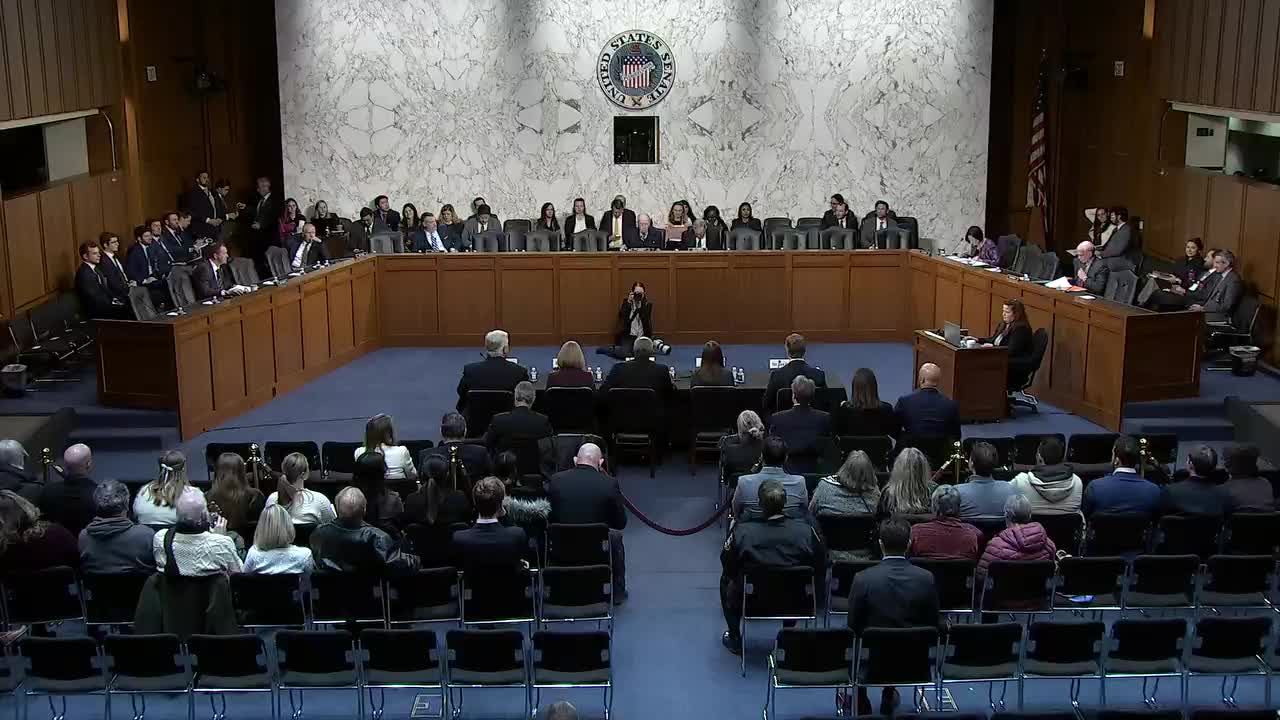
Senate Judiciary Hearing on Pamela Bondi Spotlighted Lobbying Ties, DOJ Independence and Opioid Work
Get AI-powered insights, summaries, and transcripts
SubscribeSummary
At a Senate Judiciary Committee hearing, supporters praised Pamela J. Bondi’s prosecutorial record and role fighting Florida pill mills, while critics and witnesses raised conflicts tied to her recent lobbying for corporate and foreign clients and pressed concerns about Department of Justice independence, January 6 and potential pardons.
Senate Judiciary Committee members and invited witnesses spent the hearing on Pamela J. Bondi’s nomination for U.S. attorney general debating whether her record as a prosecutor and state attorney general outweighs potential conflicts from recent private-sector work and whether she would protect the Department of Justice’s independence if confirmed.
The hearing brought sharp contrasts: former Florida prosecutors and law enforcement leaders testified that Bondi is a tough, experienced prosecutor who partnered effectively with state and local law enforcement on the opioid crisis and human trafficking. Consumer and government-watchdog witnesses warned that Bondi’s recent lobbying and private practice for corporate and foreign clients creates an appearance — and, they argued, a risk — of systemic conflicts that recusals alone would not fix.
Why this matters: the attorney general leads the Justice Department and must be able to resist pressure from the White House on individual investigations and prosecutions. Witnesses discussed the department’s White House contacts policy, record preservation obligations, and the risk of politicized prosecutions — topics senators said are especially salient in the wake of the January 6, 2021 attack and a recent Supreme Court decision on presidential immunity.
The most immediate disagreements centered on three areas:
Conflicts and lobbying. Lisa Gilbert, co-president of Public Citizen, told the committee that Bondi and her lobbying firm represented roughly 30 clients over five years and highlighted work for GEO Group and Amazon as examples that create “troubling potential conflicts of interest.” Gilbert said her organization’s review of lobbying disclosures and Foreign Agents Registration Act filings shows Bondi’s client list included corporations and foreign governments whose interests could touch Justice Department enforcement decisions. “On behalf of our members, we stand in opposition to the nomination of Pam Bondi,” Gilbert said.
Independence and political pressure. Mary McCord, executive director of the Institute for Constitutional Advocacy and Protection and a former senior Justice Department official, urged strict adherence to the department’s independence norms. “The attorney general is not the president’s personal attorney. She is the attorney for the United States,” McCord told senators, adding that recusal and strict White House-contacts policies are central to preserving impartial enforcement. Several senators pressed witnesses about whether Bondi’s prior public statements and private legal work defending political figures could require recusals from any matters touching those clients.
January 6 and pardons. Ranking Member Dick Durbin and others pressed witnesses about January 6, whether any blanket pardons of participants would undermine the justice system, and whether Bondi would oppose pardons for those convicted of violence. Durbin said he was disappointed by Bondi’s refusal in earlier testimony to state plainly that Joe Biden won the 2020 election and by her reluctance to criticize the idea of pardoning people convicted for January 6 crimes.
Prosecutorial record and opioid response. Supporters including Dave Ehrenberg, Nicholas Cox and Emery Gainey described Bondi’s career as a prosecutor and her eight years as Florida attorney general. Ehrenberg and others credited her leadership in persuading the Florida Legislature to adopt a prescription drug monitoring program that they said helped shut down “pill mills” and reduce opioid overdoses. Sheriff Emery Gainey described coalition-building with local, state and federal law enforcement and credited Bondi with rapidly addressing emergent threats such as synthetic “bath salts.”
Questions left open. Witnesses differed about whether recusals and internal controls would be adequate to address the scope of Bondi’s private-sector clients. Public Citizen said the network of corporate ties is too broad to be managed solely through recusals; McCord said that prior work defending the president or public statements about prosecutions could require recusal for matters touching those subjects.
No committee vote took place at the hearing. The hearing record was left open to 5 p.m. the same day for additional written materials, and the committee adjourned after question rounds and witness statements.
The committee hearing included extended Q&A with senators from both parties about how Bondi would handle requests from the president to target political opponents, how she would preserve evidence in high-profile matters, and how she would apply DOJ policies meant to shield career prosecutors from improper political influence. Supporters argued her long prosecutorial experience and past willingness to stand up to politicians in Florida demonstrate independence; critics said her recent lobbying work and public comments raise disqualifying concerns.
The nomination will proceed through the committee process; senators indicated they will review the written record and may call for additional materials about Bondi’s lobbying clients, recusal plans, and any prior communications relevant to investigations or prosecutions.