Get Full Government Meeting Transcripts, Videos, & Alerts Forever!
Get email alerts on the Immigration Border Policy topic
No spam. Unsubscribe anytime.
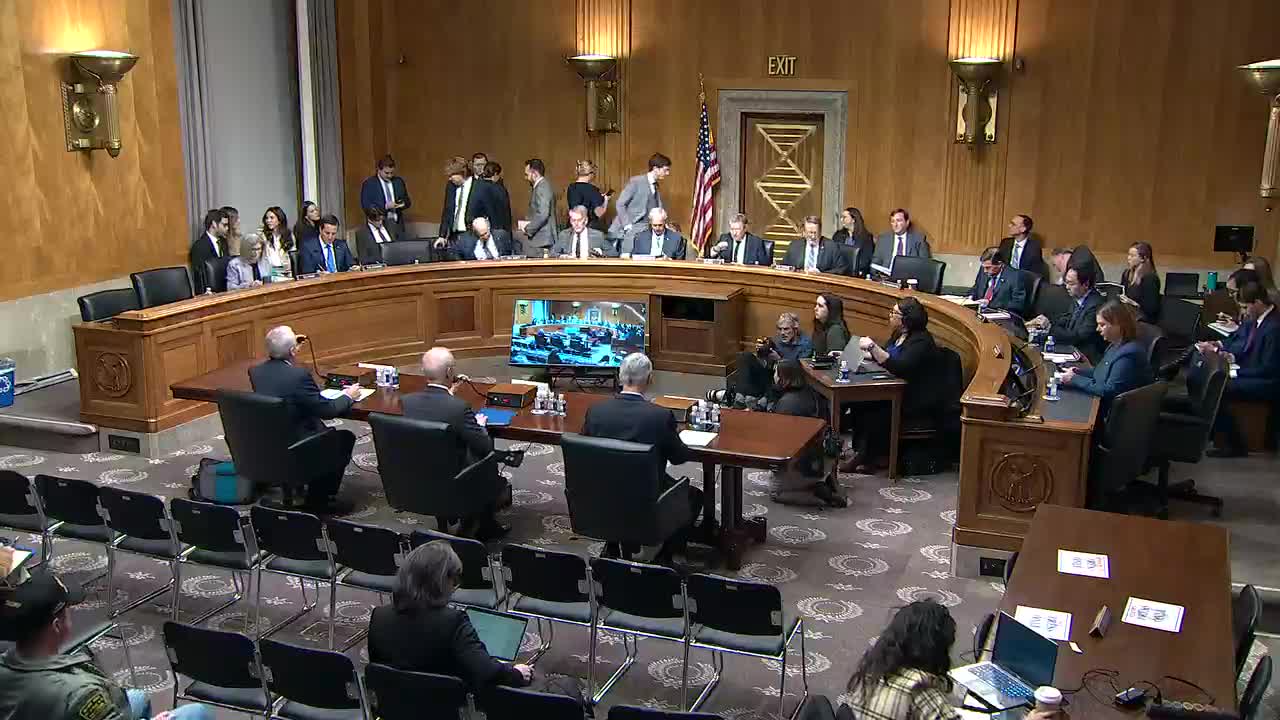
Senate Homeland Security committee debates reinstating 'Remain in Mexico'; resolution passes 8-6
Summary
The Senate Homeland Security and Governmental Affairs Committee on Jan. 16 held a hearing on the Migrant Protection Protocols (MPP), commonly called "Remain in Mexico," and approved a resolution affirming that the president and the secretary of Homeland Security have legal authority to secure the southwest border, including steps to reinstate MPP.
The Senate Homeland Security and Governmental Affairs Committee on Jan. 16 held a hearing on the Migrant Protection Protocols (MPP), commonly called "Remain in Mexico," and approved a resolution affirming that the president and the secretary of Homeland Security have legal authority to secure the southwest border, including steps to reinstate MPP.
The hearing brought competing views on whether the policy deters migration and improves U.S. security or instead enriches cartels and endangers migrants. The committee subsequently rejected an amendment offered by Ranking Member Gary Peters that would have required the administration to certify that any reinstatement would not increase kidnappings, extortion, trafficking or harm to children; that amendment failed 7–8. The resolution itself passed 8–6.
Why it matters: The debate bears on actions a new administration might take by executive order and on Congress's ability to set statutory limits or requirements. Witnesses and senators framed the issue as a mix of immigration law, border enforcement capacity, public-safety risk and U.S.–Mexico cooperation.
Former acting DHS deputy secretary Ken Cuccinelli told the committee that "the president of the United States does have vast authority to secure America's border to determine who may enter and under what conditions they may enter." He urged reestablishing MPP and cited statutory sections of the Immigration and Nationality Act (INA) — including section 208, section 212 and section 235 — as legal bases that permit the executive branch to restrict or condition entry and to return migrants to Mexico.
Andrew Arthur of the Center for Immigration Studies described MPP's original implementation under the Trump administration, citing DHS assessments that MPP reduced encounters and expedited asylum decisions in 2019. Arthur testified that MPP "was an indispensable tool in addressing the ongoing crisis at the southern border and restoring integrity to the immigration system," and he reported DHS-funded humanitarian support in Mexico tied to the program.
Adam Isaacson of the Washington Office on Latin America testified that the policy "enriched the cartels. It failed to meaningfully deter migration and it soured relations with a key ally." Isaacson described accounts he and his colleagues documented of kidnapping, extortion and violence against migrants waiting in Mexican border cities and said the cartels monetized prolonged waits. He summarized the effect this way: "The cartels' cruelty ... is their economic model, and that makes it a national security issue."
Committee members pressed witnesses on several issues: whether the president can unilaterally redefine asylum eligibility or impose third-country processing requirements; how MPP affected cartel revenues and cross-border crime; the capacity of U.S. immigration courts; and the trade-offs between deterrence and humanitarian harms. Witnesses and senators repeatedly cited court decisions and statutory constraints — including the Flores settlement, TVPRA and Title 42 public-health expulsions — as limiting factors in how detention and family-unit cases are handled.
Votes at a glance: - Amendment (Peters, Amendment No. 2): Require presidential certification that reinstating MPP will not lead to increased kidnapping, extortion, trafficking, cartel profit, increased fentanyl smuggling, family separation or weakened child-protection standards. Motion failed, yeas 7, nays 8. - Committee resolution affirming executive authority to secure the southwest border (including reinstatement of MPP and steps to end catch-and-release): Approved, yeas 8, nays 6.
The hearing record will remain open for 15 days for additional submissions, the chair said. Committee debate underscored a bipartisan acknowledgment of strain on the immigration system and the asylum backlog, combined with sharp differences about MPP's effects on cartel power and migrant safety.
Looking ahead, several senators called for legislative fixes to clarify detention authority, asylum adjudication timelines and special procedures for nationals from countries that will not accept returns; witnesses told senators those changes would require congressional action to resolve court-created constraints and capacity shortfalls.