Get Full Government Meeting Transcripts, Videos, & Alerts Forever!
Senators and Nominee Clash on Size of Federal Spending and Baseline to Cut From
Summary
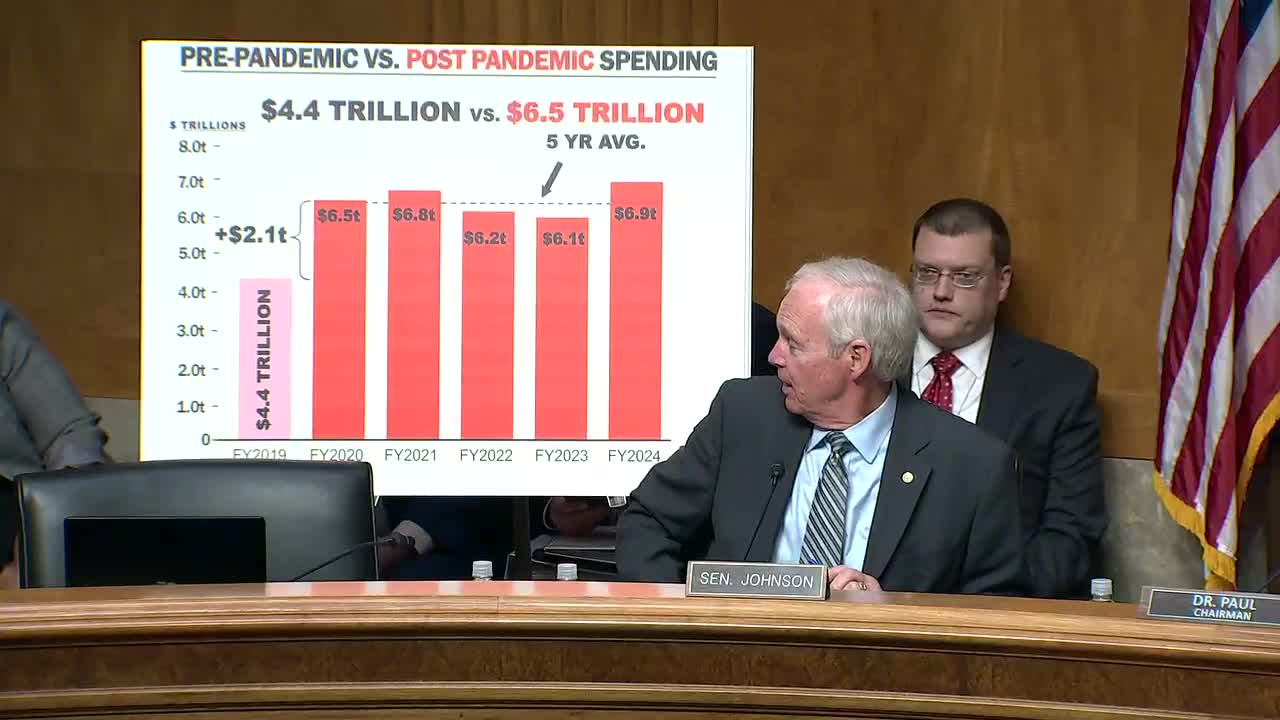
Committee members pressed Russell Vought about targets and baselines for reducing federal spending, with senators citing post‑pandemic spending increases and Vought describing potential baselines tied to prior presidential budgets.
Senators used Russell Vought's confirmation hearing to press him on how the Office of Management and Budget would approach federal spending, debt and inflation if he is confirmed as director.
Senator Rand Paul, opening the hearing, criticized the last four years of federal spending and said, "Interest now exceeds our military budget" to underscore his argument that rising debt is unsustainable. Several senators — including Johnson and Scott — described pandemic-era…
Already have an account? Log in
Subscribe to keep reading
Unlock the rest of this article — and every article on Citizen Portal.
- Unlimited articles
- AI-powered breakdowns of topics, speakers, decisions, and budgets
- Instant alerts when your location has a new meeting
- Follow topics and more locations
- 1,000 AI Insights / month, plus AI Chat