Get Full Government Meeting Transcripts, Videos, & Alerts Forever!
Get email alerts on the Epa Workforce Grants topic
No spam. Unsubscribe anytime.
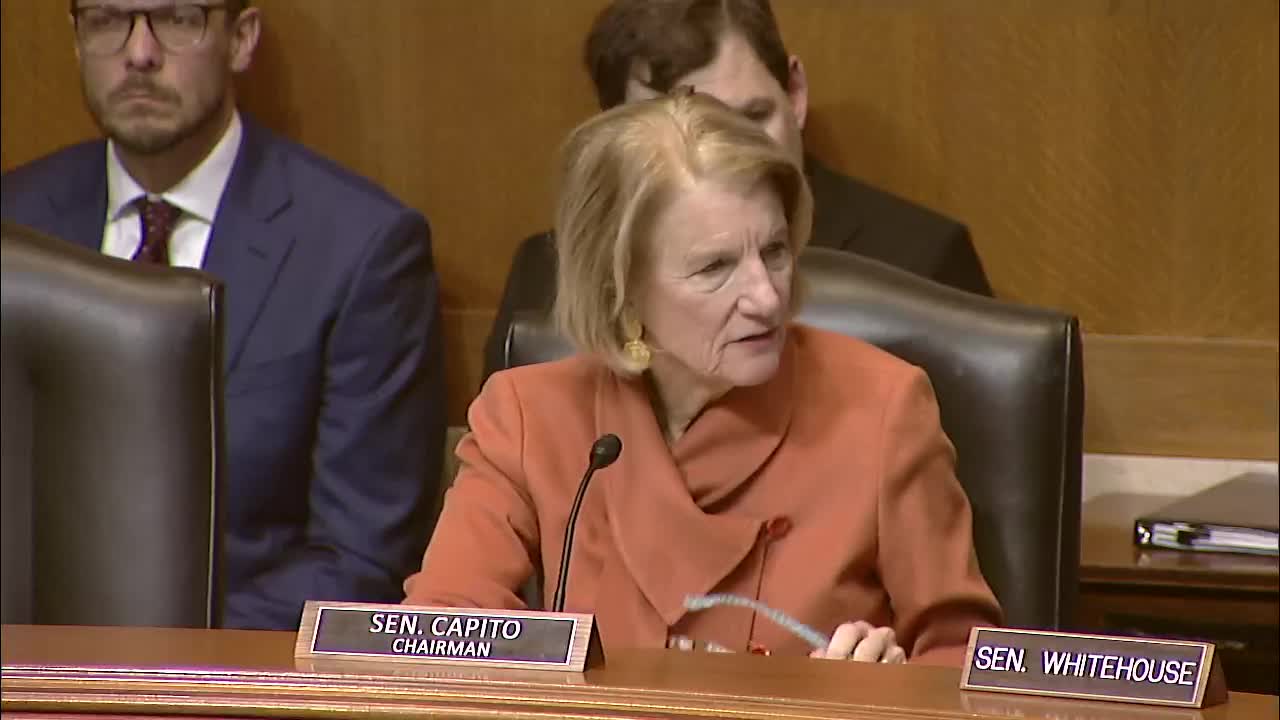
Whitehouse and others press nominee on EPA workforce, enforcement and IRA grant oversight
Summary
Ranking Member Sheldon Whitehouse and several senators pressed Lee Zeldin on whether he would support reducing EPA's workforce, how he would protect career staff, and whether he would review hundreds of millions in Inflation Reduction Act and other EPA grant spending for proper use.
Senator Sheldon Whitehouse and others raised concerns about political pressure on the agency’s workforce and about oversight of large grant programs administered by EPA.
Whitehouse asked whether Zeldin would support efforts he characterized as seeking to “traumatize” EPA’s workforce, cut staff by large percentages or strip civil‑service protections. Zeldin said his stated objective is to increase productivity, be accountable and transparent, and to bring out the best of EPA staff; he said he would not be coming into the job with any mandate to carry out personnel purges.
Senators including Cynthia Lummis and others asked about oversight of significant IRA and other appropriations run through EPA. Zeldin said he would review how funds were spent and promised to account to the committee. He emphasized his obligation to follow the law and to be prepared to answer to the committee about specific grants and distributions.
Senators also pressed on enforcement posture — whether the agency should prioritize civil compliance and cooperation with regulated entities or pursue aggressive enforcement operations. Zeldin said he favors collaboration with states and regulated entities while recognizing the role enforcement plays when mitigation or cleanup is required.
Ending: The nominee committed to transparency, to working with the committee on grant oversight and to using both compliance assistance and enforcement tools as lawfully required; he rejected proposals framed in the hearing to dismantle civil‑service protections or remove enforcement functions entirely.