Get Full Government Meeting Transcripts, Videos, & Alerts Forever!
Get email alerts on the Epa Nomination topic
No spam. Unsubscribe anytime.
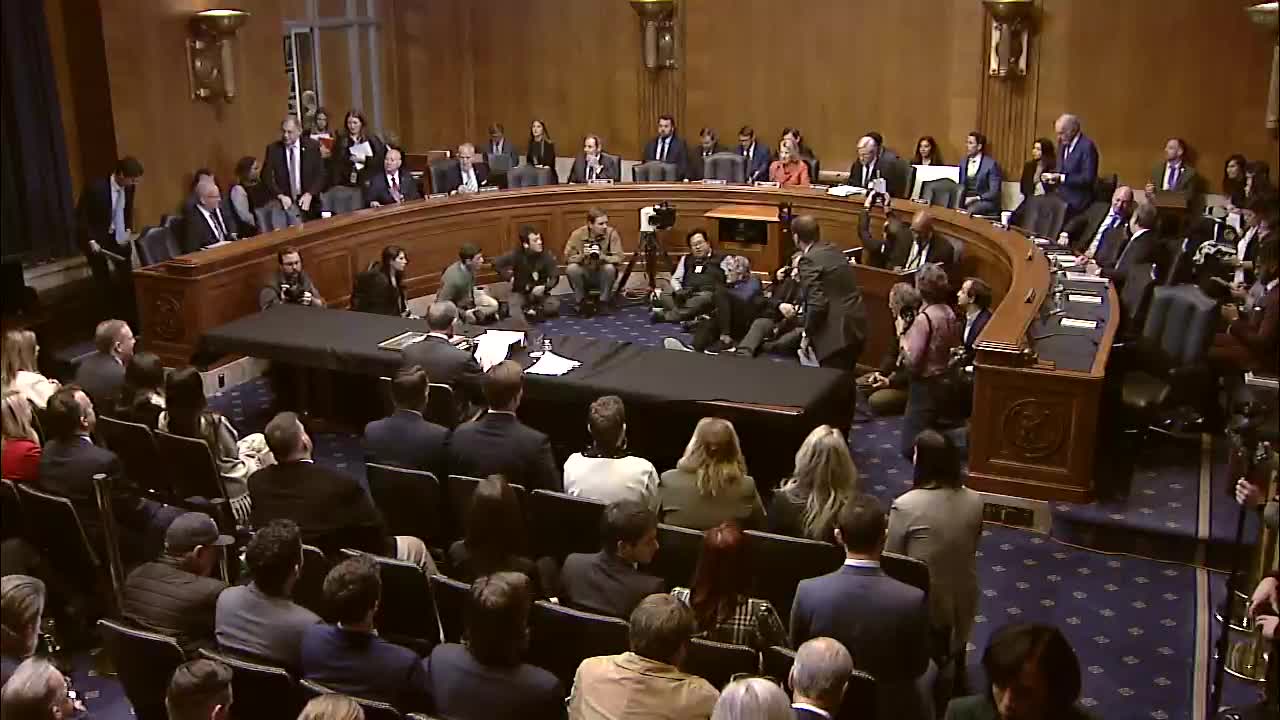
Senate Environment and Public Works holds confirmation hearing for Lee Zeldin to lead EPA
Summary
The Senate Environment and Public Works Committee heard testimony from President Trump's nominee for EPA administrator, former Rep. Lee Zeldin. Senators pressed him on climate science, PFAS, cooperative federalism, permitting and enforcement; Zeldin emphasized adherence to law, deference to agency scientists and cooperation with states.
Chairwoman Shelley Moore Capito convened the Senate Environment and Public Works Committee for a confirmation hearing for President Trump’s nominee to lead the Environmental Protection Agency, former U.S. Rep. Lee Zeldin.
The hearing centered on whether Zeldin would follow scientific findings on climate and pollution, how he would balance environmental protection with economic and reliability concerns, and how he would manage EPA programs and staff if confirmed.
Zeldin told the committee he would “honor our obligations under the law,” defer technical questions to career agency scientists and follow the Administrative Procedure Act so agency actions are “durable” and able to withstand legal scrutiny. He described priorities including clean air and water, cleanup of contaminated sites and cooperative federalism with states.
Ranking Member Sheldon Whitehouse framed the central test of the hearing as “Will he follow the science and the economics and protect our air, water, and climate? Or will he merely be a rubber stamp for looters and polluters?” Whitehouse also cited Zeldin’s work with groups such as the America First Policy Institute and questioned whether those ties and industry donors would affect his independence.
Multiple senators pressed Zeldin on specific rules and statutory duties. He answered that he views carbon dioxide and methane as heat‑trapping greenhouse gases and said the EPA has a role in addressing their effects, while noting he would rely on agency scientists for detailed metrics. Zeldin repeatedly declined to “prejudge outcomes” of future rulemakings, citing obligations under the law.
Committee members from both parties asked about concrete programs and regional problems — including PFAS contamination, lead service lines, wildfire smoke exceptions for attainment calculations, border pollution into the Tijuana River, and permitting delays for energy and infrastructure projects. Zeldin committed to working with senators on state‑level priorities and to be accountable to the committee.
Chairwoman Capito closed the hearing by setting deadlines for written questions and responses and saying she expects a positive confirmation process ahead.
The committee will collect written questions for the record and Zeldin’s answers before the panel proceeds with its consideration.
Ending: The committee’s questioning highlighted bipartisan priorities — infrastructure, drinking water, and disaster response — alongside sharp partisan lines on climate and industry influence. The nomination will proceed through standard committee and Senate steps after record questions are exchanged.