Get Full Government Meeting Transcripts, Videos, & Alerts Forever!
Get email alerts on the Public Employment Eligibility topic
No spam. Unsubscribe anytime.
Senate Bill 5068 would let agencies consider applicants lawfully authorized to work, not only citizens or green‑card holders
Summary
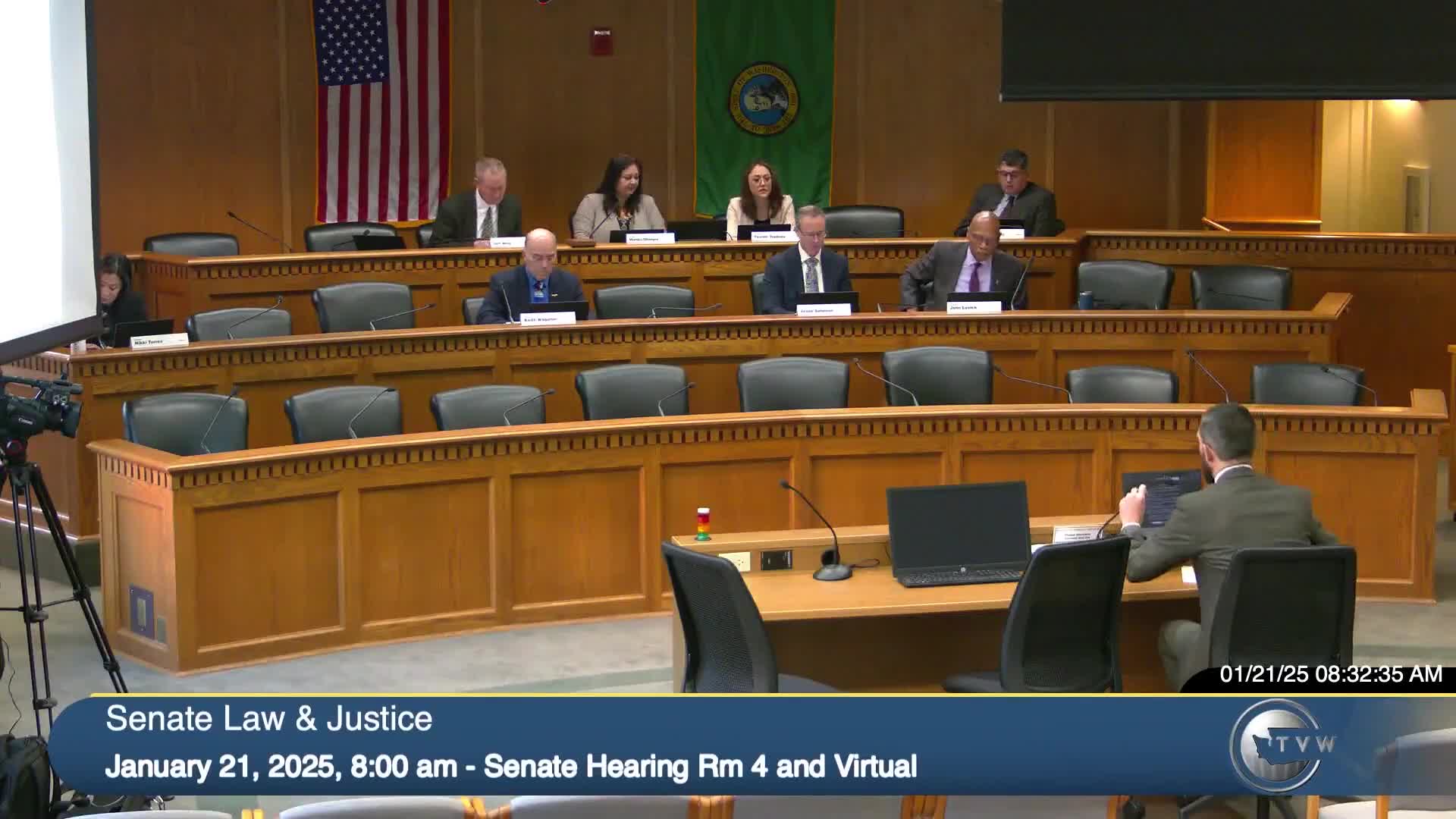
Senate Bill 5068 would permit certain civil‑service public safety agencies to consider applicants who are legally authorized to work in the U.S. (beyond U.S. citizens and lawful permanent residents), expanding eligibility to additional visa categories; committee heard support from prosecutors and law‑enforcement associations.
Senate Bill 5068 would allow certain civil‑service public employers — including general and limited authority law enforcement agencies, city firefighters, county sheriffs, prosecuting attorneys and the Department of Fish and Wildlife — to consider applicants who are legally authorized to work in the United States under federal law, beyond the current categories of U.S. citizens and lawful permanent residents.
During the staff briefing, Joe McKittrick explained the existing restrictions and noted that current law already allows some agencies to hire lawful permanent residents or DACA recipients in certain roles but excludes many other federal work‑authorized visa holders. McKittrick summarized: “If enacted, Senate Bill 5068 would permit … agencies … to consider applications from persons who are legally authorized to work in the United States under federal law.”
The bill’s prime sponsor, Sen. John Lovic, framed the measure as a tool to expand the pool of qualified applicants for public safety positions at a time when three regional training academies are producing recruits faster than agencies can hire them.
Christina Miyamasu, chief deputy of criminal operations for the King County Prosecutor’s Office, testified in support and said two principal reasons justify the change: prosecutor offices should reflect the communities they serve, and the offices face a hiring and retention crisis. Miyamasu described situations in which competent, bar‑admitted immigrant attorneys are barred from serving as prosecutors solely because their immigration status does not match statutory categories.
Stakeholder groups including the Washington Retail Association and the Association of Sheriffs and Police Chiefs testified in support, framing the bill as part of a broader recruitment and retention package. James McMahon, representing sheriffs and police chiefs, urged clarification about how federal visa portability and firearms possession rules would interact with the change and flagged a technical provision the association believes also needs amendment (a CJTC certification standard related to firearms possession for applicants under federal rules).
The committee recorded 7 proponents and 868 opponents logged as not desiring to testify; the hearing closed with public testimony and no final committee vote recorded in the transcript.