Get Full Government Meeting Transcripts, Videos, & Alerts Forever!
Get email alerts on the State Government & Elections topic
No spam. Unsubscribe anytime.
Panel debates automatic voter registration expansion; health exchange and returning-citizen provisions draw support and technical questions
Summary
Senate Bill 5077 would let the governor designate additional agencies to provide automatic voter registration and would permit the Health Benefit Exchange to send applicant data to the Secretary of State unless applicants opt out.
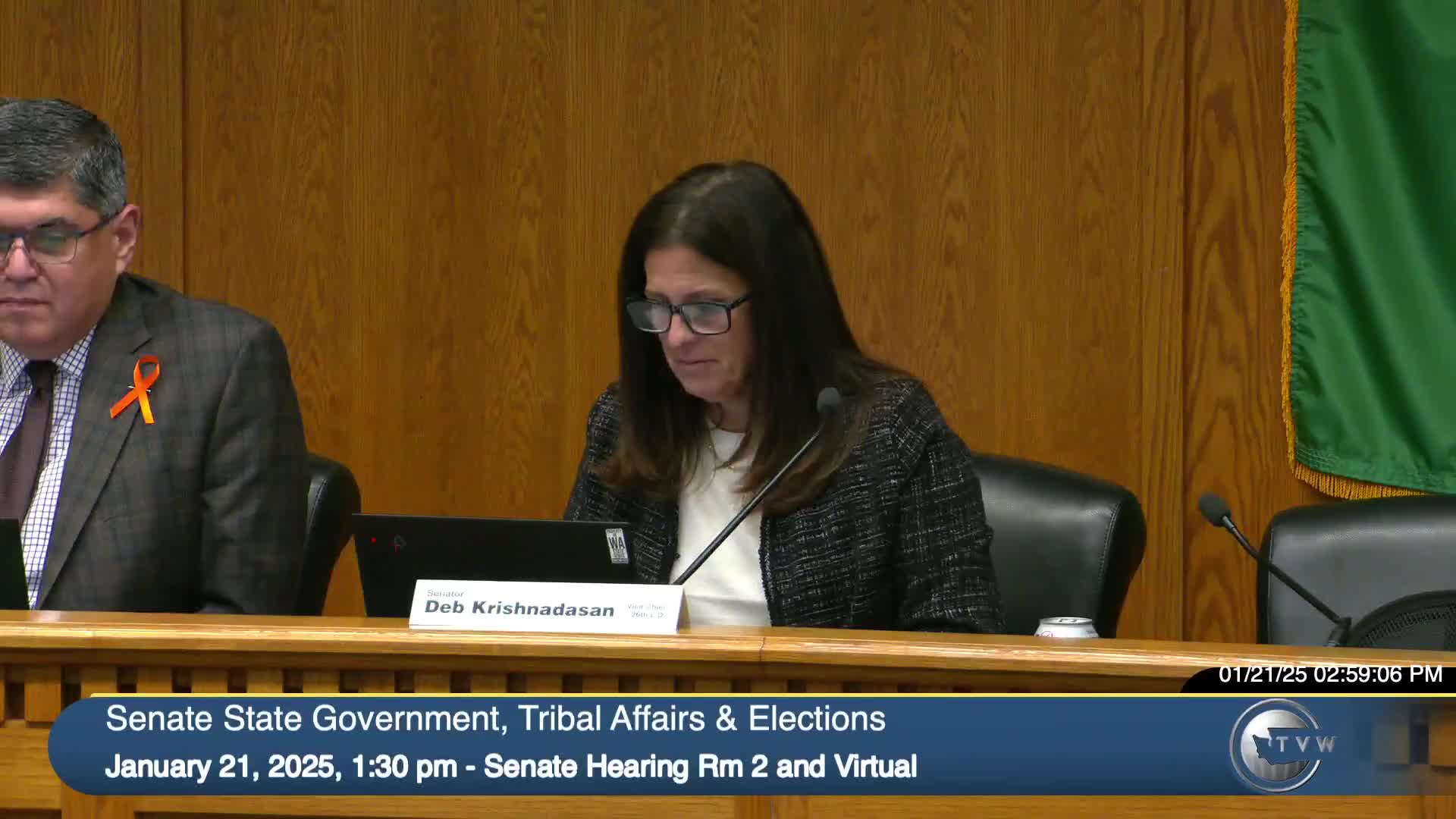
Senate Bill 5077, heard Jan. 21 by the Senate Government, Tribal Affairs and Elections Committee, would authorize the governor, after consulting with the Secretary of State, to designate additional state, local, federal and tribal agencies that may provide automatic voter registration or update existing registrations. The bill would also create an opt-out process for the Health Benefit Exchange (HBE) to provide applicant information to the Secretary of State for automatic registration and would clarify how returning citizens’ registrations are handled if the Department of Corrections is designated.
William Bridges, committee staff, told the committee the measure would require agencies selected by the governor to implement a process substantially similar to the Department of Licensing’s enhanced-driver’s-license model for automatic registration. Under staff summary, HBE would mail notice to applicants within five business days of a health-insurance application, informing them that the exchange will provide registration information to the Secretary of State unless the applicant declines. If an applicant does not decline within 15 days, HBE would transmit the information, which could include household members listed on the application, and the Secretary of State would process submissions using existing automated verification procedures.
Sean Merchant and other staff from the Secretary of State’s office supported making registration easier but cautioned about new operational workloads and warned the office does not have veto authority over the governor’s agency designations. Merchant said agencies chosen by the governor must already collect names, residential addresses and dates of birth and that the Secretary of State uses federal data services (the “hub”) to verify citizenship for automatic registration currently performed with the Department of Licensing.
Ingrid Ullrich, CEO of the Washington Health Benefit Exchange, and Shirley Persaud, HBE’s government affairs director, said HBE already operates an opt-in registration channel (with more than 82,000 sign-ups in the prior year) and supported the bill’s objective but raised legal and operational concerns about converting to an opt-out model. They said federal Medicaid and Affordable Care Act rules restrict how HBE-collected information may be used and that HBE likely would need approval or a waiver from federal regulators (Centers for Medicare & Medicaid Services) before implementing an opt-out automatic-registration process. They also asked for clarification about whether the 15-day opt-out period means calendar or business days, the permitted methods for opting out, and how household-member data would be treated when an applicant applies on behalf of others.
Multiple community groups and formerly incarcerated individuals testified in favor of SB 5077, telling the committee automatic registration would reduce barriers for new citizens, returning citizens and low-income communities and would increase participation. Justice Solutions representatives described how civic education and registration support helped returning citizens reengage. Public testimony also included opposition concerned about election security and the risk of third parties or agencies registering voters without explicit affirmative consent; one opponent urged that any registration at non-DOL agencies require opt-in rather than opt-out.
Sponsors and agencies agreed to continue technical conversations. No committee vote was taken at the Jan. 21 hearing.