Get Full Government Meeting Transcripts, Videos, & Alerts Forever!
Get email alerts on the Public Safety Law Enforcement Staffing topic
No spam. Unsubscribe anytime.
Senate Bill 5060 would create $100 million hiring grant for local, tribal law enforcement
Summary
Senate Bill 5060 would create a state grant program to help local and tribal law enforcement agencies hire new officers by funding up to 75% of entry‑level salaries and benefits for up to 36 months and includes a $100 million appropriation request for implementation.
Senate Bill 5060 would create a state grant program to help local and tribal law enforcement agencies hire new officers by funding up to 75% of entry‑level salaries and fringe benefits for full‑time officers for a maximum of 36 months, and it includes a $100,000,000 general‑fund appropriation for fiscal year 2026 to implement the program.
The bill would require the Criminal Justice Training Commission (CJTC) to develop application policies and publish selection criteria, limit grant funding to no more than $125,000 per officer position, bar grants for applicants employed by a local or tribal agency within the prior 12 months, and require annual reporting to the Legislature beginning July 31, 2025, on applications, awards and funding requested.
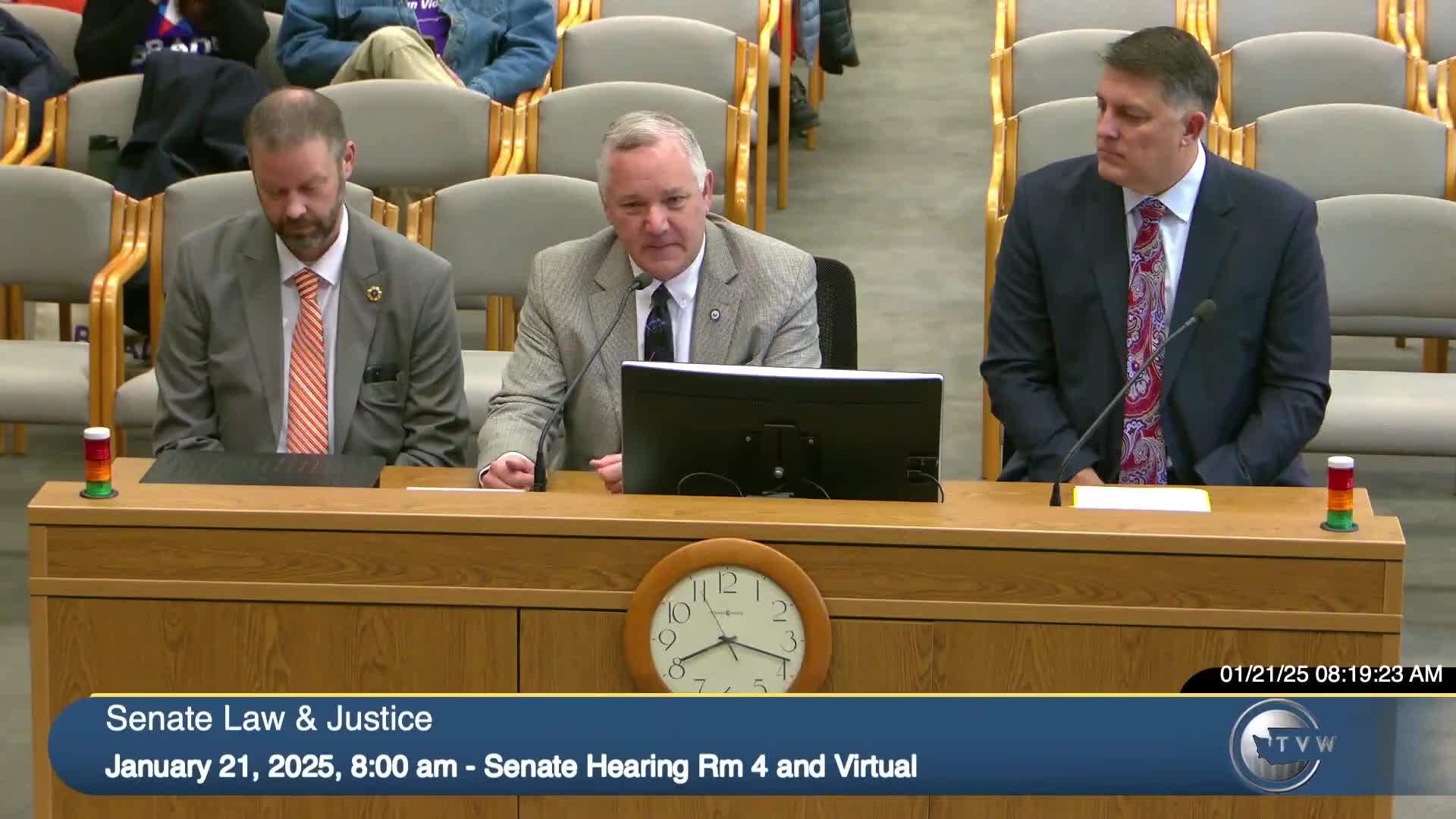
The bill’s prime sponsor, Sen. Holy, told the committee he refiled the legislation after receiving a $100 million staffing proposal from the governor’s office and said the grant is intended to “prime the pump” to help smaller agencies that cannot match larger jurisdictions’ pay and training investments.
Joe McKittrick, staff counsel to the committee, summarized the bill’s provisions to members: “Before you now is Senate Bill 5060 concerning the creation of a law enforcement hiring grant program,” and he described the fiscal and reporting requirements the CJTC would have if the bill is enacted.
Nathan Olson, public safety policy adviser to Governor Ferguson, testified in strong support and said the administration prefers the $100 million be appropriated for the biennium so CJTC has time to hire a grant manager and staff to run the program. Olson said the money “will only be used to pay the salaries and benefits for new recruits, so every dollar in this bill goes to growing the number of certified officers in the state of Washington.”
Local elected officials and public‑safety groups urged passage. Rod Higgins, a Spokane Valley council member, cited a 2022 staffing study that recommended adding positions and described his city’s use of federal COPS grants to fund the first phase of new officers. Salim Nees, mayor of Mercer Island, told the committee the state ranks last in officers per capita and urged a funding formula that supports jurisdictions with financial challenges.
Law enforcement organizations also supported the bill. Jeff Devere of the Washington Council of Police and Sheriffs said the proposal would help agencies respond to calls and reduce overtime. James McMahon of the Association of Sheriffs and Police Chiefs stressed the scale of the staffing gap, saying Washington needs “1,370 additional officers” to tie for last in officers per capita and arguing the problem requires more than money, including support for the profession.
Several municipal groups including the Association of Washington Cities and local city staff said the funds should be low‑barrier for smaller jurisdictions and noted many cities lack the staff to pursue complex competitive grants.
During public comment, a private citizen said hiring without stronger accountability or improved internal investigations risks adding officers who repeat problematic conduct; senators and testifiers acknowledged retention and misconduct concerns while framing the bill as one piece of a broader staffing strategy.
The committee heard public testimony and recorded that 96 signed proponents and 278 opponents were logged for the public record; no final vote on the bill was recorded at the hearing.
If enacted, the CJTC would publish grant criteria and submit annual outcome reports to the Legislature, and agencies receiving funds would be subject to the eligibility and reporting limits spelled out in the bill.