Get Full Government Meeting Transcripts, Videos, & Alerts Forever!
Get email alerts on the Housing Mfte topic
No spam. Unsubscribe anytime.
House committee hears bill to let more GMA counties use multifamily tax exemption
Summary
House Bill 1206 would expand which counties can designate residential targeted areas (RTAs) eligible for the multifamily housing property tax exemption (MFTE), extending a tool supporters say can spur multifamily and affordable housing outside a handful of large counties.
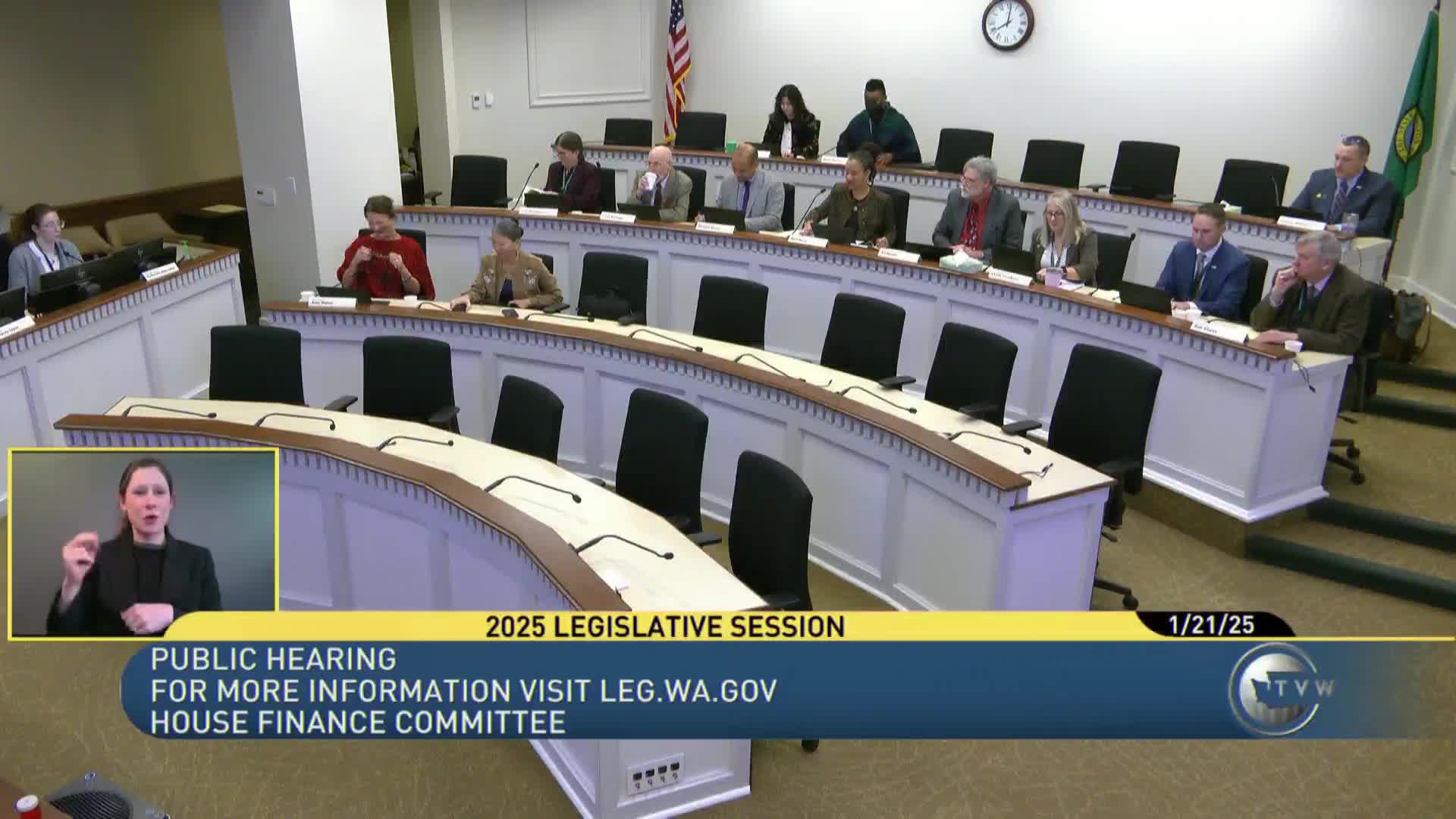
House Finance Committee members heard testimony Jan. 21 on House Bill 1206, which would revise eligibility so more counties that fully plan under the Growth Management Act (GMA) may designate residential targeted areas eligible for the Multifamily Housing Property Tax Exemption (MFTE).
The bill’s sponsor and staff told the committee the change would make the MFTE available to counties beyond the small number that currently meet population and service-level thresholds. "House bill 1206 expands the number of counties eligible to designate a residential targeted area under the multifamily housing property tax exemption," said Christina King, staff to the committee.
The measure would preserve the program’s existing limits: the tax exemption applies only to the value tied to construction, conversion, or rehabilitation of qualified multifamily residential structures within an RTA, not to the underlying land or other improvements. The MFTE currently provides an 8-year exemption that extends to 12 years if the owner commits at least 20% of units as affordable to low- and moderate-income households. Under current statute, counties may designate RTAs only if they meet a set of requirements; HB 1206 would allow counties that are required or choose to fully plan under the GMA to qualify to designate RTAs while keeping the requirement that RTAs be located within urban growth areas.
Supporters — including county officials and housing advocates — told the committee the bill would give counties the same tool cities use to encourage higher-density multifamily housing. "The Growth Management Act and the housing element requires counties to plan for and accommodate housing types that support all economic segments. It only makes sense that those counties that have made that commitment...have the same tools that municipalities have," Brian Enslow, Washington State Association of Counties, said in support.
Kitsap County representative Tom McBride said removing the current transit-service threshold would allow more practical use of the exemption in county urban centers such as Silverdale and Kingston. "It's difficult to plan for that service level without the density to support the transit requirements...This bill will incentivize multifamily housing in areas where it makes sense," McBride said.
Several testifiers asked for technical cleanup on the bill to make county and city program requirements consistent. FutureWise’s Bryce Hayden said his group supports the bill’s goals but urged language to ensure new MFTE sites have access to services such as sidewalks, grocery stores and transit.
The committee record cited a fiscal note and a Department of Revenue (DOR) assessment that the bill would expand the number of counties eligible to participate but that the number that will opt in, and the degree of taxpayer use, are indeterminate; the DOR also anticipates no loss to the state levy. Staff and witnesses suggested the bill would materially expand access to the MFTE beyond the current five counties that meet the old unincorporated-population threshold (Clark, King, Kitsap, Pierce and Snohomish), and would align eligibility with the 28 counties that fully plan under the GMA.
After testimony from local officials, housing advocates and industry representatives, the committee closed the hearing on HB 1206.