Get Full Government Meeting Transcripts, Videos, & Alerts Forever!
Get email alerts on the State Government & Elections topic
No spam. Unsubscribe anytime.
Committee hears bill to rewrite legislative ethics law, including new immunity and higher gift limits
Summary
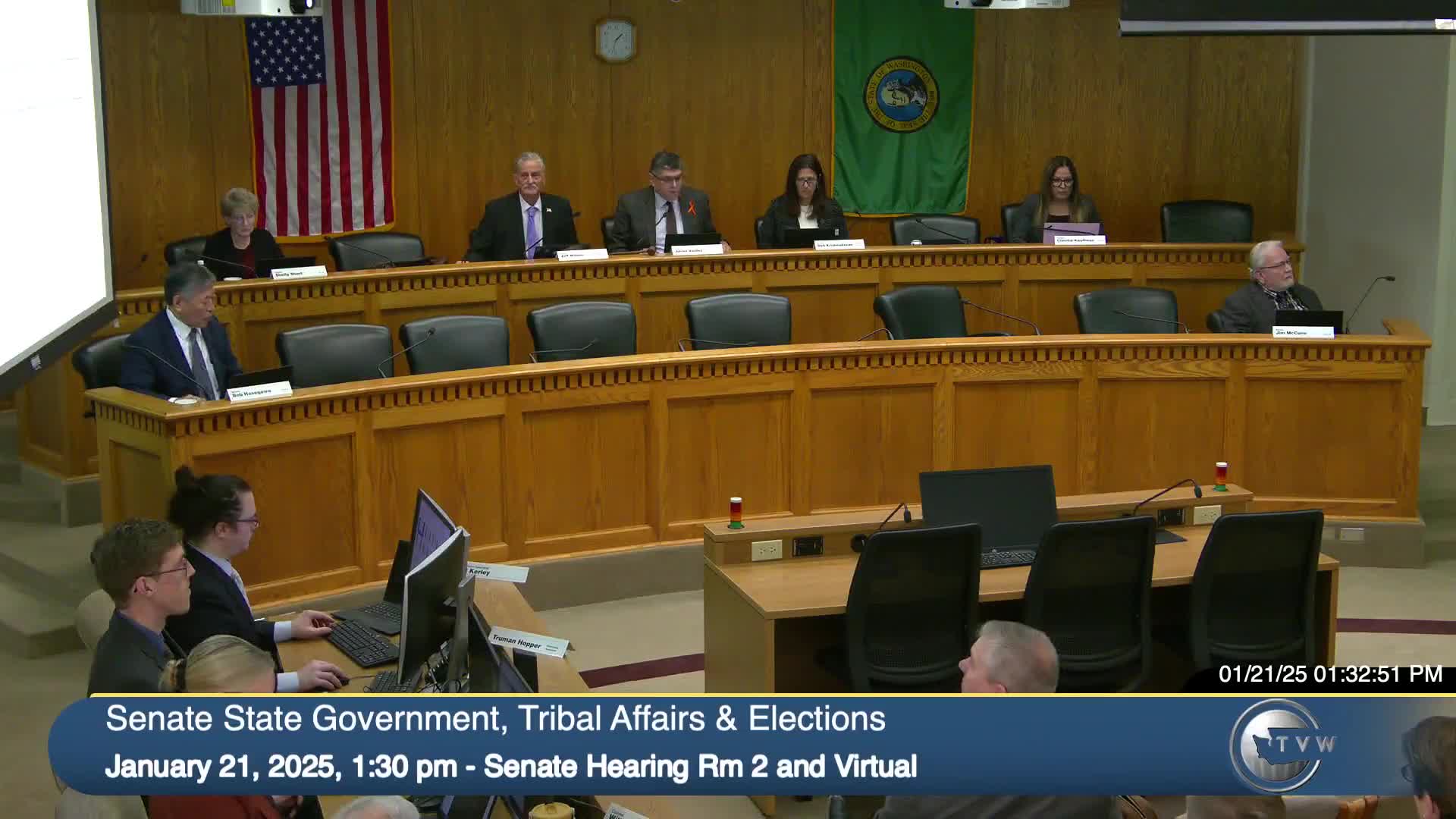
The Washington State Senate Government, Tribal Affairs and Elections Committee held a public hearing Jan. 21 on Senate Bill 5143, which would revise the Ethics in Public Service Act to add new definitions, change gift thresholds and expand legal protections for ethics board members and staff.
The Washington State Senate Government, Tribal Affairs and Elections Committee held a public hearing Jan. 21 on Senate Bill 5143, which would revise the Ethics in Public Service Act to add new definitions, change gift thresholds and expand legal protections for ethics board members and staff.
Supporters and the bill sponsor said the changes are intended to consolidate ambiguous ethics language spread across code and to clarify rules for legislators, staff and the legislative ethics board.
William Bridges, committee staff, told the committee the bill “adds definitions, removes obsolete provisions, corrects internal references and updates statutory citations,” and that it raises the calendar-year gift threshold for state officers and employees from $50 to $100. Bridges also said the bill would exclude gift cards of $25 or less given to legislative employees and would permit unsolicited gifts from legislators to legislative staff to be excluded from the statutory definition of a gift. He described other changes including expanded definition of “legislative nexus,” removal of a combined $5,000 cap on penalties and costs, and a grant of absolute privilege from suit for members and employees of the legislative and executive ethics boards.
The bill would remove the combined cap that limited both penalties and costs to $5,000; Bridges said the change allows penalties to “not exceed $5,000” while permitting a separate order for recovery of reasonable costs assessed by the board. The bill also would grant members and employees of the legislative ethics board and the executive ethics board an absolute privilege from suit for official acts, similar to the protection afforded the Commission on Judicial Conduct, Bridges said.
Senator Jamie Pedersen, who identified himself as a long-serving member of the legislative ethics board, told the committee he supports the cleanup and said the board asked staff counsel to prepare the request bill after repeated ambiguities. Pedersen said the gifts provisions and overlapping definitions had caused recurring problems for staff and legislators and that consolidating the ethics law under a single code section would reduce confusion.
Brady Hornstein, a testifier who said he works for the Department of Social and Health Services, urged the committee to remove the blanket immunity provision for the executive ethics board. Hornstein described a prolonged investigation that he said was false and continued despite his agency concluding it lacked merit. He said an immunity provision added late in the drafting process would “moot a pending lawsuit” and asked the committee to remove the provision that he said would create a blanket civil and criminal immunity for the ethics boards.
Committee members asked clarifying questions. Senator Short asked whether any immunity currently exists; Bridges answered there is no present statutory immunity. Senator Wilson pressed on whether the bill limits the recovery of costs; Bridges said the bill leaves recovery of “reasonable costs” without a statutory cap. The bill’s prime sponsor asked the committee to avoid amending the request bill heavily during the process and said the legislative ethics board and staff sought clarity.
The committee received one in-person public testifier and recorded public positions; the hearing was closed with no final vote. No floor action or committee vote on SB 5143 was recorded at the hearing.
The committee will consider the bill in further work sessions or future hearings; no formal action was taken at the Jan. 21 hearing.