Get Full Government Meeting Transcripts, Videos, & Alerts Forever!
Get email alerts on the Emergency Preparedness Pets topic
No spam. Unsubscribe anytime.
Committee hears bill to have counties, cities identify pet accommodations in emergency plans
Summary
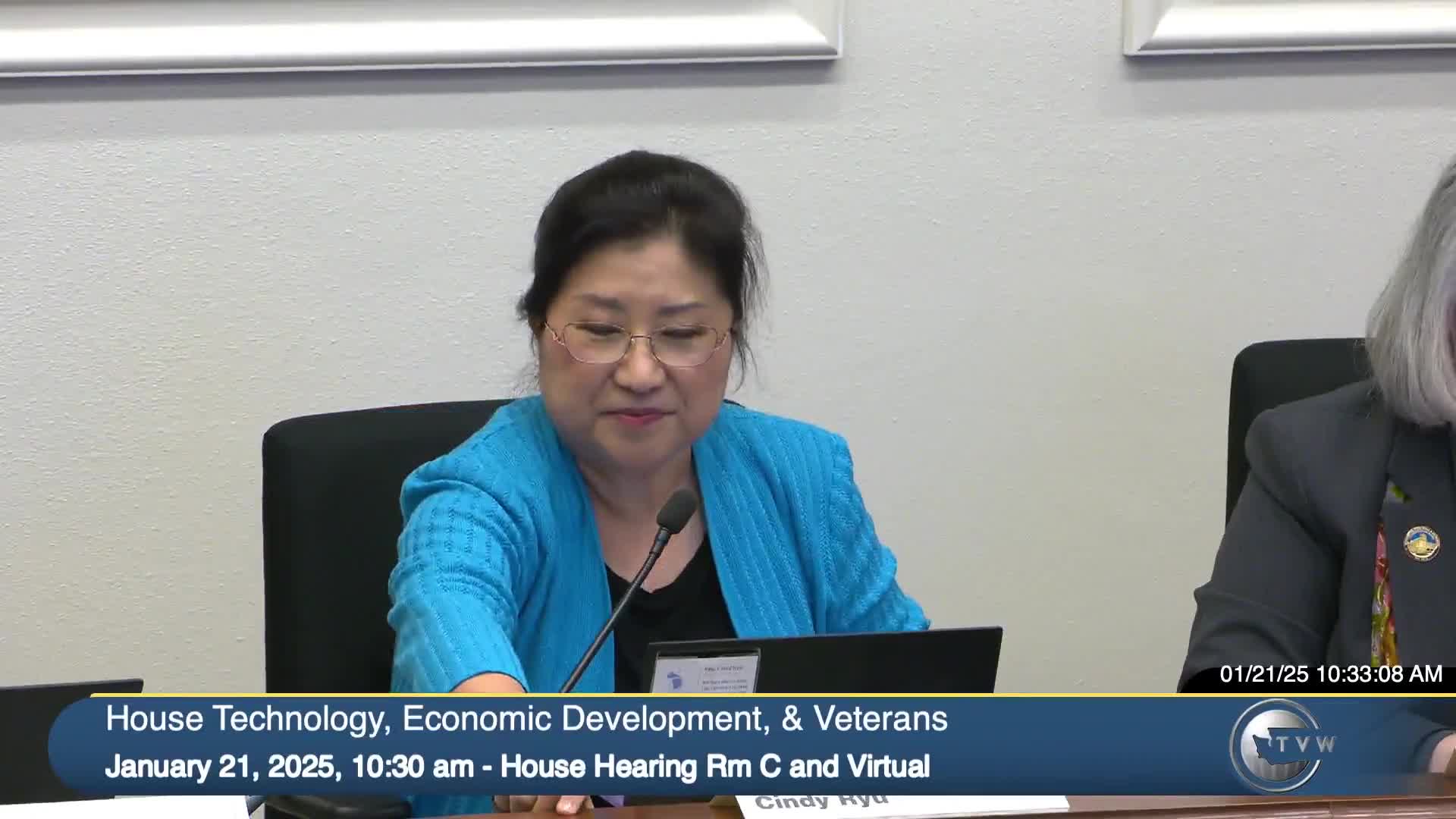
The Technology, Economic Development and Veterans Committee held a public hearing Jan. 21 on House Bill 1201, which would require counties and cities to identify pet accommodations in their local comprehensive emergency management plans and to publish pet emergency information on jurisdiction websites.
The Technology, Economic Development and Veterans Committee held a public hearing Jan. 21 on House Bill 1201, which would require counties and cities to identify pet accommodations in their local comprehensive emergency management plans and to publish pet emergency information on jurisdiction websites.
House Bill 1201 matters because research and testimony presented at the hearing said lack of pet accommodations can discourage evacuations and increase risk to people, first responders and animals during extreme weather events or other emergencies.
Martha Whaling, staff to the committee, summarized the bill and the existing planning framework: local organizations for emergency management must submit comprehensive local plans to the state military department’s emergency management division, and the bill would add three elements when a plan is updated — identify at least one emergency shelter, cooling or heating center that can accommodate pets; require identified shelters to adopt safety procedures consistent with published FEMA policies; and require counties and cities to provide pet emergency preparedness information on their websites. Whaling said the bill text currently references counties and cities and does not define “city.”
Representative Marie Levitt, the bill’s prime sponsor, told the committee she brought the measure after conversations in her district and work on last year’s Extreme Weather Protection Act. “These are companion animals,” Levitt said. “They are not just a random pet … it really does matter. And it really is life or death for many people.” Levitt said the bill is meant to encourage jurisdictions to plan, not to impose an onerous timetable: it requires consideration of pet accommodations when plans are updated or when shelters open, and includes caveats where accommodations are not feasible.
Testimony in support came from animal‑welfare and local service providers. Britney Benesee, on behalf of the American Society for the Prevention of Cruelty to Animals (ASPCA), said the bill would reduce evacuation noncompliance tied to pets and improve public safety. Benesee cited research used in testimony: “It is estimated that 80% of people who illegally enter an evacuation zone do so to rescue a pet,” and that a 2021 survey found “91% of pet owners plan to bring their pets with them during a disaster or during an evacuation. But 84% of those do not have emergency housing secured and do not know where they will go.” She added the legislation helps ensure families will seek safety without abandoning companion animals.
Kat Kelly, representing the Animal Legal Defense Fund, described psychological and logistical harms when families are forced to separate from animals and said co‑sheltering can reduce overall costs and improve intake processes in disasters. Amy McGuffin, president and CEO of the Kittitas County Chamber of Commerce, and Rachel Raj, executive director of Seattle Veterinary Outreach, described local experiences — including wildfire and cold‑weather responses — where lack of prior planning for household companion animals made volunteer coordination and intake more difficult. Raj recounted a case from January 2024 in Seattle where a person experiencing homelessness was found deceased with his longtime dog, and said inconsistent planning contributes to life‑threatening choices.
Committee members asked clarifying questions. Representative Penner asked whether the bill applies to towns; Whaling replied that the bill text refers to counties and cities and does not define “city,” which implies towns (fourth‑class cities) may be excluded unless language is amended. Representatives asked about liability, separation for allergy‑sensitive evacuees, timelines for plan updates, and how the bill would be implemented in multi‑jurisdiction plans; witnesses and the sponsor said intake procedures, memoranda of understanding and facility configuration (multiple rooms/ventilation) typically address liability and separation concerns and that some jurisdictions already include co‑sheltering practices.
The committee closed the public hearing on HB 1201 after testimony; no committee vote was taken during the Jan. 21 meeting. The bill record and testimony indicated ongoing drafting with the Association of Washington Cities (AWC) and other local partners to clarify definitions and implementation details.
Looking ahead, sponsors and witnesses urged jurisdictions to align plans with FEMA guidance and to post consistent pet preparedness materials online so residents know whether identified shelters can accept animals and how to prepare an evacuation plan for companion animals.