Get Full Government Meeting Transcripts, Videos, & Alerts Forever!
Get email alerts on the Public Safety And Parks topic
No spam. Unsubscribe anytime.
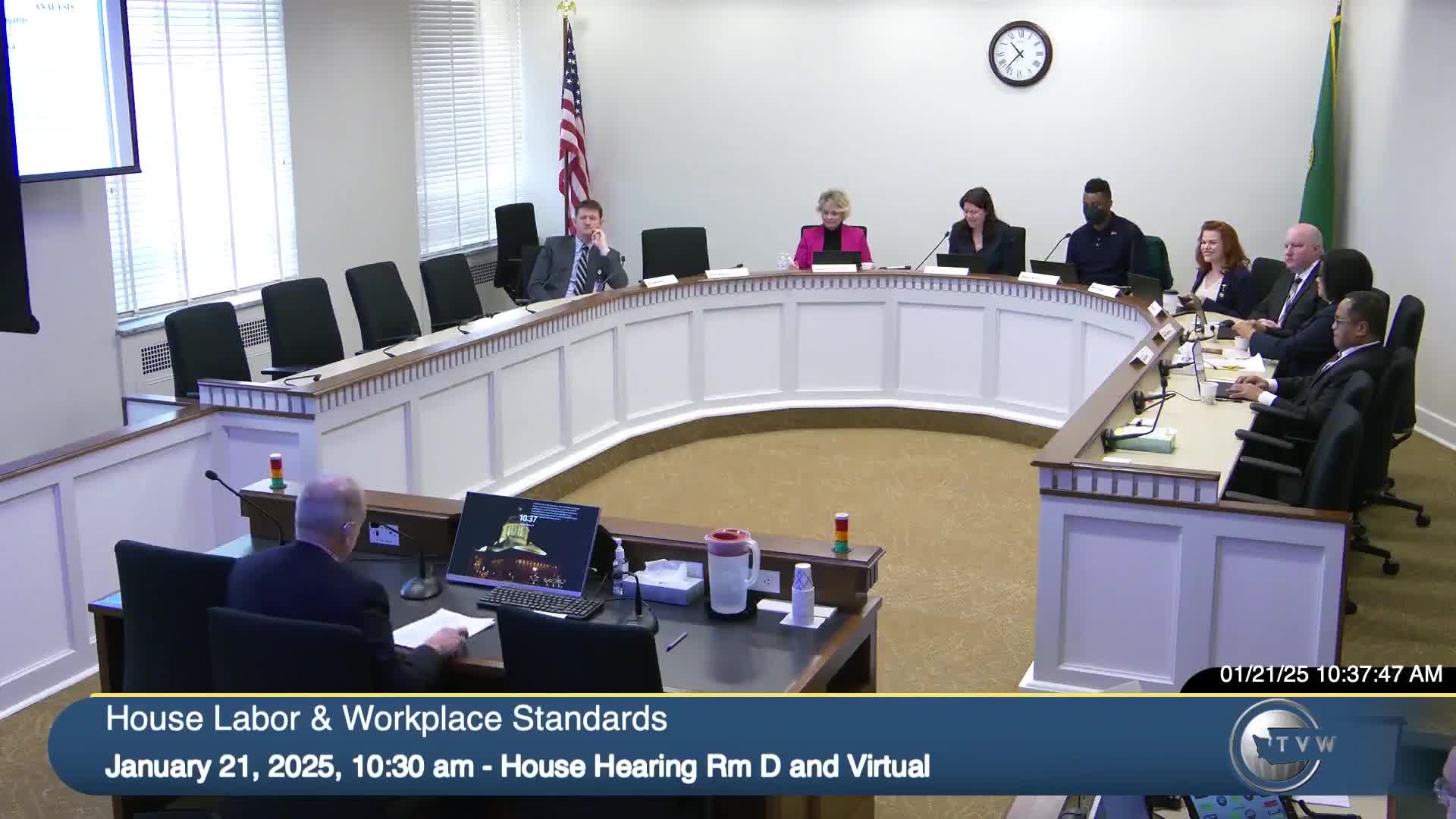
Bill to extend interest arbitration to state park rangers and certain Department of Corrections managers is heard
Summary
House Bill 1182 would extend interest arbitration to Parks and Recreation Commission employees (except confidential employees/internal auditors) and to Washington Management Service members at the Department of Corrections; park rangers and labor advocates testified they need better bargaining tools to recruit and retain staff.
House Bill 1182 would extend interest arbitration — a binding dispute-resolution mechanism used when parties cannot reach agreement during collective bargaining — to employees of the Parks and Recreation Commission (excluding confidential employees and internal auditors) and to Washington Management Service members at the Department of Corrections.
Supporters, including multiple current and former park rangers, told the Labor & Workplace Standards Committee that park ranger duties now often require the same training and law-enforcement certifications as other agencies, that recruitment and retention are deteriorating, and that interest arbitration would help secure competitive compensation, training, equipment and staffing.
Miles Kerrigan, vice president of Local 1466 and a Washington State Park Ranger, described varied duties that include law enforcement response, incident command and operations management. “We respond and take command of any law enforcement incidences that happen within our jurisdiction,” he told the committee. Other rangers described increases in training (Basic Law Enforcement Academy) that make park rangers more comparable to other law enforcement and said pay gaps with municipal and county agencies lead to turnover.
Jason Bearden, a park ranger in Spokane, said interest arbitration would help the agency secure equipment and training more quickly — he cited securing naloxone (Narcan) for rangers responding to overdoses as an example where faster procurement would have helped. Witnesses estimated substantial training and outfitting costs for new officers and described a multi-decade decline in ranger staffing.
Union representatives asked the committee to pass the bill, saying arbitration would create parity for rangers with other public-safety personnel who already have similar recourse. Opponents were not recorded for this item; multiple park-ranger witnesses and the Washington Federation of State Employees submitted testimony in favor.
The committee heard the bill, took testimony from park rangers, unions and advocates, and did not record a final vote during the public hearing.