Get Full Government Meeting Transcripts, Videos, & Alerts Forever!
Get email alerts on the Overpayment Waiver Abd topic
No spam. Unsubscribe anytime.
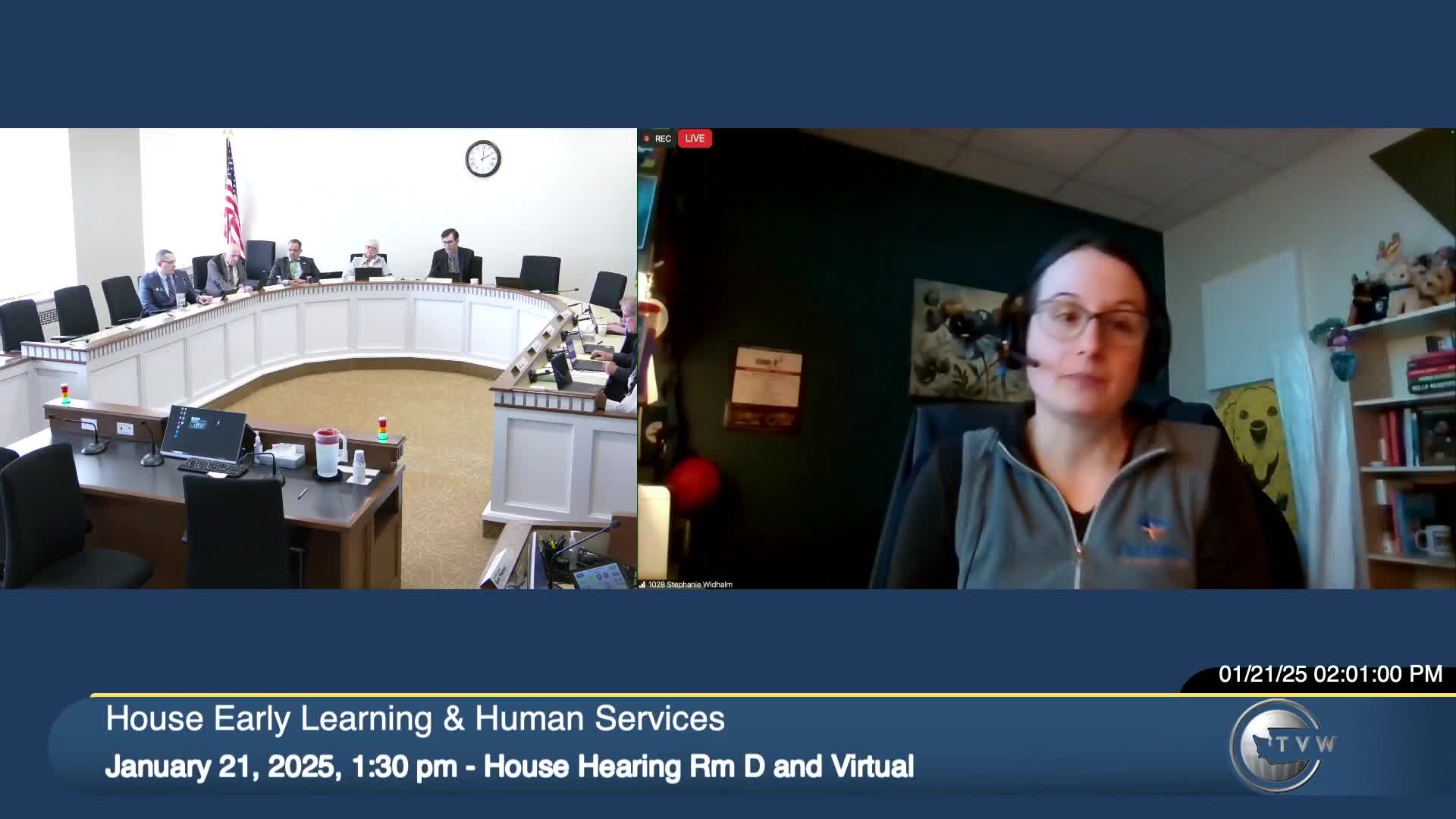
Panel hears bill letting DSHS waive certain overpayments for older adults and adults with disabilities
Summary
House Bill 1243 would authorize the Department of Social and Health Services to waive collection efforts for certain unintentional overpayments affecting ABD cash assistance and Medicaid long-term services for older adults and adults with disabilities; DSHS estimated biennial fiscal effect of about $308,000.
House Bill 1243 would allow the Department of Social and Health Services (DSHS) to waive collection efforts for unintentional overpayments made under the aged, blind, or disabled (ABD) cash assistance program and certain Medicaid long-term and developmental disability waiver services, DSHS officials told the House Children, Youth & Early Learning Committee.
O'Meara Harrington, staff counsel to the committee, outlined existing recovery rules. Overpayments are generally recovered through reductions to clients' future assistance payments or billing for long-term care services, and federal rules require states to remit the federal share of recovered amounts to CMS. DSHS may not collect overpayments after six years from the date of notice, Harrington said.
Representative Simmons, sponsor of the bill, described it as a bipartisan, "good government" measure to reduce administrative burden and stress on people living in deep poverty. "It is... $308,000 per biennium, very small amount that they're even collecting," Simmons said, summarizing the department's fiscal estimate and asserting the change would reduce recipients' stress.
Bryce Montgomery, director of the Community Services Division in DSHS's Economic Services Administration, urged committee support and explained the policy rationale. He said collecting overpayments from ABD recipients—who live at very low incomes—can cause hardship and may be counterproductive because repayment rates for unintentional overpayments are low. "In state fiscal year 24 a total of 954 ABD cash assistance overpayments were established, of which 92% were considered unintentional," Montgomery said, adding a recovery rate of roughly 25%.
Montgomery told the committee DSHS will adopt rules specifying circumstances in which collection efforts will be waived. Committee members asked about steps to reduce the underlying error rate; Montgomery said the agency intends to codify definitions of "unintentional overpayment" in rule and described three categories: client-caused unintentional errors, department-caused errors, and technical errors.
The committee closed the hearing without taking a vote. Staff reminded members that bills heard that day would be on the committee's executive-session calendar later in the week and noted amendment deadlines prior to that meeting.