Get Full Government Meeting Transcripts, Videos, & Alerts Forever!
Get email alerts on the Veterans Reentry topic
No spam. Unsubscribe anytime.
Committee approves substitute bill to create veteran reentry employment program after amendment debate
Summary
After debate and two amendment votes, the committee adopted an amendment expanding interagency collaboration and defeated an amendment excluding dishonorably discharged veterans; substitute House Bill 1161 was reported out with a 9-8 vote.
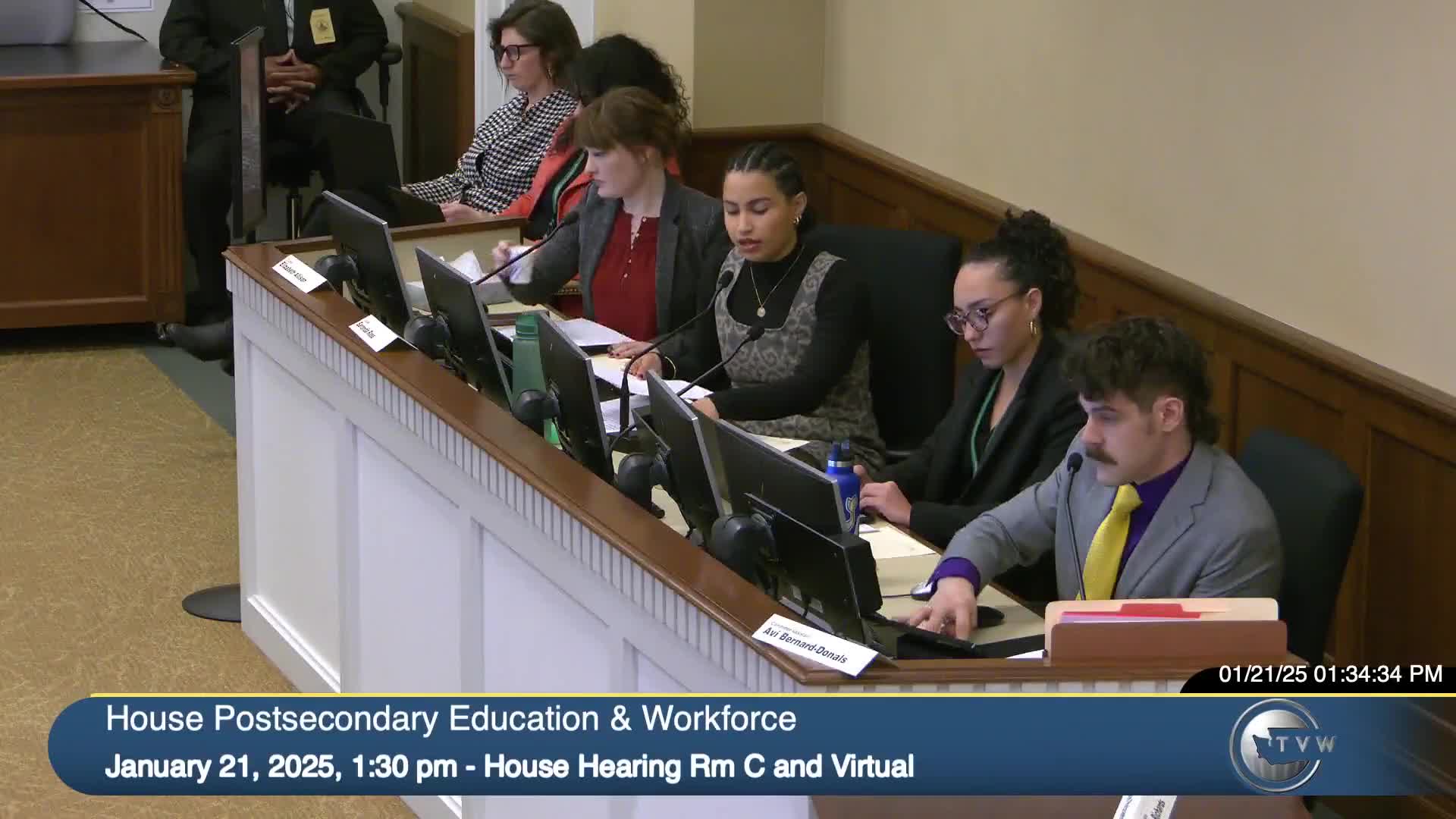
The House Postsecondary Education & Workforce Committee on Jan. 21 considered House Bill 1161, which would create a veteran employability training and career advancement program to assist justice-involved veterans transitioning to civilian life. After debate on two amendments, the committee approved substitute House Bill 1161 with a due-pass recommendation by roll call, 9 ayes to 8 nays.
Rep. McIntyre moved Amendment Ross 062 to exclude individuals with a dishonorable discharge from eligibility. In arguing for the amendment, McIntyre described the rarity and severity of dishonorable discharges and said such recipients typically forfeit veteran benefits. Rep. Reid opposed the change and urged rejecting the amendment, saying the bill’s purpose is to provide second-chance services for people in reentry. The amendment Ross 062 was not adopted.
Vice Chair Nance then moved Amendment Ross 061, which requires the reentry and educational navigator to partner with the Employment Security Department and local workforce offices and to include the Employment Security Department on the interagency work group and reporting responsibilities. Members spoke in favor of adding workforce partners; Rep. Lee voiced explicit support for including state agencies. The committee adopted Ross 061.
After adopting the Ross 061 language into a substitute bill, the committee voted on the substitute House Bill 1161. The roll call recorded nine members voting aye and eight voting nay; staff confirmed the substitute bill was reported out of committee with a due-pass recommendation.
Committee discussion reflected differing priorities: some members emphasized the reentry pilot’s value in providing second chances, citing Veterans Legislative Council support; others expressed concern that the bill focuses narrowly on incarcerated veterans while leaving unincarcerated veterans who also need services. The committee’s final action averts a blanket exclusion for dishonorable discharges while adding workforce-agency coordination to the program.