Get Full Government Meeting Transcripts, Videos, & Alerts Forever!
Get email alerts on the Election Timing topic
No spam. Unsubscribe anytime.
Committee hears competing testimony on allowing local governments to move elections to even‑numbered years
Summary
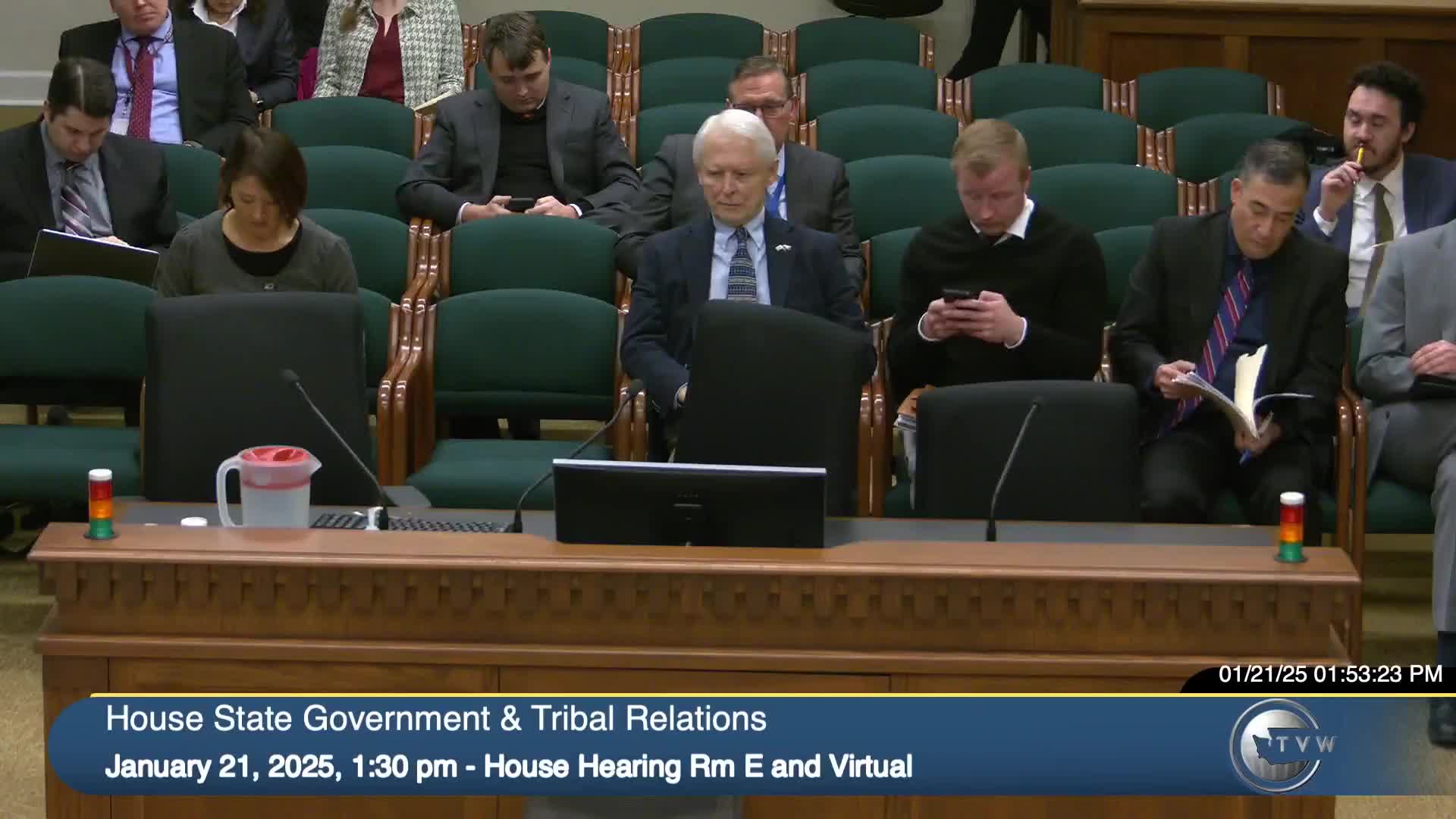
The State Government & Tribal Relations Committee held a lengthy hearing on House Bill 1339, a proposal to let local governments opt to hold regular elections in even‑numbered years rather than odd years.
Olympia — The State Government & Tribal Relations Committee on Tuesday held an extended hearing on House Bill 1339, which would permit cities, towns and special purpose districts in Washington to shift their regular elections from odd‑numbered years to even‑numbered years by ordinance, voter approval or initiative.
Connor Schiff, counsel to the committee, explained the mechanics: jurisdictions may adopt an ordinance or policy, refer an ordinance or charter amendment to voters, or have citizens propose an initiative or charter amendment where local law allows. The change requires two public hearings before adoption, the final vote must be at least 30 days after the second hearing, and the jurisdiction must adopt the swap before Jan. 15 of an odd‑numbered year to affect that cycle. The law also allows sponsors to specify whether a transition term for officers will be one year shorter or longer than current terms.
Representative Gregerson, the bill’s sponsor, argued the policy would boost turnout among younger and working voters and give voters “a healthier community” by increasing participation. He said even‑year turnout can be roughly double odd‑year turnout in many races.
Supporters included political‑science scholars and civic groups. Zoltan Hainal, a UC San Diego professor who has studied election timing for two decades, told the committee that moving local contests to even years “doubles or more than doubles turnout” in many cases and that the reform tends to make electorates more representative by age, race and class. John Ketchum of the Manhattan Institute and speakers from Sightline Institute and the Northwest Progressive Institute also cited research showing sharp turnout increases in other jurisdictions after on‑cycle changes.
Opponents and cautionary voices raised operational and representational concerns. Secretary of State Steve Hobbs, speaking with former Secretary of State Sam Reed, said longer, multi‑page ballots can increase ballot drop‑off and create operational challenges for county auditors. Hobbs described examples of multi‑page ballots and said voter roll‑off can be substantial on lengthy ballots; he recommended caution and said he would “probably not move this bill forward” at this time. Former Secretary Reed described scenarios in which local candidates could receive less attention and warned against unintended effects on local competition.
Other testimonies included campaign‑finance professionals who said compressing more contests into even years could reduce demand for professional treasurers and complicate compliance; local elected officials and mayors who said even‑year elections would broaden participation in municipal contests; and numerous civic‑engagement groups supporting the measure as a way to increase turnout among historically underrepresented voters.
No committee vote was recorded; the bill remains under consideration.
Why it matters: proponents argued the change is the single most powerful reform to boost turnout, citing cases of triple‑digit percentage increases in some mayoral contests in other cities; opponents said operational burdens, longer ballots and potential incumbency advantages warrant caution. The hearing produced detailed data and competing policy arguments that the Legislature will need to weigh.