Get Full Government Meeting Transcripts, Videos, & Alerts Forever!
Get email alerts on the Professional Licensing topic
No spam. Unsubscribe anytime.
Committee hears bill to expand licensing reports, consider fee relief for low‑wage professions
Summary
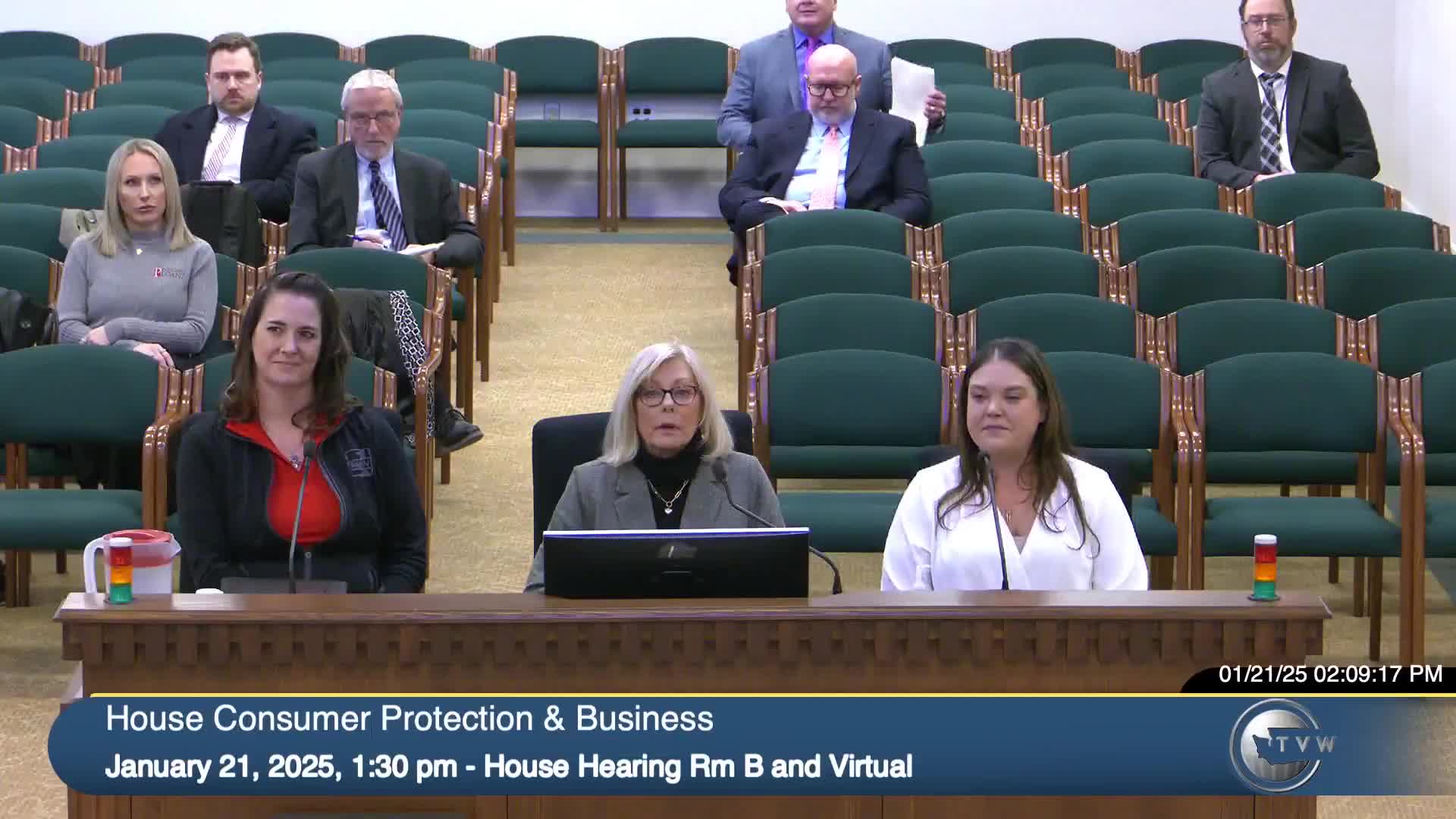
A bill that would expand the annual Department of Licensing report and require analysis of fees, renewal periods and budget breakdowns for low‑wage professions drew a brief public hearing before the Consumer Protection & Business Committee on Jan. 21, 2025.
The Consumer Protection & Business Committee on Jan. 21 held a public hearing on House Bill 1242, which would expand the Department of Licensing’s annual report to include budget breakdowns, low‑wage fee relief options and cost analyses of renewal periods.
Megan Mulvihill, staff to the committee, told members the 2023 law already requires the Department of Licensing to annually review and analyze 10% of professional licenses and to recommend whether licenses “should be terminated, continued, or modified.” Mulvihill said HB 1242 would add three specific reporting elements: annual budget information broken down by activity; “options to reduce the licensing renewal fee for professions with an average hourly wage of less than 125% of the statewide minimum wage”; and “a review and analysis of the timeframe for which a professional license must be renewed with a cost analysis of moving from a 2 year license or to a 2 year bridal license renewal period for those that are currently renewed annually.”
Representative Cindy Jacobson, the bill’s prime sponsor, said the measure is a “very small ask” prompted by a personal example: her brother, who is developmentally disabled and works as an unarmed security guard, pays “over $100 a year for his unarmed security guard license,” while earning near minimum wage. Jacobson said the bill is intended to identify ways to reduce burdens for low‑paid professions.
Committee members asked staff about how license fees have historically changed. Representative Klobuch noted that licensing fees often reflect the actual cost of administering programs and responding to complaints; Mulvihill answered that most professional license fees are based on administrative costs. Jacobson said she hopes the expanded reports will identify cost savings or longer renewal periods that could lower fees for low‑wage professions.
The committee had no additional public testimony and closed the public hearing on HB 1242.