Get Full Government Meeting Transcripts, Videos, & Alerts Forever!
Get email alerts on the Non Opioid Pain Treatment topic
No spam. Unsubscribe anytime.
Committee hears bill to bar insurers from disadvantaging non‑opioid drugs for pain
Summary
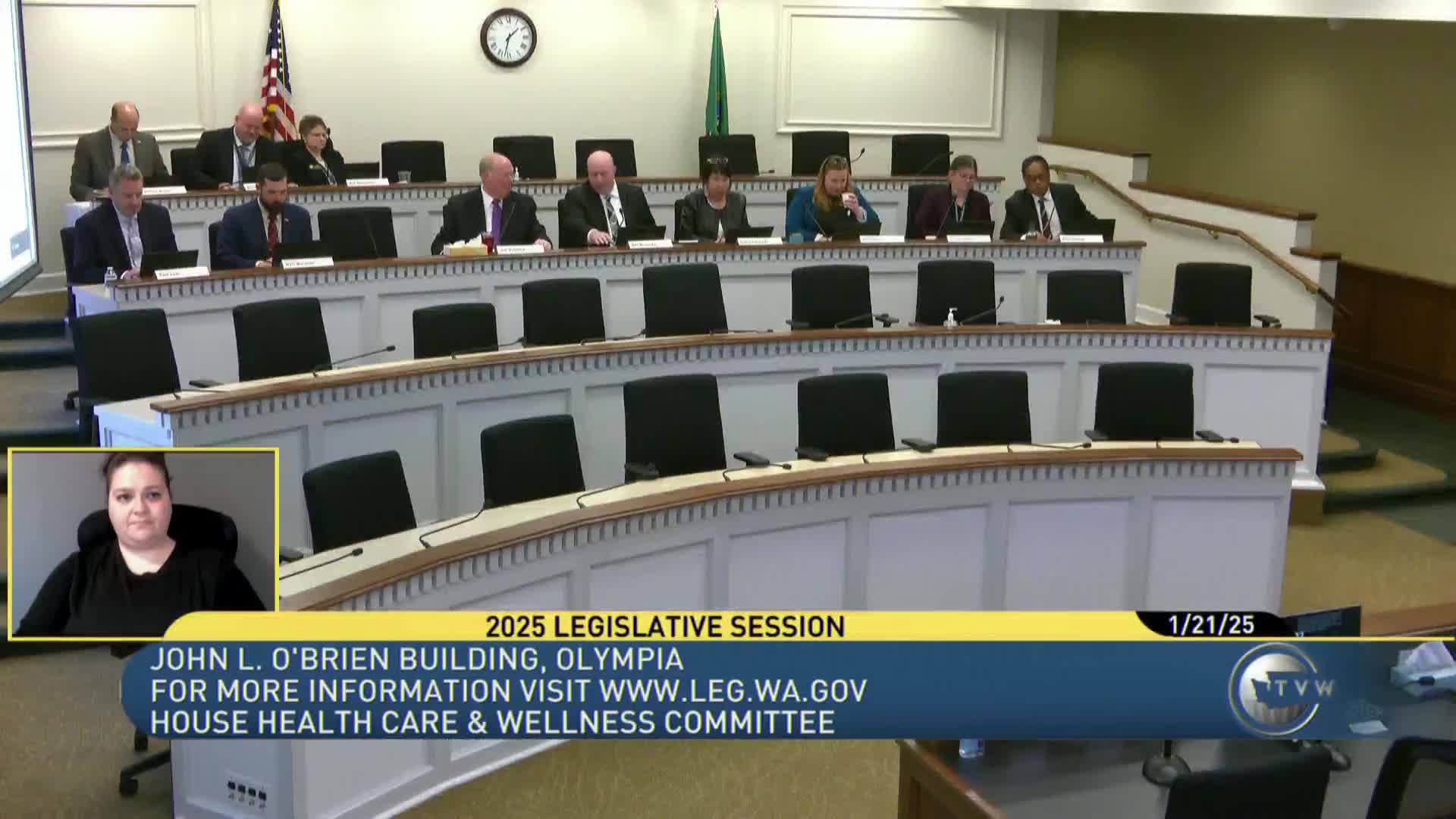
House Health Care & Wellness Committee members heard testimony Jan. 21 on House Bill 1034, a measure from Rep. Lillian Ortiz‑Self that would bar health carriers, state and public employee plans, and Medicaid from imposing policies that disadvantage non‑opioid medications compared with opioids for pain treatment.
House Health Care & Wellness Committee members heard testimony Jan. 21 on House Bill 1034, a measure from Rep. Lillian Ortiz‑Self that would bar health carriers, state and public employee plans, and Medicaid from imposing policies that disadvantage non‑opioid medications compared with opioids for pain treatment.
The bill’s sponsor said the intent is to give patients equitable access to non‑opioid pain treatments and ensure people, including those in recovery from substance use disorders, are informed of alternatives to opioids.
"This bill wants to find parity and equality between access to non opioids and opioid medicine for pain management," said Representative Lillian Ortiz‑Self, the bill’s prime sponsor. She described personal encounters where opioid medications were provided without discussion of alternatives.
Supporters told the committee HB 1034 could reduce pathways to addiction by making non‑opioid treatments easier to use. "This legislation will ensure those in Washington can reasonably access FDA‑approved non‑opioid pain management treatments by prohibiting insurance plans from implementing stricter controls on non opioids compared to opioids," said Chris Fox, executive director of Voices for Nonopioid Choices. Fox cited state overdose data included in his testimony: 2,783 opioid‑related overdose deaths in Washington in 2023 and 34.5 opioid prescriptions written per 100 people that year.
Patient and provider witnesses described clinical and practical barriers to non‑opioid therapies. Allison Fine, executive director of the Center for Chronic Illness, said many chronically ill patients cannot take opioids because of drug interactions and need non‑opioid options for acute events. Lori Grassi of the Washington State Chiropractic Association urged the sponsor to explicitly include non‑pharmacological therapies such as chiropractic care, physical therapy and acupuncture.
Insurers and regulators voiced concerns about possible unintended consequences in the bill’s current language. Jennifer Ziegler of the Association of Washington Health Care Plans said utilization management plays a safety role: "Just because a drug is not an opioid doesn't necessarily mean it's safe for that particular patient. So we manage that through our utilization practice, and we want to be sure that this bill doesn't inadvertently inhibit our ability to do that." Nico Janssen of the Office of the Insurance Commissioner echoed affordability concerns, warning that the bill could incentivize use of higher‑cost brand products over equally effective generics.
Charissa Fotinos, medical director for Medicaid and behavioral health at the Health Care Authority, said the agency supports the bill’s goal of broader access but raised specific concerns about high‑price therapies and a subset of upcoming gene‑ or biologic‑based drugs that could carry large fiscal implications for state programs.
Committee members asked about drafting options to address those concerns. Representative Parsley suggested language ensuring "medically appropriate" use; Ortiz‑Self said she expected stakeholder negotiations and possible amendments.
No action was taken; the committee held a public hearing and suspended further consideration to allow drafting and stakeholder work.
Why it matters: advocates say the bill would expand non‑addictive pain management options at a time when opioid‑related deaths remain elevated, while insurers warn the language could push costlier therapies and limit clinical safety controls. The committee signaled willingness to refine the bill with input from the Health Care Authority, the Office of the Insurance Commissioner and industry groups.