Get Full Government Meeting Transcripts, Videos, & Alerts Forever!
Get email alerts on the Vacating Convictions topic
No spam. Unsubscribe anytime.
Bill to allow limited vacation of some DUI convictions draws split testimony
Summary
Supporters say House Bill 1110 will help people who have completed sentences and remained law-abiding for five years regain opportunities; opponents warn it could undermine recent deferred-prosecution reforms and create public-safety and licensing complications
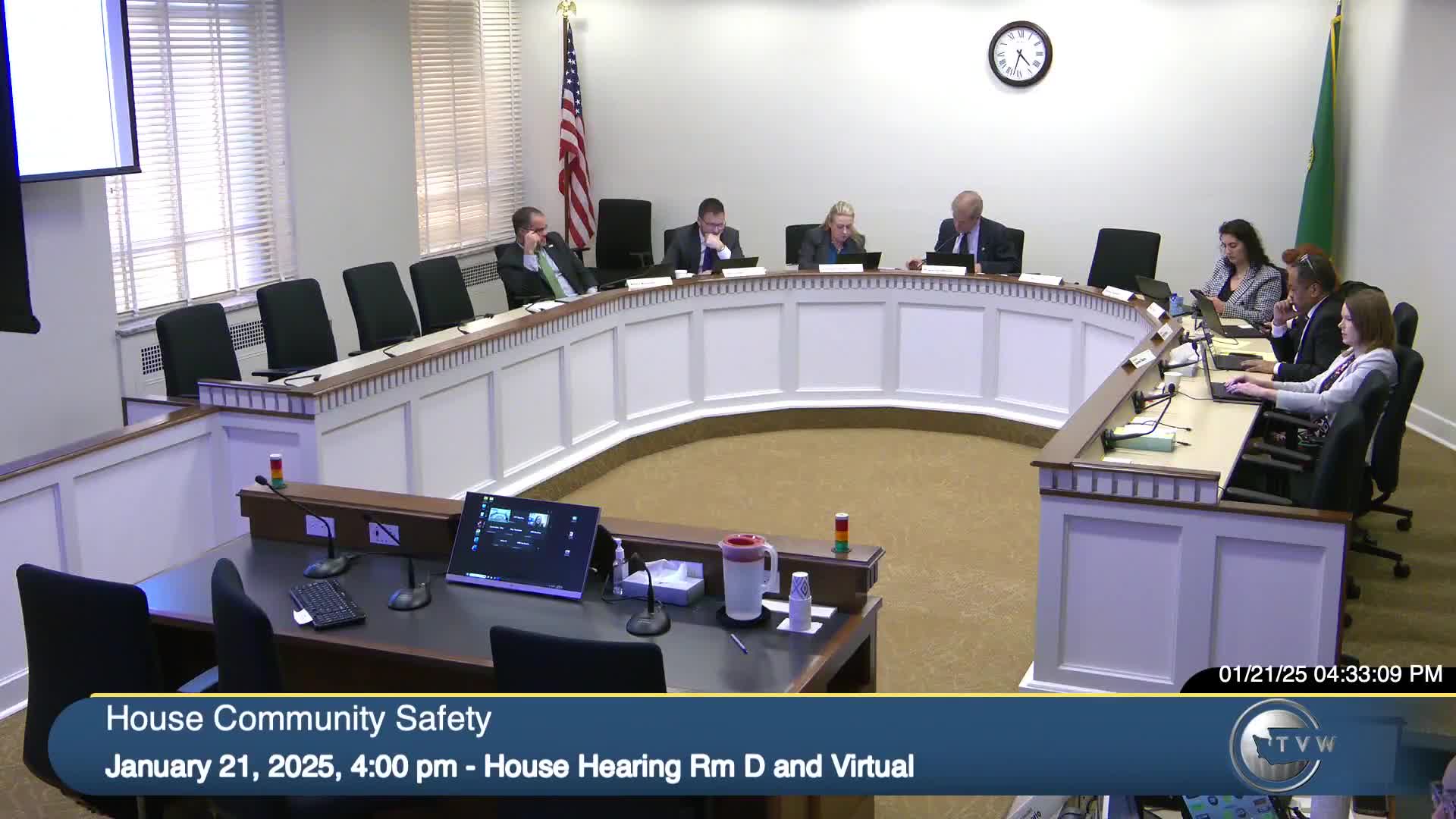
On Jan. 21 the Community Safety Committee considered House Bill 1110, a proposal that would allow a person convicted of driving under the influence (DUI) or physical control (PC) to apply to vacate that conviction if they have completed all sentence terms and have no subsequent alcohol- or drug-related traffic convictions within five years.
Committee staff explained statutory details: a vacated DUI would be treated as a prior conviction for certain later prosecutions within 15 years and could be used for sentencing in vehicular-homicide cases that occur while the driver was under the influence. The staff summary also noted other current limits on vacation eligibility, including pending charges and certain categories of offenses.
Representative Lillian Ortiz-Salle, sponsor of the bill, framed HB 1110 as a narrow pathway to second chances for people who have completed court-ordered obligations and remained law abiding. "I believe in second chances," she told the committee, recounting constituent cases in which a single DUI conviction created long-term barriers to family travel, employment and housing.
Supporters included legal-aid and defense organizations. Oscar Aguirre of the King County Bar Association's Records Project said the change "in no way impacts law enforcement's ability to enforce the DUI laws" and argued that vacating some convictions reduces barriers to employment and housing for people who have completed sentences. Alex Uscoskie of the Washington Association of Criminal Defense Lawyers and the Washington Defenders Association said vacating historic convictions can support reintegration but that vacated records would still be available for sentencing in some later prosecutions under the bill's terms.
Civil-society advocates and reentry lawyers urged passage. Laura Delviar of Civil Survival said DUI convictions function as "a scarlet letter" for many clients who had otherwise rebuilt their lives and stressed that the bill aligns DUI vacation with existing post-conviction relief available for most other offenses.
Opponents cautioned the bill could undercut recent reforms. Linda Thompson of the Washington Association For Substance Misuse and Violence Prevention noted that last year's HB 1493 created a narrowly negotiated framework for deferred prosecutions and expressed concern that HB 1110 could undermine that compromise. James McMahon of the Association of Sheriffs and Police Chiefs and Amy Friedheim of the King County Prosecutor's Office warned about conflicts with occupational licensing and transportation requirements and said the bill could make it harder to hold repeat offenders accountable.
The committee did not vote on HB 1110 at the Jan. 21 hearing; testimony reflected competing priorities between restoration of civic opportunities for people who have completed sentences and concerns about public-safety and sentencing consequences if convictions are removed from easy review.