Get Full Government Meeting Transcripts, Videos, & Alerts Forever!
Get email alerts on the Public Camping Law topic
No spam. Unsubscribe anytime.
Bill would require ‘objective reasonableness’ for local anti-camping laws; cities warn of litigation exposure
Summary
House Bill 1380 would require local laws that regulate sitting, lying or sleeping on public property to be “objectively reasonable,” and would allow courts to enjoin ordinances that are not.
House Bill 1380 would require that city and county laws regulating sitting, lying, sleeping or keeping warm and dry in public spaces be objectively reasonable with respect to time, place and manner, taking into account the totality of the circumstances and the law’s impact on people experiencing homelessness. The bill would allow a person to sue for injunctive or declaratory relief; courts could award attorney fees to prevailing plaintiffs under defined circumstances. The measure does not create a private right to monetary damages, and it would apply retroactively to local laws and causes of action that arise on or after the bill’s effective date. The bill contains an emergency clause and would take effect immediately if enacted.
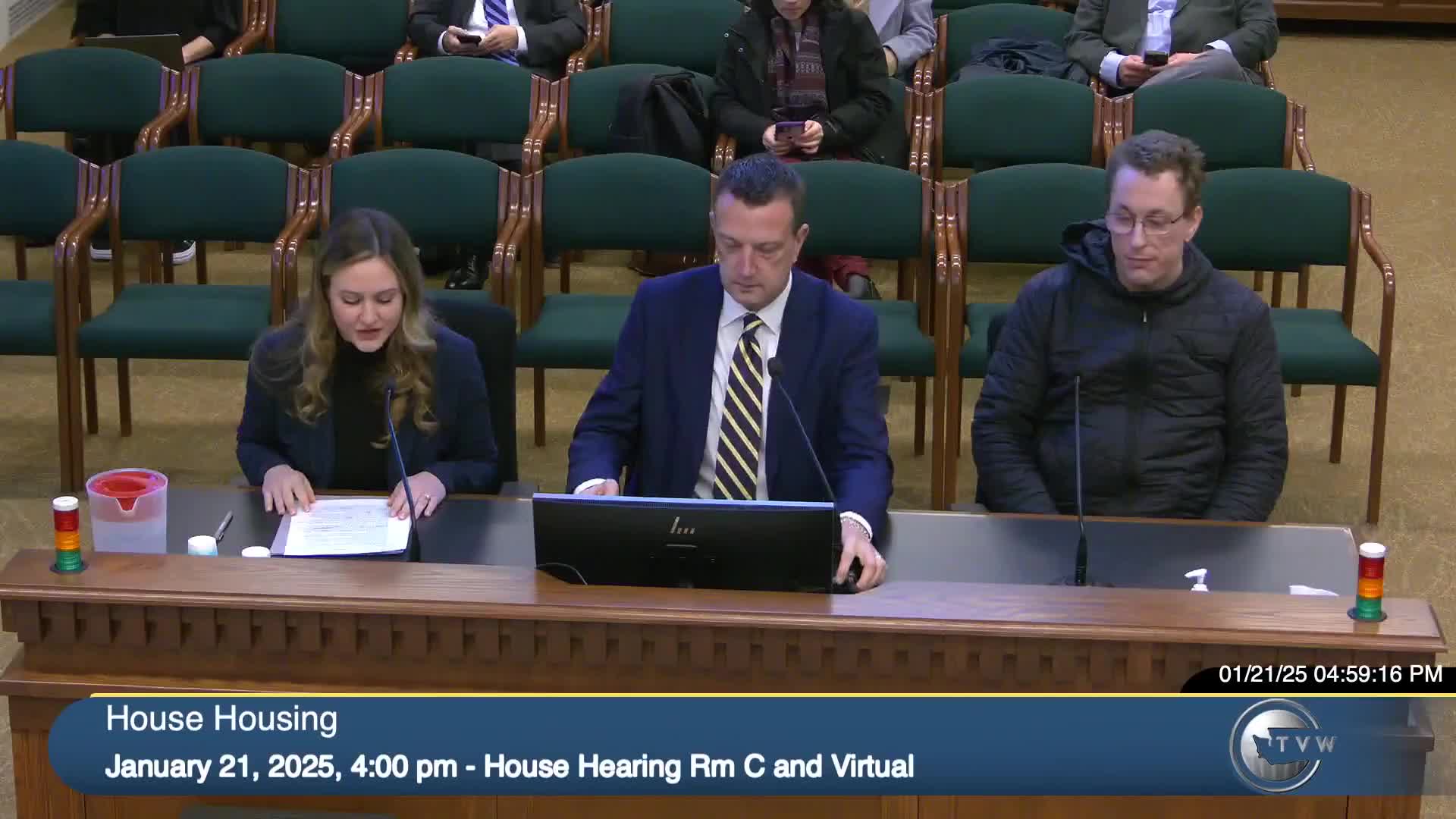
Representative Gregersen, the bill’s sponsor, framed the proposal as a middle-ground approach that preserves local authority to regulate public space while ensuring local rules consider the impact on people without housing. Jasmine Clark of the ACLU of Washington said HB 1380 aligns with the U.S. Supreme Court’s direction in City of Grants Pass v. Johnson and would protect civil rights while allowing reasonable ordinances. Scott Crane of Northwest Justice Project and Columbia Legal Services attorney Sarah Nagy said the bill preserves broad local authority to pursue shelter, services and other responses while protecting unsheltered people from criminalization for efforts to keep warm and dry.
Supporters told the committee the measure would reduce the harms of criminalization and provide clarity to people experiencing homelessness about where and when they can shelter themselves. Cheryl Brown, director of operations at Jules Helping Hands in Spokane and a person with lived experience of homelessness, told the committee that enforcement and loss of identification or vouchers can erase progress toward housing. Paul Leppay of the Washington Low Income Housing Alliance and other advocates urged the committee to pass the bill to prevent fines and criminal sanctions that drain resources and worsen instability.
Many cities and counties testified in opposition. Curtis Steinhauer of the Washington State Association of Counties and Carl Schroeder of the Association of Washington Cities said the bill’s central phrase — “objectively reasonable” — is undefined, will generate litigation to interpret it, and will consume local tax dollars in defense rather than delivering housing. Several mayors (Auburn, Covington, Renton, Mercer Island, Normandy Park and others) argued the bill offers no new shelter capacity, could force cities to redirect already limited funds to litigation, and would hamstring local responses tailored to their jurisdictions. Mayor Eric Zimmerman of Normandy Park urged the Legislature to prioritize funding for residential rehabilitation and treatment programs rather than changing enforcement standards.
Witnesses described two competing concerns: advocates said the bill would protect people who have nowhere else to go and avoid punitive enforcement; many city/county legal advisers and elected officials said the language invites court challenges because there is no Washington precedent defining the term and the Oregon statute that inspired the bill drew immediate litigation in Portland.
Ending: The committee heard extensive public testimony on both sides and closed the hearing; sponsors said they would continue working with city and county officials to refine language and consider funding approaches. No committee vote occurred at the hearing.