Get Full Government Meeting Transcripts, Videos, & Alerts Forever!
Get email alerts on the Recycling Reform topic
No spam. Unsubscribe anytime.
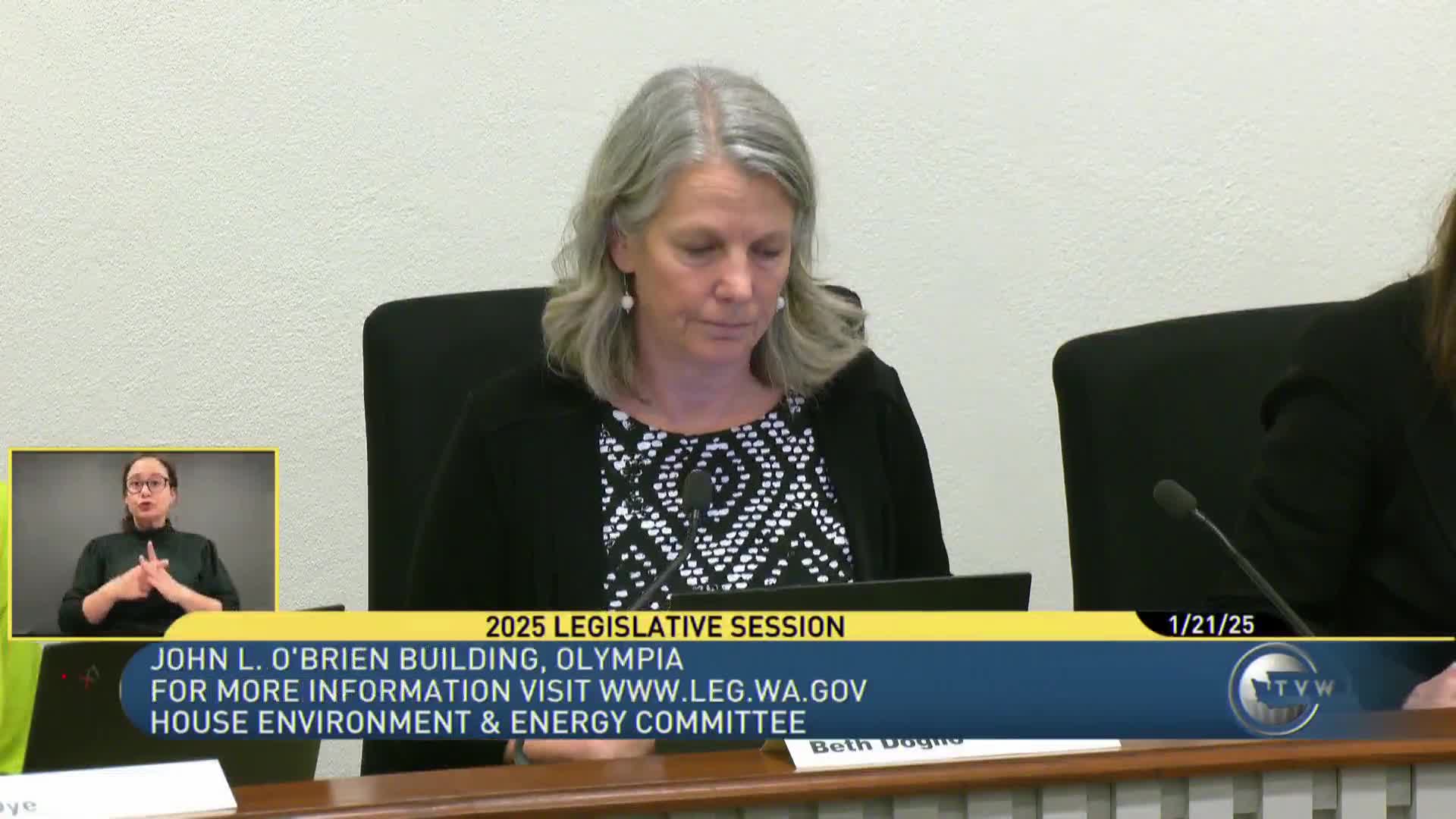
Committee hears hours of testimony on bill to make producers pay for recycling; sponsors say plan will raise residential recycling to 66% by 2032
Summary
House Bill 1150, introduced by Representative Liz Berry (D., 36th Legislative District), would require producers of paper and packaging sold in Washington to finance and participate in a producer responsibility organization that plans and implements statewide recycling collection and processing.
House Bill 1150, introduced by Representative Liz Berry (D., 36th Legislative District), would require producers of paper and packaging sold in Washington to participate in and fund a producer responsibility organization (PRO) that plans and implements statewide collection, processing and end‑of‑life management for covered materials.
Jacob Lipson, staff to the House Environment & Energy Committee, told members the bill sets timelines for producer registration with the Department of Ecology, requires the PRO to submit an approved implementation plan, and directs Ecology to carry out a statewide needs assessment and produce lists of materials suitable for residential curbside recycling, residential composting collection, public‑place collection and alternative collection. Ecology would review plans, receive annual reports, and could assess penalties for noncompliance.
Sponsor Rep. Liz Berry said the measure is aimed at the state’s struggling recycling system. “Right now in Washington, only 40% of residential recyclable materials are actually being recycled,” Berry said, and she told the committee the bill would expand service to 11 rural counties and to multifamily housing and raise the residential recycling rate to 66% by 2032. Berry described hundreds of stakeholder meetings and said more than 1,200 people signed in supporting the bill.
Supporters representing environmental groups, labor and some manufacturers and retailers urged passage. Peter Stilquist of Surfrider Foundation, Kelsey Hulse of the EPR Leadership Forum, and representatives from the Association of Washington Cities and from labor (Teamsters Joint Council 28) testified the PRO model would shift cost responsibility to producers, create incentives to reduce problematic packaging, and increase investment in domestic recycling markets. Health‑sector testimony from Dr. Mark Bosler (Physicians for Social Responsibility) cited research linking microplastics to human disease and said the bill offers a tool to reduce exposure.
Industry witnesses and service providers raised concerns. Several solid‑waste and recycling companies, including Sunshine Disposal and Recycling, the Sanitary Service Company, Waste Management, and small family haulers from Eastern Washington urged a comprehensive, Washington‑specific needs assessment before establishing a statewide PRO. Testimony from Brian Coddington (Sunshine Disposal) and others said county‑by‑county differences in geography and collection networks mean one program could overlook local capacity. Several speakers noted Ecology has done prior studies and disputed the 40% figure cited by the sponsor; one trade witness cited a 49% statewide recycling rate based on Ecology documents provided to the committee.
Retailers, grocers and the Consumer Brands Association said they support increased recycling but warned about timelines, cost impacts and regulatory authority. Testimony citing a New York analysis said an EPR program in that state was estimated to add roughly $36–$57 per month to an average household’s grocery bill; other witnesses cited lower estimated impacts. Food producers and agricultural packers asked for exemptions or protections for FDA‑regulated food‑touch packaging, saying available food‑safe recovered materials are limited.
The bill contains several implementation and policy details discussed at length: required registration of service providers and solid‑waste collectors; integration of PRO plans with local solid‑waste comprehensive plans; Ecology oversight and potential civil penalties; a provision for minimum compensation standards for employees of material recovery facilities (MRFs); an antitrust exemption for some PRO activities; and three one‑time studies to be carried out in the 2030s — including a 2032 equity study and a JLARC (Joint Legislative Audit and Review Committee) review over the first seven years of the program.
Multiple witnesses urged the committee to require or fund a thorough state needs assessment before implementation; proponents replied the bill already embeds a needs‑assessment process that Ecology would carry out and that the PRO would use when designing collection and processing plans.
No committee action or formal vote was taken at the hearing. The measure drew extensive, sometimes sharply divergent testimony from municipalities, industry groups, labor, environmental advocates and service providers and will return to the committee for further work.