Get Full Government Meeting Transcripts, Videos, & Alerts Forever!
Get email alerts on the Housing Accountability topic
No spam. Unsubscribe anytime.
House panel hears bill to make Commerce approve local housing plans before they take effect
Summary
House Bill 1235 would require Department of Commerce approval of housing elements and development regulations for jurisdictions that plan under the Growth Management Act before those rules take effect.
House Bill 1235 would require cities and counties that plan under the Growth Management Act to submit housing elements and housing development regulations to the Washington State Department of Commerce for a determination of compliance before those rules take effect.
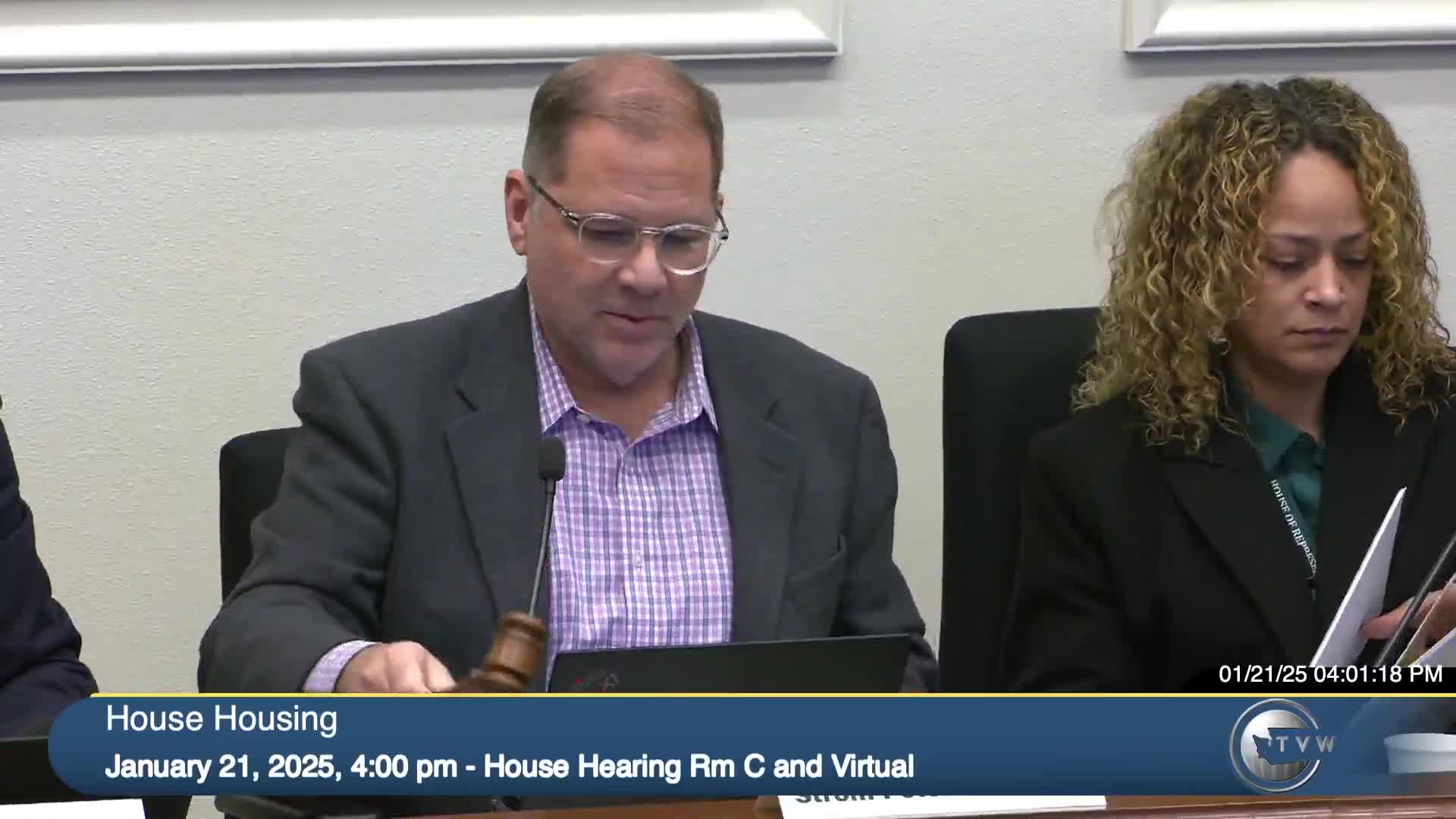
Representative Peterson, chair of the House Housing Committee and the bill’s prime sponsor, opened the hearing by saying the measure addresses the housing “supply” problem and is meant to help local governments comply with statewide housing policy. Audrey Vasek, staff to the committee, summarized the bill: jurisdictions must submit their housing elements and development regulations to Commerce within 10 days after final action to amend or replace them (and no later than six months after a comprehensive-plan update or five-year progress report is due). Commerce would have 90 days to issue a final compliance decision; until Commerce issues that decision, the submitted housing elements or regulations would not take effect. The bill also directs Commerce to publish objective compliance standards and to maintain a public list of jurisdictions’ compliance status. Commerce’s final decisions would be appealable to the Growth Management Hearings Board within 60 days, the staff report said.
Supporters including FutureWise, the Master Builders Association of King and Snohomish Counties, Habitat for Humanity, and the Building Industry Association told the committee the bill would provide clarity and predictability that helps housing developers and nonprofits pursue projects. Bryce Yaden of FutureWise said the 2020 Growth Management Act changes (House Bill 1220) increased planning responsibilities for jurisdictions and that Commerce review would provide needed oversight and allow appeals from both development advocates and opponents. Alex Hurd of the Master Builders Association and Brent Ludeman of the Building Industry Association said clear, objective state standards would help the private sector plan and finance projects.
Municipal officials and local government associations raised administrative and timing concerns. Carl Schroeder of the Association of Washington Cities said fewer than 1% of past appeals found local plans noncompliant and warned that a mandatory pre-effect approval process could slow housing delivery and create capacity problems for Commerce. Carol Heland, planning director for the City of Redmond, and Carl Almgren, community planning manager for the City of Lynnwood, said the current process — in which Commerce reviews transmittals and provides feedback before local legislative action — allows local councils to take final action after public outreach; they urged clearer drafting on retroactivity and more review time for Commerce (one suggestion was increasing notice-of-intent windows from 60 to 90 days for comprehensive-plan reviews).
Representative Defoe asked whether HB 1235 includes penalties such as withholding certain state revenues; witnesses and the sponsor clarified that a separate companion bill contains an expanded list of penalties, while HB 1235 retains existing GMA consequences and a “builder’s remedy” allowing certain affordable developments to proceed during noncompliance periods as defined in the bill. The sponsor said Commerce would publish minimum objective standards within six months of the bill’s effective date and that Commerce decisions would be appealable to the Growth Management Hearings Board.
The hearing record included multiple proponents and opponents who said they would follow up with written technical suggestions. No formal vote occurred; committee members indicated further work and potential amendments would follow.
Ending: The committee closed the hearing on HB 1235 after public testimony and moved on to other bills on the agenda. No action or vote on the bill was recorded at the hearing.