Get Full Government Meeting Transcripts, Videos, & Alerts Forever!
Get email alerts on the Comprehensive Plan topic
No spam. Unsubscribe anytime.
Avon Grove updates draft comprehensive plan; public review set for Feb. 11–March 11
Summary
District staff described a six-team “Future Ready” framework and timeline for public review, saying action teams will revise plans through January before a public comment period runs Feb. 11–March 11.
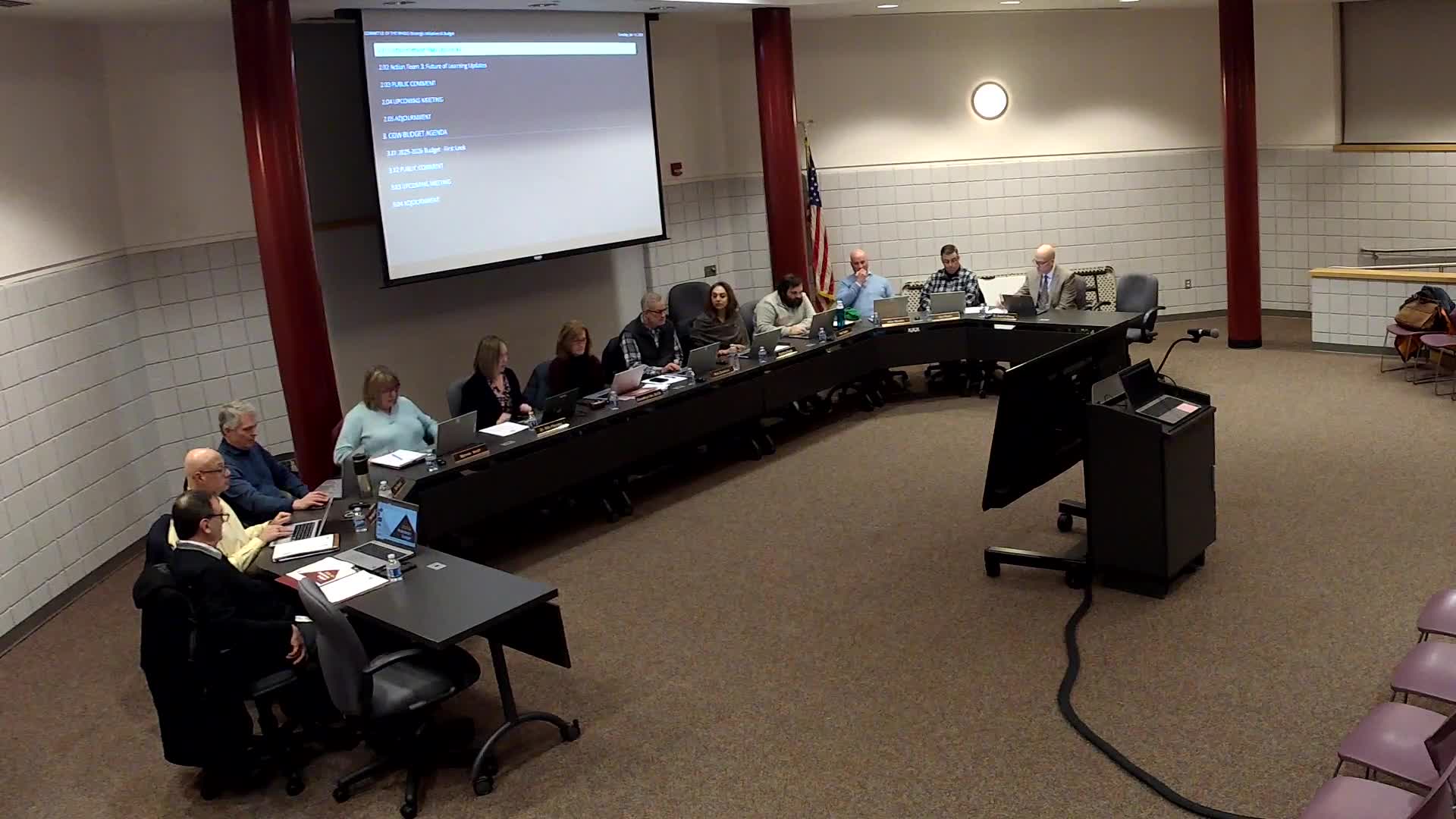
Avon Grove School District officials on Jan. 14 provided an update on the district’s draft comprehensive plan, describing six cross‑functional action teams, a schedule of final revisions and a public review period set to begin Feb. 11.
Dr. Lynn Harvey, a district staff member leading the Future Ready planning process, told the Committee of the Whole that action-team captains incorporated steering-team feedback from two recent work sessions and that she expects a more comprehensive committee presentation on Feb. 11. “Between now and the end of January, our action teams will be making revisions and then we will start inputting every as the future ready comprehensive planning portal,” Harvey said.
Why it matters: The comprehensive plan will guide district priorities for 2025–2028 and informs budget and program decisions. The public-review period will allow community members — with Spanish translations and a summary video planned — to provide feedback that district staff say will be considered before the board seeks legislative approval in March.
Harvey described six teams that will drive the plan: (1) Profile of a Future Ready Avon Grove Graduate (career/future-ready portfolios), (2) Future of Learning (instructional frameworks and technology alignment), (3) Connected, Accepted and Valued (tier‑1 social‑emotional supports and PBIS integration), (4) Health and Advocacy (tier‑2/3 interventions and chronic absenteeism), (5) Systems Improvement (onboarding and staff workflows) and (6) Workforce Development (recruitment and retention). She said the teams will sequence work to introduce initiatives at elementary levels and roll them through middle and high school.
On chronic absenteeism Harvey said the district will target students attending less than 90% of school days (the state definition cited during the meeting) and that the Health and Advocacy team will develop targeted supports for those students.
Board members asked about student voice, selection and data. Mr. Wood (board member) asked how often students participated; Harvey said the process solicited 11th‑ and 12th‑grade applicants (about 20 applicants), from which two juniors and two seniors were selected; three of the four remained active for the full process. Rucera (board member) praised the diversity of voices and the process, saying it included students, parents, educators and community members and that the cross‑perspective conversation had been “very enlightening.”
Harvey outlined next steps and dates: final internal revisions by action teams through the end of January; inclusion of plan content into the district’s comprehensive‑planning portal (producing a large PDF); a Padres Latinos presentation and input opportunity on Jan. 21; a Future of Learning after‑school review on Feb. 4; a Committee of the Whole update on Feb. 11 with a slide deck and public‑facing materials; a public review window from Feb. 11 through March 11 with video summary and translated materials; and a request for legislative approval on the March board meeting agenda.
Harvey said the Feb. 11 Committee of the Whole update will be “much more comprehensive, much more granular” with examples showing how initiatives will change classroom practice and with evidence and data explaining why teams selected priorities such as chronic absenteeism. “You will see on here we have six teams that we're looking at for 2025 through 2028,” she said, adding the first‑year initiatives were designed to align to the Future‑Ready profile competencies.
Harvey and board members stressed continuity with past planning work: the steering team based the priorities on an initial needs assessment and prior comprehensive‑plan work, and the district intends to show which prior goals are being continued, completed or adjusted.
The committee did not take any formal votes on the comprehensive plan during the meeting; staff characterized the presentation as an informational update and outlined the public‑input and board‑approval timeline.
The district will collect public input during Feb. 11–March 11 via an online feedback form, a summary video, and the long PDF of the plan; Harvey said staff will report back at the March 11 Committee of the Whole meeting on what the public submitted and whether changes resulted from that input.
Ending: Board members thanked staff for the work and for plans to provide clearer examples of what the Future Ready profile will look like in classrooms and how data informed the selected priorities. The next Committee of the Whole Strategic Initiatives meeting will be at 6 p.m. on Tuesday, Feb. 11 at the AGI Audion.