Get Full Government Meeting Transcripts, Videos, & Alerts Forever!
Get email alerts on the Budget topic
No spam. Unsubscribe anytime.
South Colonie staff outline preliminary 2025–26 budget; foundation aid rise, UPK funding and tax-cap impacts highlighted
Summary
District staff presented preliminary budget priorities and early revenue estimates including a projected $3.23 million increase in foundation aid, partial use of UPK funding, rising health insurance and retirement costs, and a capital-exclusion tax impact tied to the district's 2022 next-generation construction project.
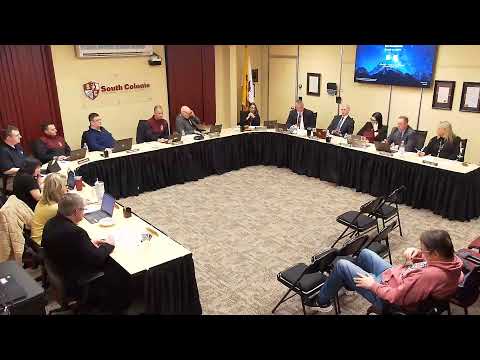
Miss McAllister, a district staff member presenting the budget, led a preliminary discussion of the South Colonie Central School District's 2025'26 budget priorities and revenue outlook.
The presentation identified five budget priorities: academic equity and opportunities, program structure and sustainability, enhancements to high-school pathways, continued construction tied to the district's next-generation capital project, and attention to economic forces shaping revenues and expenditures. Miss McAllister told the board that the governor's executive budget and the state aid runs were released earlier that day and that the district's foundation aid appears to increase from about $32.3 million to about $35.5 million, a roughly $3.23 million uptick.
Why this matters: the foundation aid increase improves the district's revenue picture for 2025'26 but does not eliminate key cost pressures. Miss McAllister cautioned that rising health insurance, prescription drug costs and employer retirement contribution rates will push expenditure growth. Board members asked questions about transportation, state testing alignment and how UPK funding is being accessed.
Miss McAllister summarized expense pressures: projected salary trend increases of 3% to 5% tied to contract settlements; health-insurance premium increases (examples cited: 10.9% and 8.3% on two plans); and pension/retirement employer rates (TRS near 10.11% and ERS rising from 15.2% to 16.5%). She noted 18 teacher retirements that will create both budget "breakage" and new staffing costs.
On state aid details, Miss McAllister said the foundation aid formula had been updated to use newer poverty metrics and different Census data, and that the change had a positive effect for the district. She also described a state announcement of funding for school cell-phone policies (a $13.5 million statewide allocation) that districts must plan for if enacted in final budgets.
Universal Pre-K (UPK): McAllister said the district is allotted up to roughly $970,000 and currently accesses about $680,000, leaving roughly $300,000 of potential UPK funds unused because adding sections requires a local share (about 50% of the cost of an 18-student section). She said each fully funded UPK section brings roughly $54,100 in revenue but also generates associated staff and TA costs.
Tax cap and capital project: Miss McAllister explained that the district will see an additional roughly 1 percentage point added to the tax impact due to the capital exclusion associated with the next-generation construction project approved in 2022; she said that will appear as a separate capital exclusion on the tax bill and is not part of the operating levy. She noted the state's allowable levy growth factor and tax-base growth factor calculations are driving this change and that final figures would be returned to the board when aid projections are finalized.
Transportation and electric buses: board members pressed about the state bus electrification mandate. McAllister and Dr. Perry said state legislators and representatives have heard districts' concerns but that, as presented to them, the state timeline still envisions a long-term phase-in (implementation dates cited in the discussion included 2027 for initial targets and 2035 for fuller implementation). The district has applied for one replacement bus pending approval and will continue planning for infrastructure and fleet changes.
Process and next steps: McAllister reviewed the district's budget calendar: a transportation operations and maintenance focus meeting on Feb. 4; a special-education and student-support focus on Feb. 25; the first draft of the instructional budget after those focus sessions; a second draft and final presentations in late April; a public hearing May 6; and the budget vote on May 20.
Board questions highlighted the complexity of a budget that benefits from increased state aid while still facing rising local costs and constraints on staffing and transportation choices.