Get Full Government Meeting Transcripts, Videos, & Alerts Forever!
Get email alerts on the Proposition1 Actions topic
No spam. Unsubscribe anytime.
Council declines motions to sue over or publish a city attorney opinion on Proposition 1; motion to file suit fails 2–3
Summary
Council declined two motions related to Proposition 1 on Jan. 21 — a motion to direct the city attorney to file suit failed 2–3, and a later motion to publish a comprehensive city‑attorney opinion also failed.
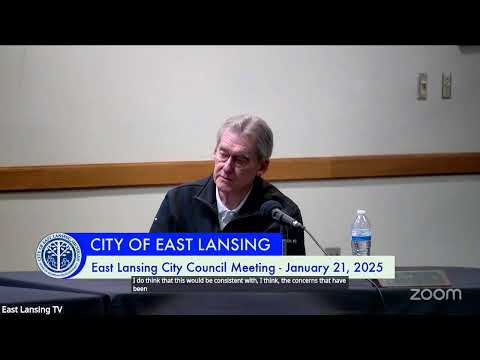
At the Jan. 21 meeting the council considered two related motions concerning Proposition 1, the citizen‑initiated charter amendment adopted by voters. First, Council Member Aldman moved to direct the city attorney to file a lawsuit challenging the validity of Proposition 1 on grounds of lack of clarity and state‑law violations; Council Member Meadows seconded. The motion failed on a roll call vote: Aultman — yes; Meadows — yes; Watson — no; Mayor Pro Tem Singh — no; Mayor Brookover — no (2–3).
Aldman argued the charter amendment contains multiple discrete propositions and that paragraph 1 is ambiguous in a way that could undermine local zoning, rental‑housing overlays and occupancy limits; he said litigation would resolve legal uncertainty. “I see this as the next step in a legislative process,” Aldman said, framing the motion as a way to obtain judicial clarification rather than as an attempt to overturn the electorate.
Council members who opposed directing the attorney to sue said they respected the outcome of the public vote and preferred legislative or administrative remedies and clarifications rather than immediate litigation. Mayor Brookover, Singh and Council Member Watson expressed concern that litigation would perpetuate discord and that council‑led ordinance updates and the housing‑regulation work already underway provide a path for addressing ambiguities.
After that vote, Aldman moved a separate motion directing the city attorney to draft and publish a comprehensive legal opinion detailing state‑law concerns and the amendment’s alleged ambiguities. That motion was seconded but did not pass. Council discussion on the second motion included concerns from some council members and the city attorney that publishing an advisory memorandum in advance of potential litigation could be strategically problematic or compromise the city’s position; the motion failed by council vote (final voting positions were recorded as no by several members; the motion did not carry).
Outcome and next steps: neither the directed lawsuit nor the requested published city‑attorney opinion was approved by council. Council members and staff noted that ordinance changes and the housing‑regulation review already in progress remain the primary path for clarifying local rules and enforcement.