Get Full Government Meeting Transcripts, Videos, & Alerts Forever!
Get email alerts on the School Boundaries topic
No spam. Unsubscribe anytime.
Wicomico County school boundary team recommends Option B to reduce elementary overcrowding
Summary
A consultant-backed boundary plan would shift about 705 elementary students to rebalance capacity; the planning team voted 10–1 to recommend Option B. The Board of Education will hold a public hearing Jan. 14 and vote Feb. 11, 2025.
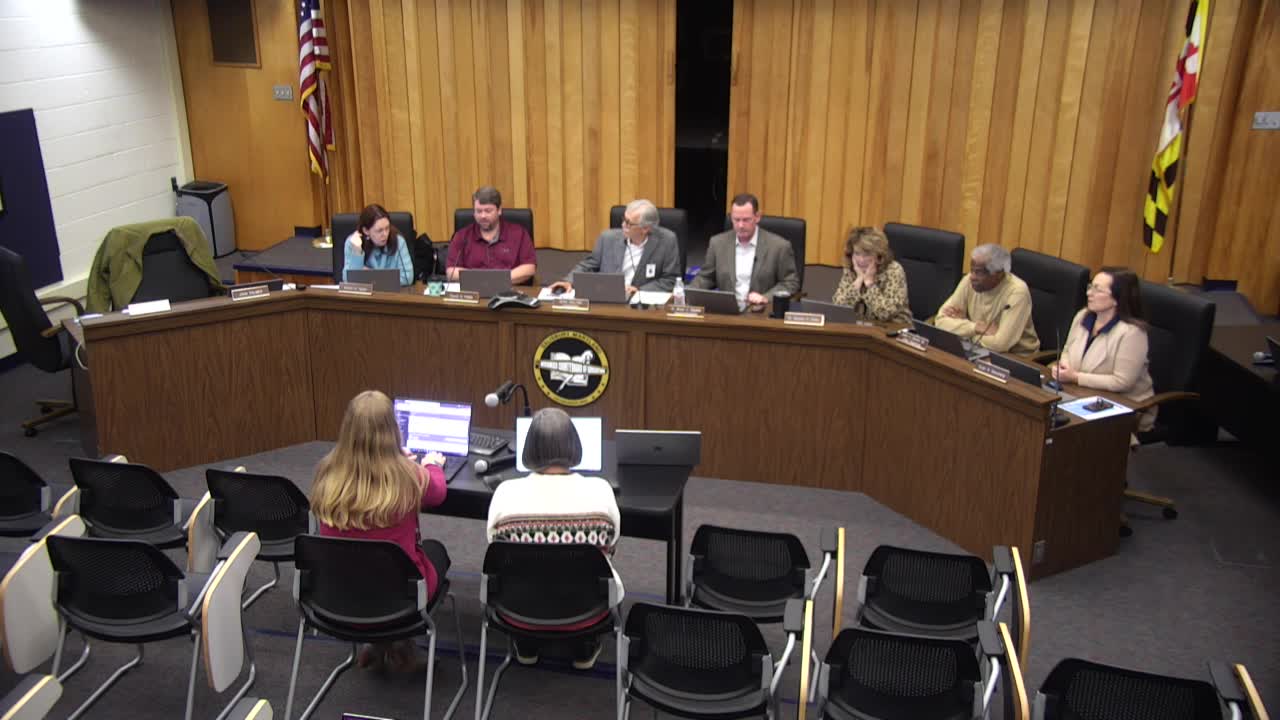
WICOMICO COUNTY, Md. — A consultant for Wicomico County Public Schools on Tuesday presented a recommended school boundary map intended to relieve overcrowding at several Salisbury-area elementary schools and better align feeder patterns to middle and high schools.
James Cooper, a consultant with Cropper GIS, told the Board of Education that the planning team built four scenarios and selected one recommendation — labeled Option B — after several public information sessions and an online survey. “I’m certainly humbled to have worked with Wicomico County Public Schools over the last few months on this boundary study,” Cooper said.
The recommendation aims to reduce extreme overcrowding at downtown elementary schools and to create more balanced utilization across the district. Using September 30, 2024 enrollment and updated October 2024 counts, Cooper said the district’s elementary-level utilization is about 103% overall; Prince Street Elementary was cited at roughly 158% utilization and identified as a primary target for relief. Under Option B, planners estimate roughly 705 elementary students would be reassigned and 37 middle-school assignments would change to improve feeder alignment.
Nut graf: The boundary planning team’s recommended map reduces small splits in feeder patterns and preserves high-school boundaries. The board will take public comment at a hearing Jan. 14 and may vote on a final plan Feb. 11, 2025; staff said the recommendation could be modified after public input.
Supporting details: The planning team followed the district’s adopted redistricting policy and best-practice factors including utilization, demographic balance, minimizing splitting subdivisions, anticipated development, and geographic dividers. Cooper said the team excluded Delmar Elementary from the study because Delmar operates under a bi‑state agreement with Delaware school authorities. Planners also used address‑level geocoded enrollment and county subdivision and development data to produce planning blocks that try to avoid splitting neighborhoods.
Public engagement: Two sets of public information sessions and an online survey generated community feedback; Cooper reported 138 survey responses after the second session plus about 57 general feedback submissions as of Jan. 1, 2025. The school boundary planning team met roughly monthly from September through December and produced a final internal vote of 10–1 in favor of Option B.
Implementation and next steps: The district posted an interactive web map (wcpsboundarystudy.org) where residents can enter an address to see whether and how an assignment would change. Board members asked staff to prepare options for family-level exceptions or transition plans if the board endorses the recommendation after the public hearing. The board scheduled a public hearing for Jan. 14, 2025 at 7 p.m. at West Salisbury Elementary School, 1321 West Road, Salisbury; the board’s vote on a boundary plan is scheduled for Feb. 11, 2025 at 7 p.m. at 101 Long Avenue, Salisbury.
Quotes and context: Chairman Malone said the public hearing will be a listening session and described how residents will speak: “We will have no limit except for 3 minutes,” he said, adding that the district will livestream and record the hearing. Staff advised the board that planned development and portable classrooms affect building “feel” versus strict state‑rated capacity figures; the consultants used state‑rated capacity for consistency across the district.
Ending: The recommendation leaves high school zones unchanged and aims to improve elementary-to-middle feeder continuity; if the board approves Option B it asked staff to return with written proposals describing possible exceptions or transition support before implementation for the 2025–26 school year.