Get Full Government Meeting Transcripts, Videos, & Alerts Forever!
Get email alerts on the Childcare Licensing topic
No spam. Unsubscribe anytime.
Committee reviews child‑care licensing modernization, inspections and background checks
Summary
Nonpartisan staff reviewed state licensure categories, the Provider Hub and proposed weighted risk enforcement, key‑indicator inspections, Parent Aware automatic ratings, and concerns about fingerprints and background study access via NETStudy and vendor IDEMIA.
House Research and House Fiscal staff briefed the committee on state child‑care licensing, modernization efforts and background‑study procedures.
A nonpartisan presenter described three primary license types—child‑care centers, family and group family child‑care homes, and special family child‑care homes—and noted statutory exclusions (for example, certain before‑and‑after‑school arrangements and family‑friend‑and‑neighbor care) that do not require state licenses.
Why it matters: Licensing rules and enforcement determine provider eligibility to accept public subsidy dollars, set minimum safety standards, and affect program capacity. Members said changes to inspection or background‑check practices can influence the supply of licensed providers and access to care.
Staff explained three major outputs from a 2021 statutory directive: a weighted risk enforcement framework, revised licensing standards, and a key‑indicator system for abbreviated inspections. The weighted risk system assigns enforcement actions based on the risk posed by violations; staff said the statute already includes the framework but it is not in effect pending Provider Hub implementation. The key‑indicator system is designed to allow qualified providers a shorter annual inspection focused on standards that statistically predict overall compliance.
Parent Aware, the state’s voluntary quality rating and improvement system, currently has participation rates that vary by provider type: staff noted about half of centers participate while roughly 17% of licensed family child‑care providers do. The presenter said an automatic 1‑star rating pathway is scheduled to begin in 2026 for programs in good standing unless they opt out.
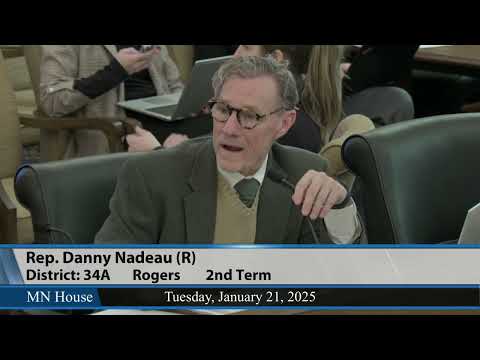
Members raised concerns about background studies and fingerprinting. Staff said background‑study disqualifications and procedures are listed in statute (chapter 245C) and that the NETStudy system is used to check records; the vendor IDEMIA collects fingerprints and photos at locations across the state. Representative McDonald and Representative Zalesnikar described practical barriers: limited appointment windows and travel burdens to vendor sites can delay renewals and reduce available staff for providers. Representative Nadeau said DHS has discussed a forthcoming RFP and exploring options, including using law enforcement in some locations, to increase access for fingerprinting and photo collection.
Staff said counties perform licensing functions for family child‑care providers and the state (currently DHS, later DCYF) issues licenses, conducts background checks, and imposes sanctions when appropriate. The committee did not take formal action during this orientation session.