Get Full Government Meeting Transcripts, Videos, & Alerts Forever!
Get email alerts on the Committee Operations topic
No spam. Unsubscribe anytime.
House Tax Committee hears nonpartisan staff outline roles, materials and tax concepts
Summary
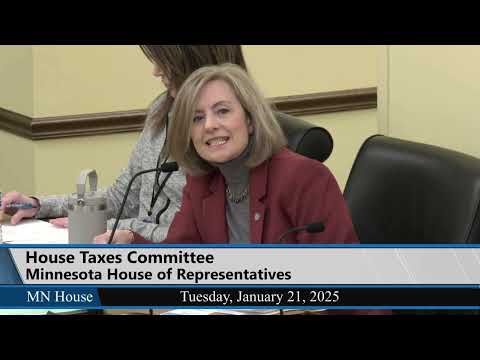
Nonpartisan House Research and fiscal staff briefed the Minnesota House Tax Committee on staff roles, weekly documents and basic tax concepts during an organizational meeting Jan. 21, 2025.
Chair Matt Davids called the Minnesota House Tax Committee to order Jan. 21 and said the committee had a quorum. Nonpartisan House Research staff then gave an orientation covering the office roles, the typical weekly packet of documents and basic concepts used to evaluate tax proposals.
Sean Williams of House Research told the committee, "Our role in the committee is to draft bills and amendments for the committee, write bill summaries, provide background research and overviews, answer questions about bill content and potential legal questions relating to bills, and then our office also does modeling of tax proposals." He described House Research's work on distributional and back-of-envelope fiscal estimates. Williams said House Fiscal typically focuses on revenue and budgetary effects.
Williams and other staff described the recurring documents members receive: bipartisan and nonpartisan bill summaries, partisan briefs, revenue estimates or fiscal notes and supporting spreadsheets and letters from testifiers. Williams emphasized the distinction between a tax base, tax rate and tax credits and explained how liabilities, credits and the tax gap determine how much revenue the state collects.
Committee members asked procedural questions about how documents are prepared and whether members may ask questions during presentations. Williams said members could ask questions during staff presentations. The meeting also included staff introductions from House Research and a brief preview that property taxes would receive a fuller briefing the following day.
The orientation included presentation slides and examples of tax-expenditure categories (agriculture, education, housing, energy, veterans) and how tax provisions can function like direct spending programs. Williams said the committee would see property-tax materials in greater depth at the next meeting.