Get Full Government Meeting Transcripts, Videos, & Alerts Forever!
Get email alerts on the DCYF Budget topic
No spam. Unsubscribe anytime.
House committee hears biennial budget and jurisdiction overview for new Department of Children, Youth and Families
Summary
Nonpartisan fiscal and research staff briefed the House Children and Youth and Families Committee on the jurisdiction and base budget of the newly created Department of Children, Youth and Families (DCYF), including major funding streams, forecasted programs and how federal match and pass-through dollars work.
The House Children and Youth and Families Committee received a briefing on the new Department of Children, Youth and Families and the committee’s fiscal jurisdiction from nonpartisan staff at a committee orientation.
The presentation by Doug Berg of House Fiscal Staff and Annie Mok of House Research outlined that DCYF programs transferred from several agencies are now within this committee’s oversight and that “the general fund base is a little over $2,000,000,000 for 2 years,” Berg said. Staff also described large federal funding streams the agency administers, including SNAP and other federal food-assistance funds.
Why it matters: The committee will review appropriations that cover child protection, child support, TANF-related programs, early learning grants and other services now housed at DCYF. Those funding lines determine the operational capacity of the new agency and how counties and other local actors administer programs.
Berg told members the new agency was created by the 2023 Legislature and was established July 1, 2024, with many programs transferred from the Department of Human Services, the Department of Public Safety, the Department of Health and the Department of Education. “As part of establishing that new agency, nonpartisan staff were directed to recodify statutes to reflect the transfer of all the programs,” Annie Mok said, and staff pointed committee members to a crosswalk on the House Research website that maps old statute locations to the recodified language.
Staff walked members through three broad funding categories the committee will review: agency operations and administration; forecasted programs (which change when the February revenue forecast is released); and grant programs that rolled forward from prior appropriations. Berg emphasized the distinction between funds that are appropriated directly by the Legislature and statutory appropriations that exist in law. He noted there is a statutory appropriation related to administration of ICWA (the Indian Child Welfare Act) that the committee will need to be aware of when reviewing bills.
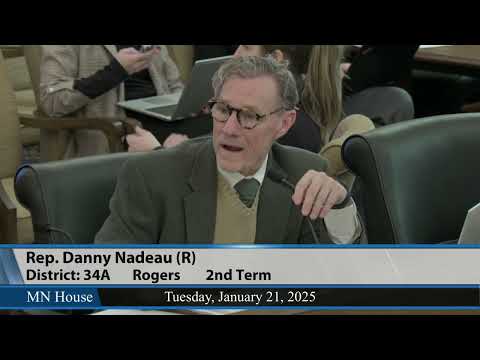
The presentation also described a common accounting item called Federal Financial Participation (FFP), where federal reimbursement reduces net state general fund costs for some administrative activities. Representative Nadeau asked whether the FFP estimate would change with a new forecast; Berg said the figure is an estimate and “sometimes it’s not right” but typically does not change materially unless an expected activity does not occur. Members asked several follow-up questions about the budget lines for TANF, SNAP and specific forecasted programs.
The briefing closed with staff offering resources and contact information and a reminder that projected numbers will be updated in the February forecast. The committee chair said members will have further briefings and hearings, including sessions with providers and stakeholders on specific program areas.
The session recorded no formal committee actions or votes on budget measures at this orientation hearing.