Get Full Government Meeting Transcripts, Videos, & Alerts Forever!
Get email alerts on the Livestock Identification topic
No spam. Unsubscribe anytime.
Committee approves measure directing Livestock Board to pursue MOUs to preserve brand-based interstate movement amid federal EID rule; bill passes 7–2
Summary
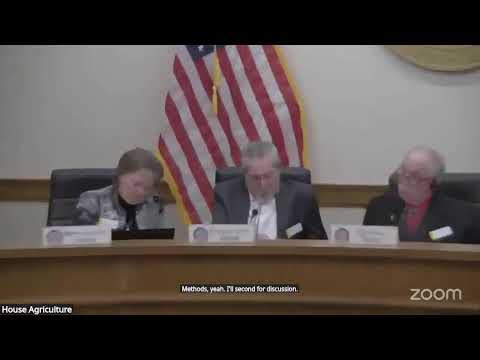
The Agriculture, State & Public Lands & Water Resources Committee voted 7–2 to pass House Bill 92, directing the Wyoming Livestock Board to pursue memorandums of understanding with receiving states that will accept Wyoming-approved identification methods for livestock movement.
The Agriculture, State & Public Lands & Water Resources Committee voted 7–2 to pass House Bill 92, which directs the Wyoming Livestock Board to initiate memorandums of understanding with other states that receive Wyoming livestock so that producers can continue to move animals using brand-based or other state-accepted identification methods rather than the federal animal disease traceability (ADT) mandate’s preferred electronic identification (EID) approach.
The bill and testimony focused on how Wyoming producers can preserve movement options amid a new federal ADT rule that emphasizes EID (radio-frequency identification). Committee members and witnesses described MOUs as a targeted, bilateral exemption: if both the shipping and receiving state agree, brands or other accepted identification methods can serve as the basis for the exemption.
Why it matters: Producers and industry witnesses said a federal mandate for EID could disrupt customary identification and movement practices; supporters said state-to-state MOUs would preserve existing business flows while the Livestock Board and veterinarian staff negotiate detailed terms with receiving states.
Agency and technical testimony: Steve True, director of the Wyoming Livestock Board, told the committee the board already adopted a resolution directing staff to pursue MOUs and prefers flexible language that mirrors that resolution rather than naming specific states in statute. He explained that some named states in the draft bill are not brand states and therefore cannot reciprocate on brand-based exemptions. Dr. Hallie Hazel, Wyoming State Veterinarian, explained veterinarians’ accreditation and certificate-of-veterinary-inspection (CVI) role and cautioned that veterinarians could face accreditation risks if they issue documents inconsistent with USDA/ADT rules. She said the board’s work must thread a narrow path that preserves animal-health protections while creating targeted exemptions.
Industry testimony: Jim McGavin of the Wyoming Stockholders Association and Brett Moline of the Wyoming Farm Bureau Federation supported the bill as a way to protect producers’ ability to move livestock under currently accepted identification methods. McGavin and others said the Livestock Board has statutory authority to act, but passing the bill would add statutory direction and deadlines that could accelerate MOU negotiations.
Amendments and legislative mechanics: Committee members adopted an amendment replacing a list of specific receiving states in the bill with broader language requiring the board to initiate MOUs "with any state that receives Wyoming livestock." During debate the committee also discussed but did not adopt language concerning the acceptance of non-EID methods; the board and agency witnesses noted existing statutes and rules already provide for multiple methods of official identification and urged caution about statutory text that could unintentionally reduce agency flexibility.
Limitations and risks: Agency witnesses emphasized that MOUs would protect only those producers and movements that fit the federal rule’s exemption; they cannot create a blanket federal exemption for all interstate movement. The federal ADT rule is final, and civil or administrative consequences exist for noncompliance with federal import requirements. Director True and Dr. Hazel told the committee that the Livestock Board will report back on MOU progress and that MOUs typically include renewal and suspension clauses.
Outcome and next steps: The bill passed committee by roll call, 7 yes and 2 no; the board said it will continue to pursue MOUs whether or not the statute passes, and committee members cited the bill’s reporting dates and deadlines as a reason to move it forward.
Tally: Motion to do pass HB 92 with amendment — passed, 7 yes, 2 no.